 0:2501 · EWS / ELS
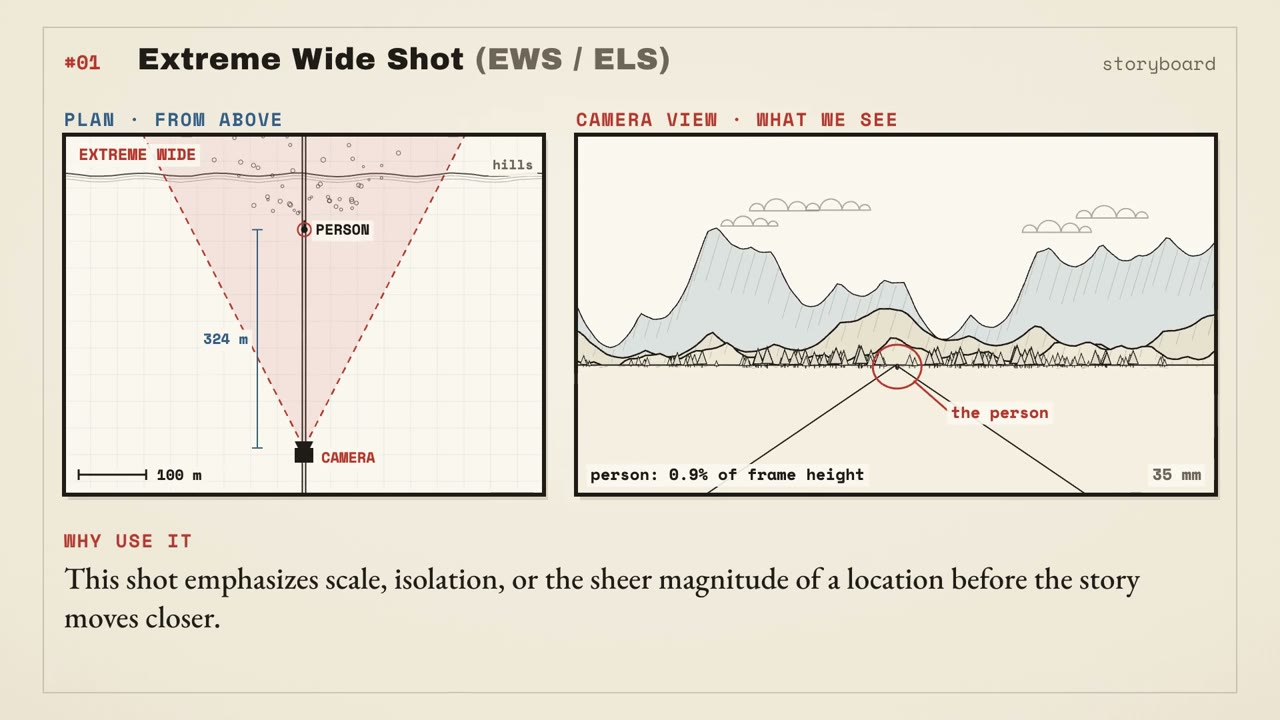
Extreme Wide Shot
This shot emphasizes scale, isolation, or the sheer magnitude of a location before the story moves closer.
Chapterframe training / Camera shots / Genres
38 of the 50 shots in the library are common in action. Each one is a 25-second animated storyboard.
0:2501 · EWS / ELSThis shot emphasizes scale, isolation, or the sheer magnitude of a location before the story moves closer.
 0:2502 · WS / LS
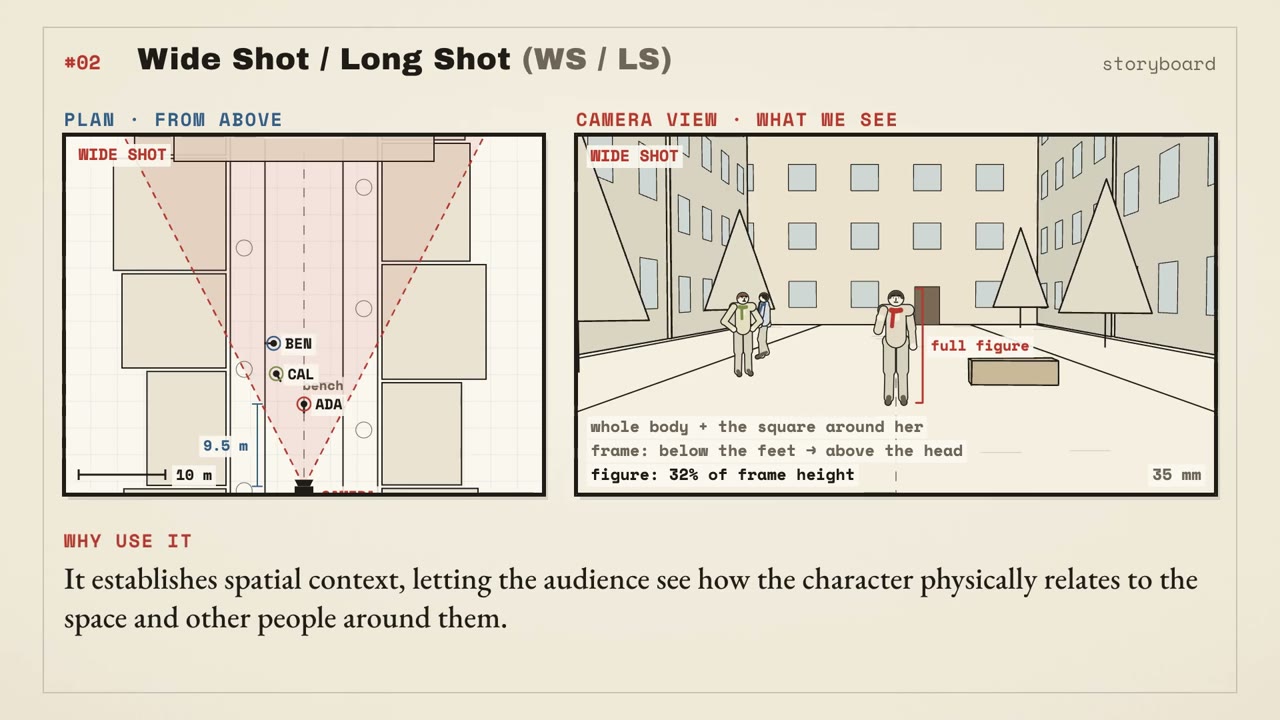
It establishes spatial context, letting the audience see how the character physically relates to the space and other people around them.
 0:2503 · FS
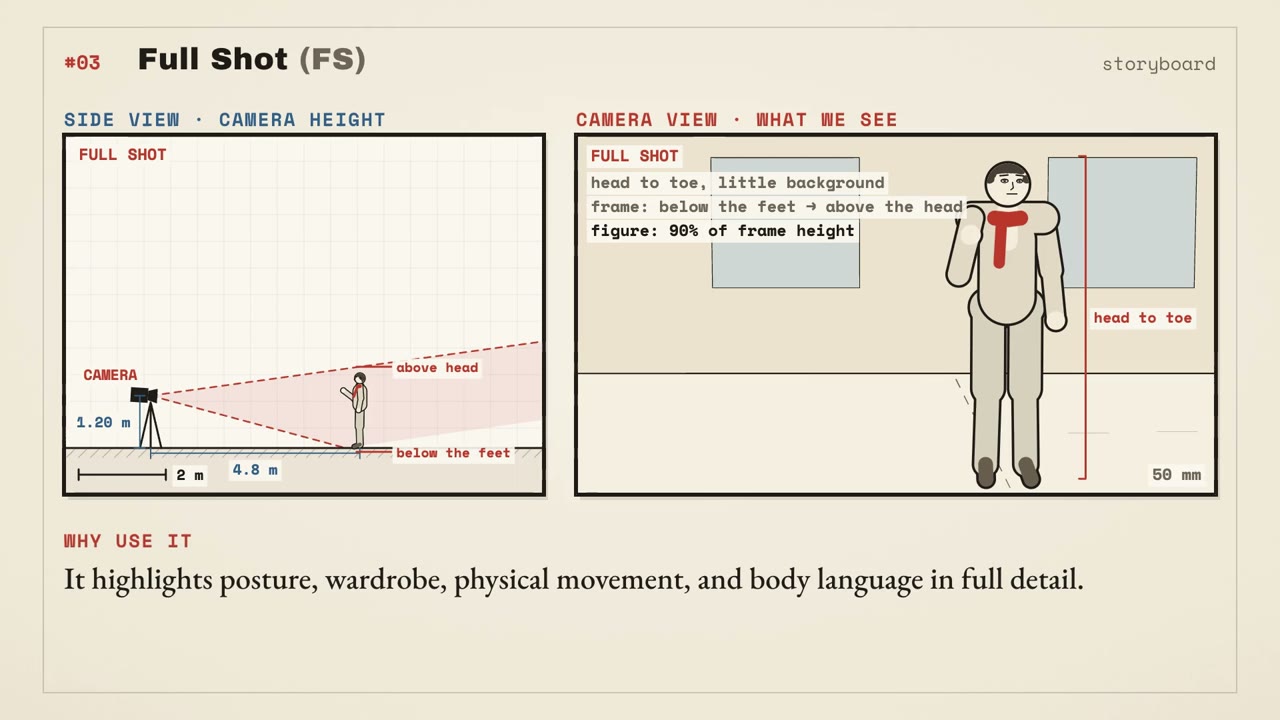
It highlights posture, wardrobe, physical movement, and body language in full detail.
 0:2504 · MWS / MLS
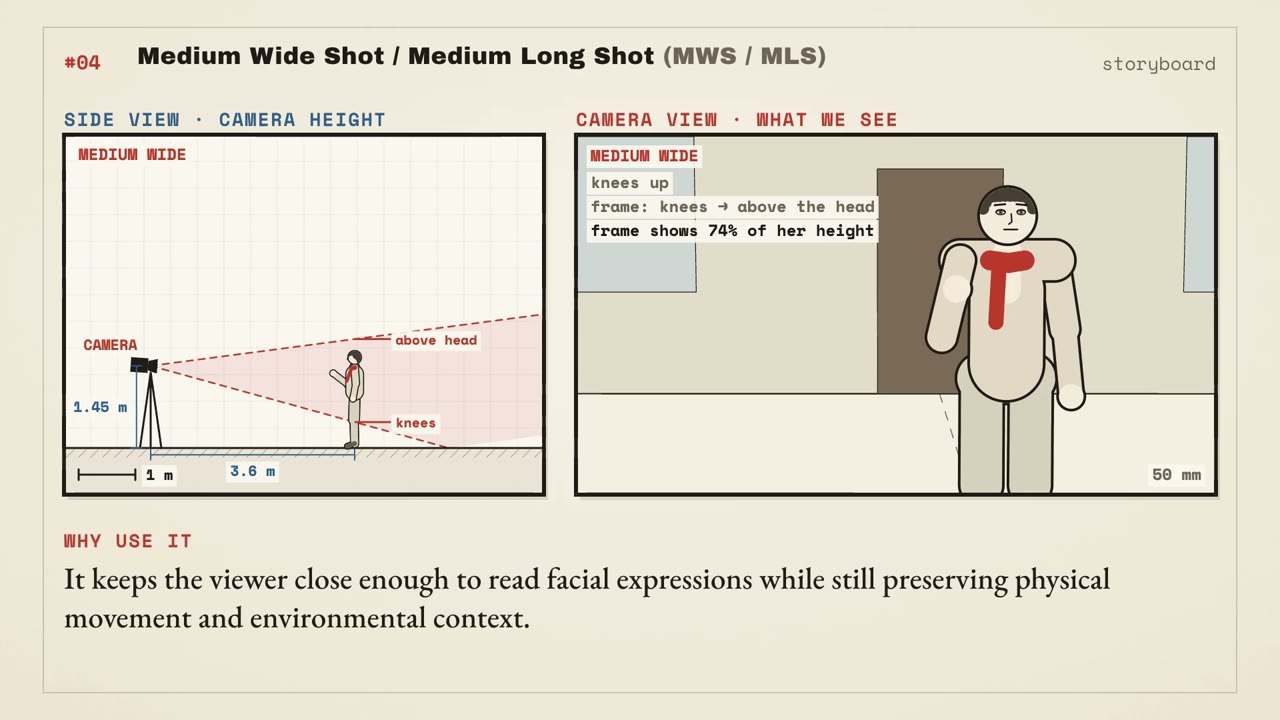
It keeps the viewer close enough to read facial expressions while still preserving physical movement and environmental context.
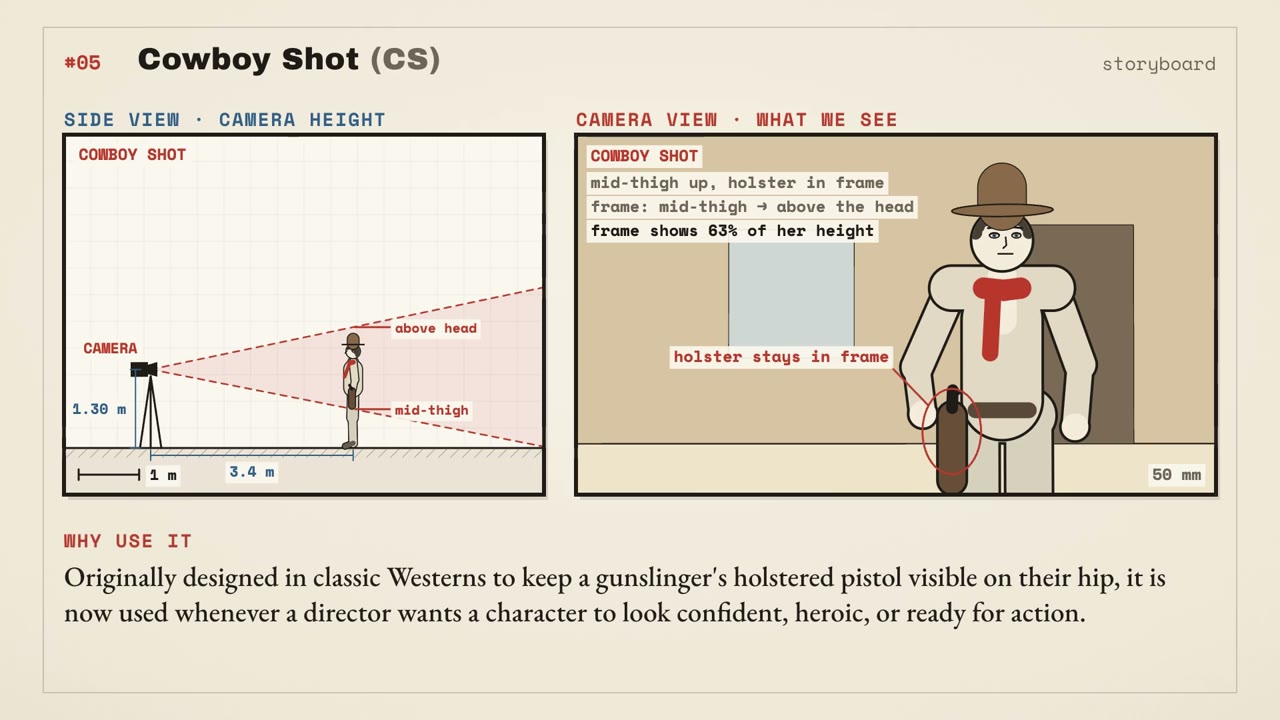 0:2505 · CS
Originally designed in classic Westerns to keep a gunslinger's holstered pistol visible on their hip, it is now used whenever a director wants a character to look confident, heroic, or ready for action.
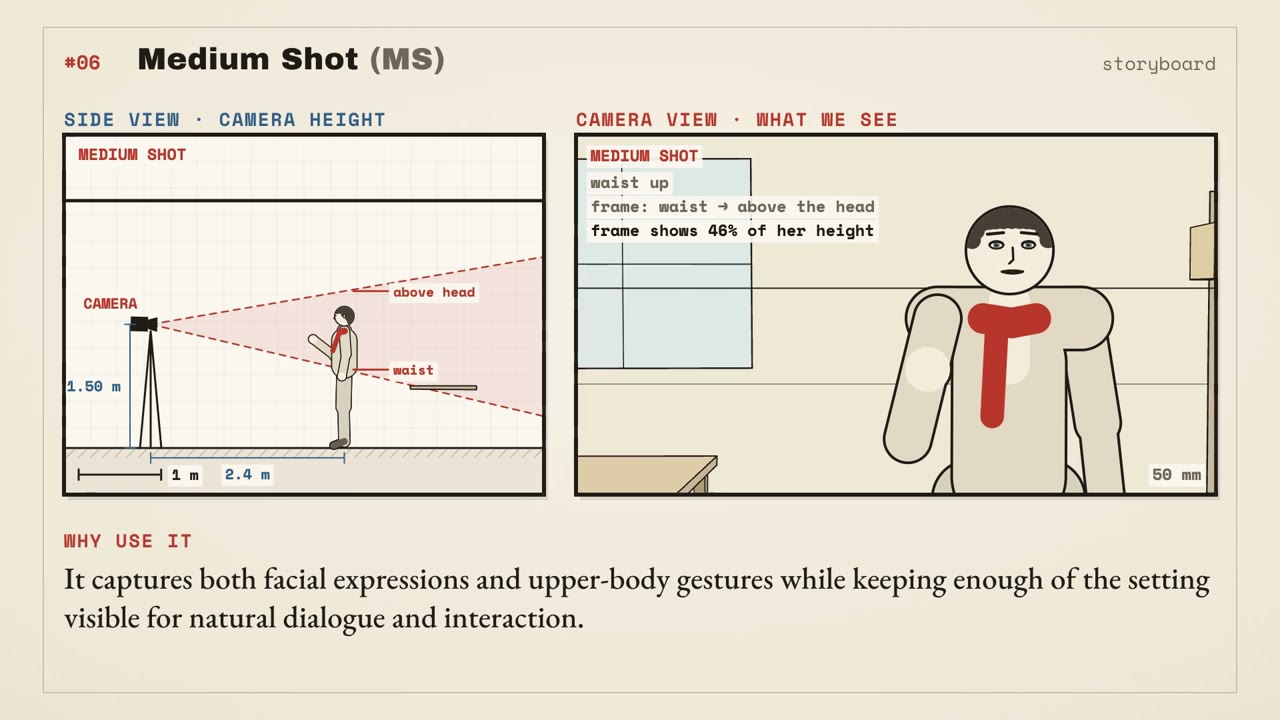 0:2506 · MS
It captures both facial expressions and upper-body gestures while keeping enough of the setting visible for natural dialogue and interaction.
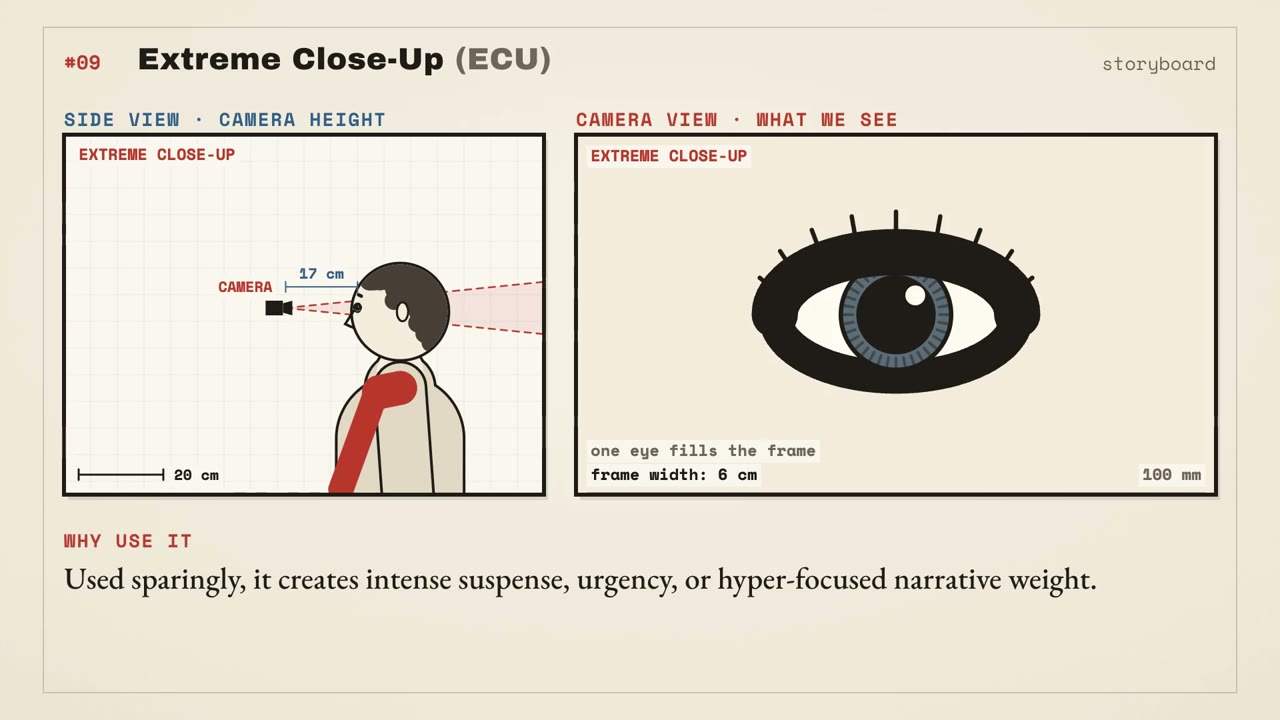 0:2509 · ECU
Used sparingly, it creates intense suspense, urgency, or hyper-focused narrative weight.
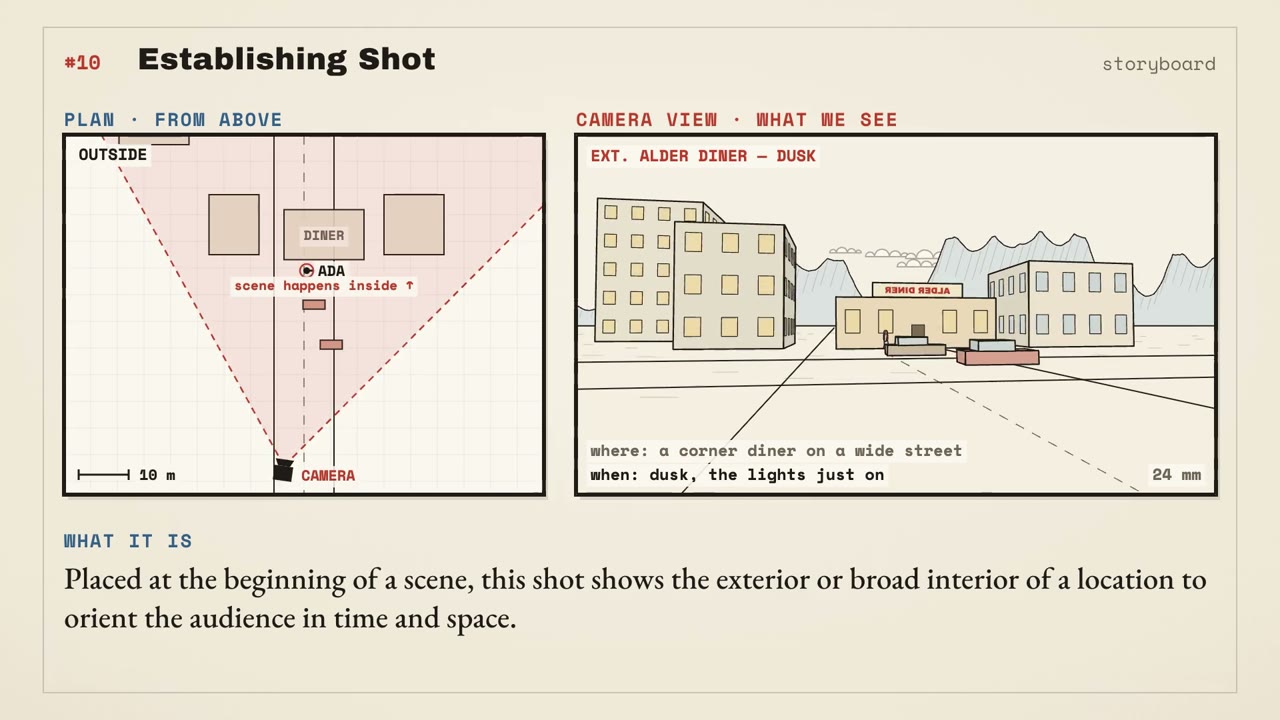 0:2510
While often a wide or aerial shot, it can be any framing that quickly communicates where the upcoming action takes place.
 0:2513
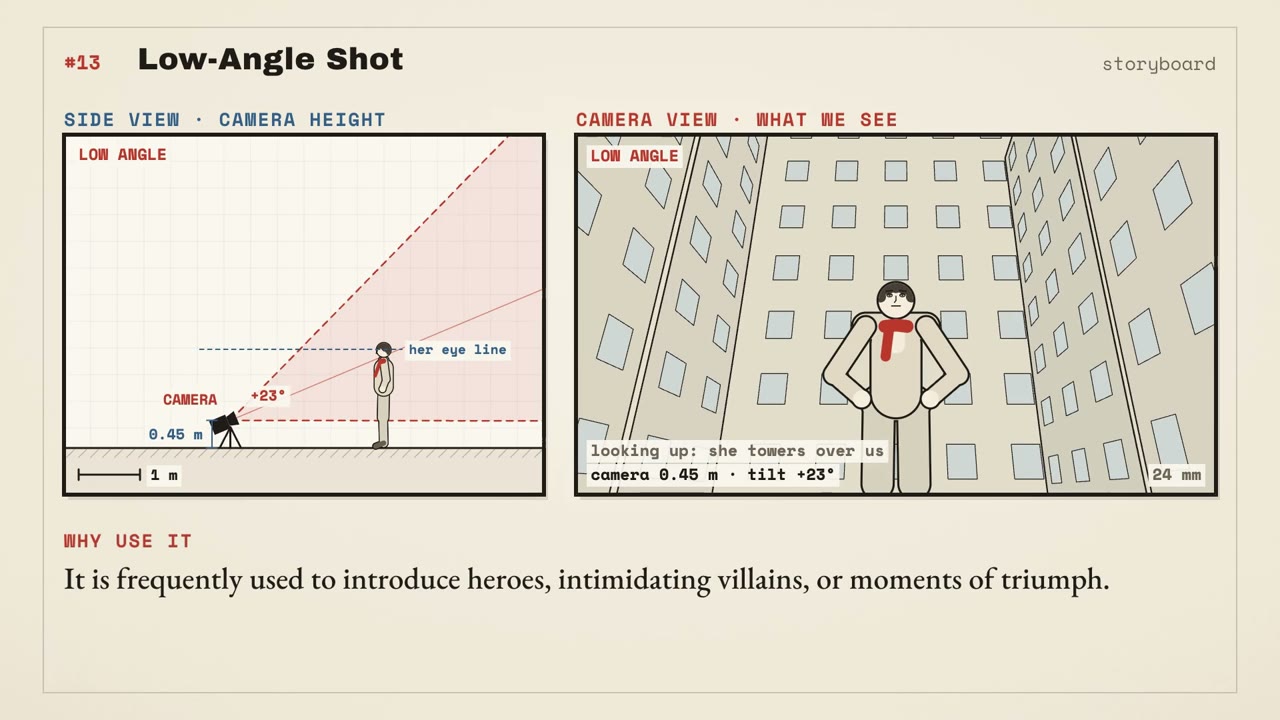
It is frequently used to introduce heroes, intimidating villains, or moments of triumph.
 0:2514
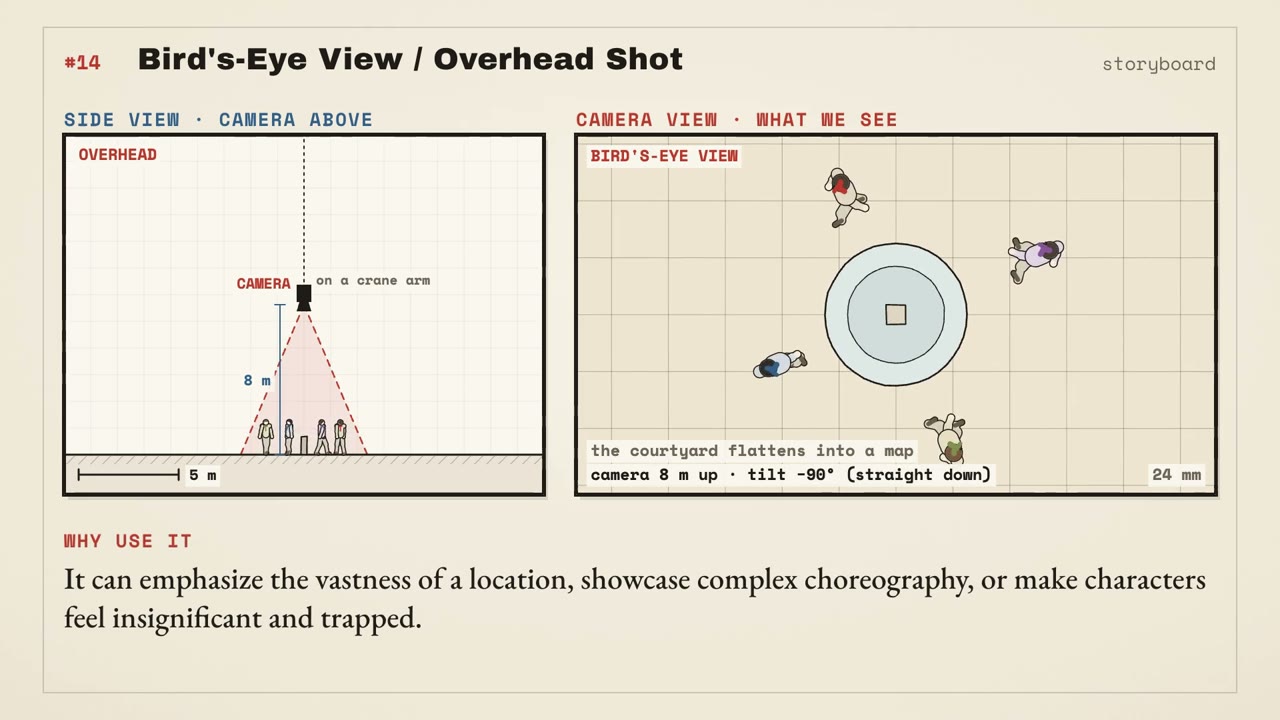
It can emphasize the vastness of a location, showcase complex choreography, or make characters feel insignificant and trapped.
 0:2515
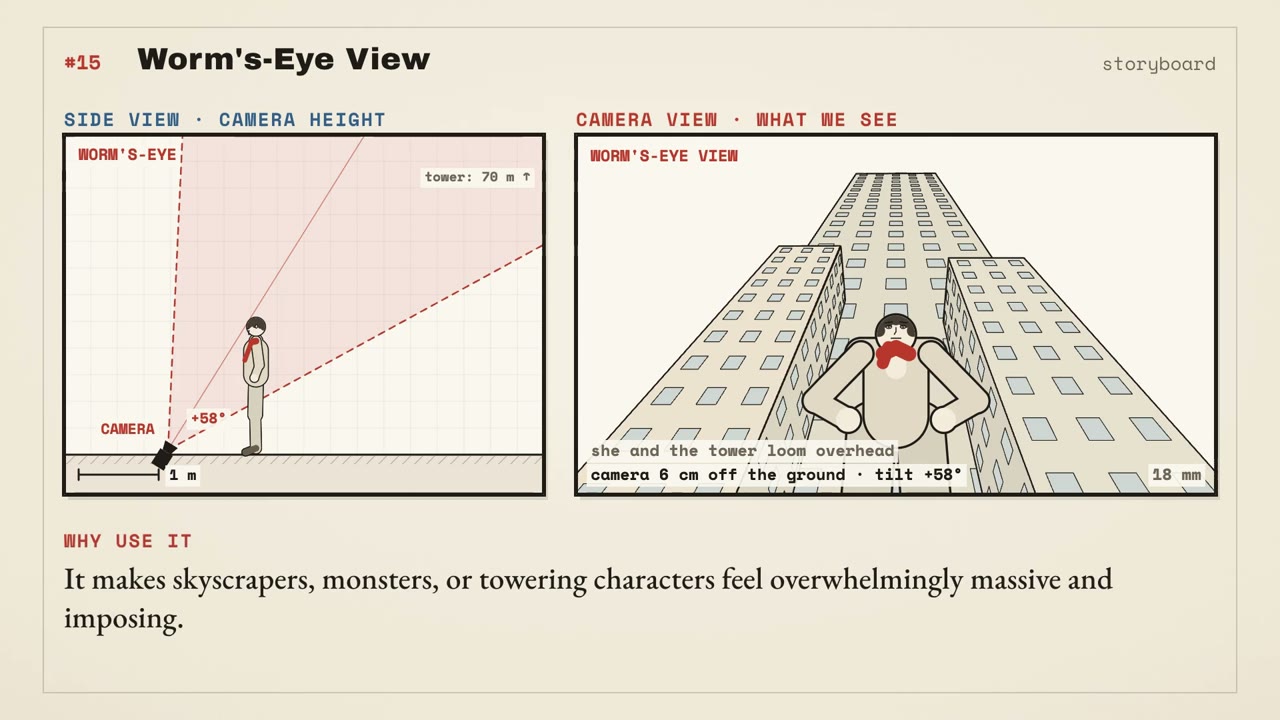
It makes skyscrapers, monsters, or towering characters feel overwhelmingly massive and imposing.
 0:2516
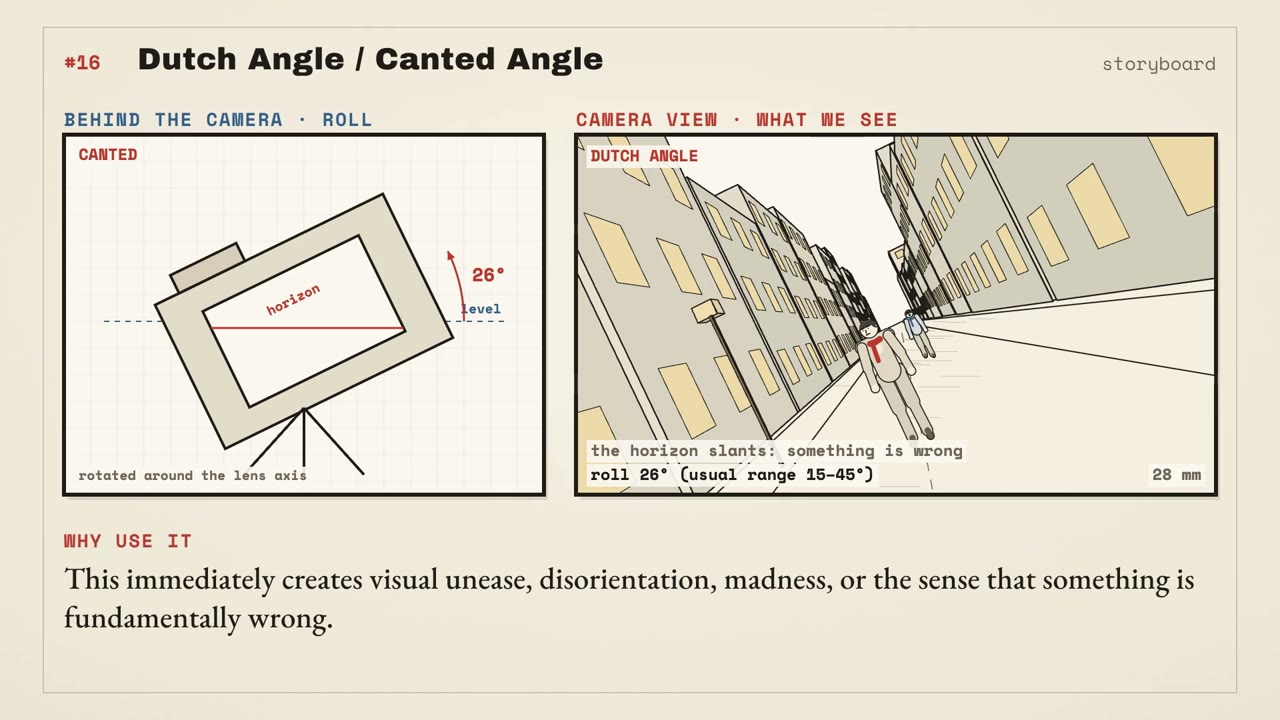
This immediately creates visual unease, disorientation, madness, or the sense that something is fundamentally wrong.
 0:2517
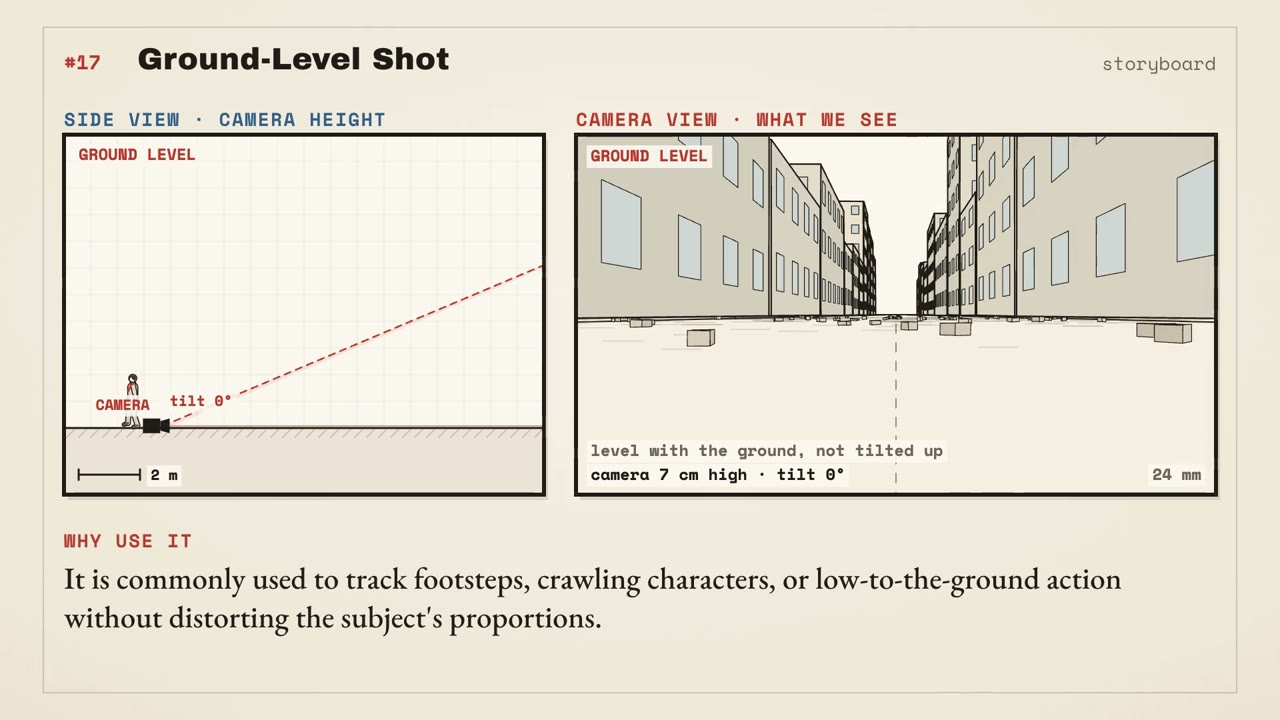
It is commonly used to track footsteps, crawling characters, or low-to-the-ground action without distorting the subject's proportions.
 0:2518
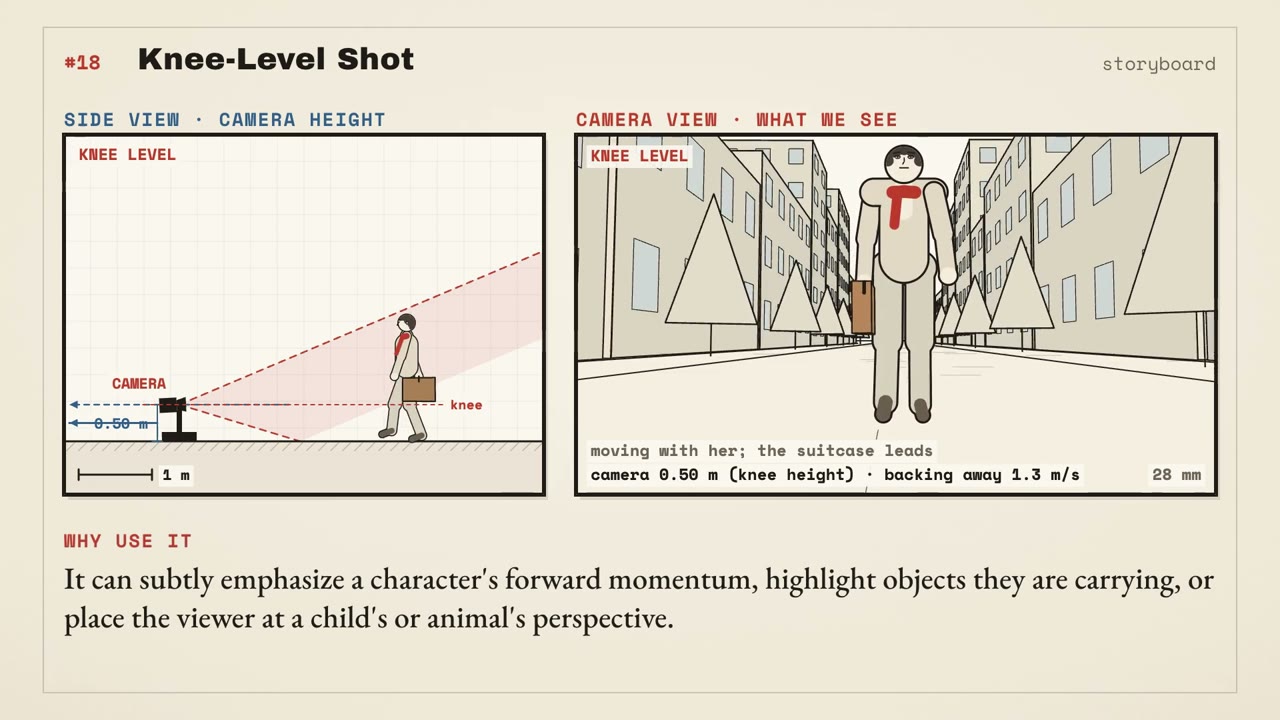
It can subtly emphasize a character's forward momentum, highlight objects they are carrying, or place the viewer at a child's or animal's perspective.
 0:2519
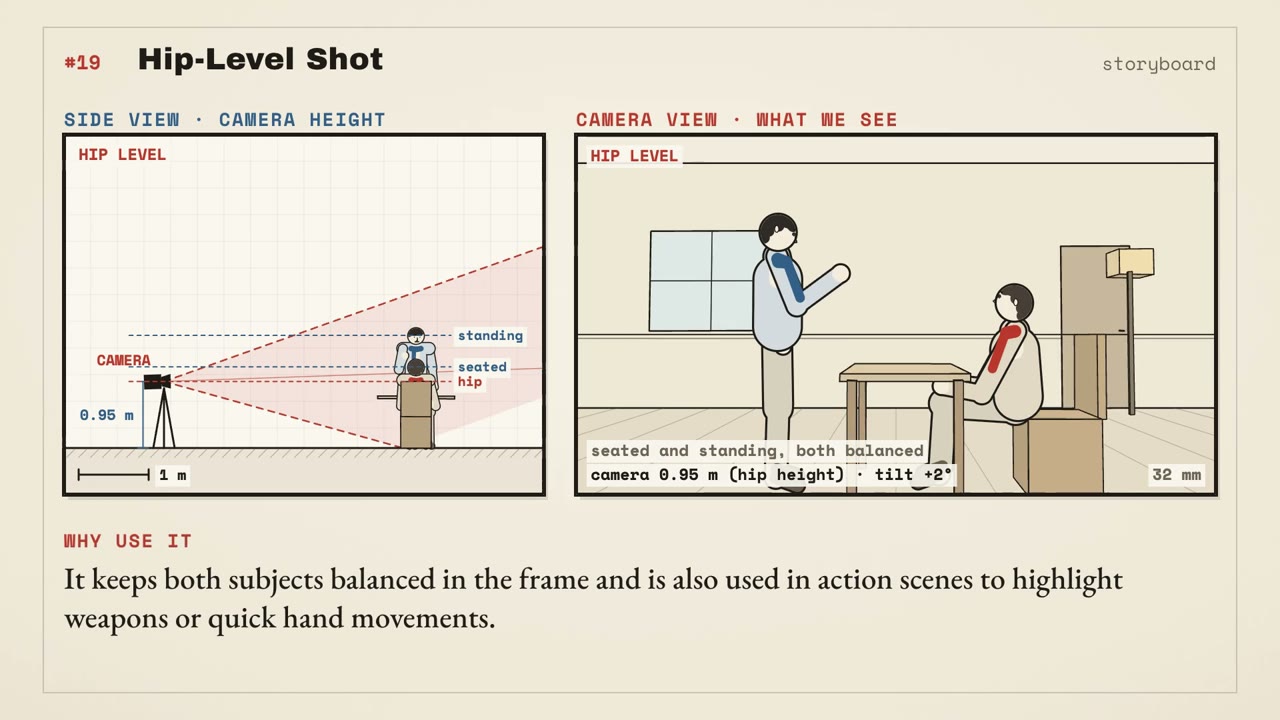
It keeps both subjects balanced in the frame and is also used in action scenes to highlight weapons or quick hand movements.
 0:2520
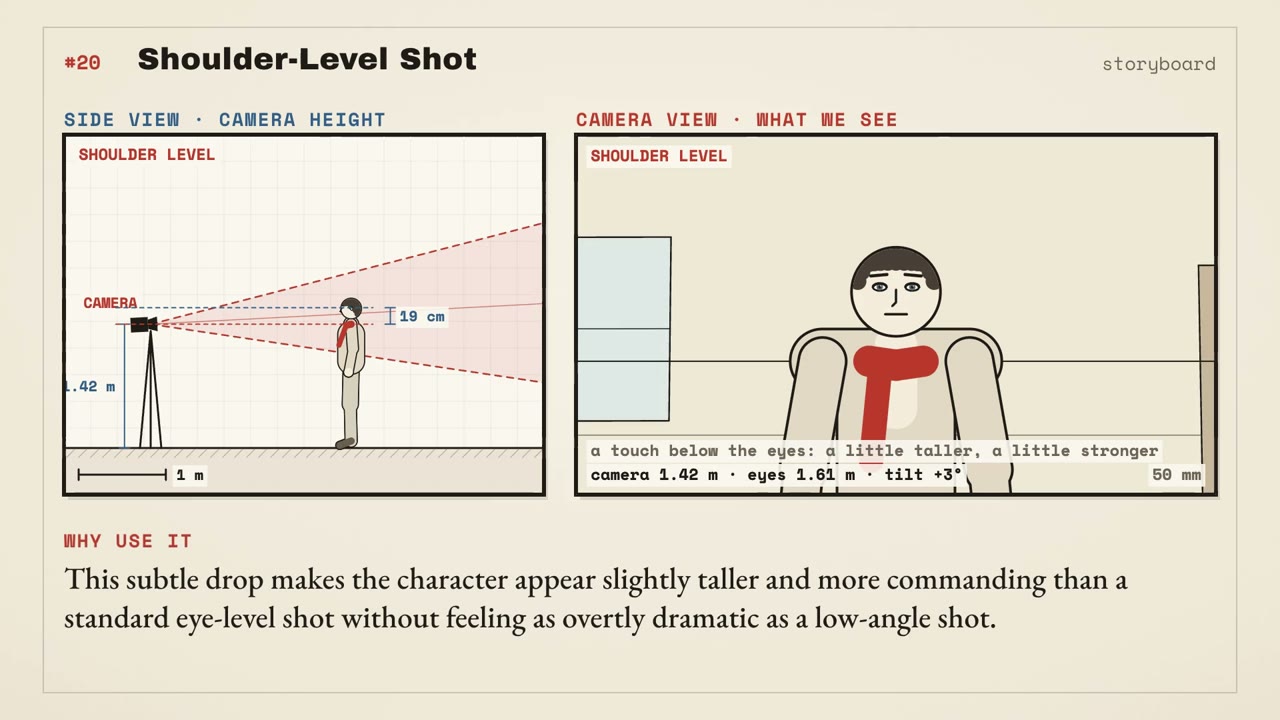
This subtle drop makes the character appear slightly taller and more commanding than a standard eye-level shot without feeling as overtly dramatic as a low-angle shot.
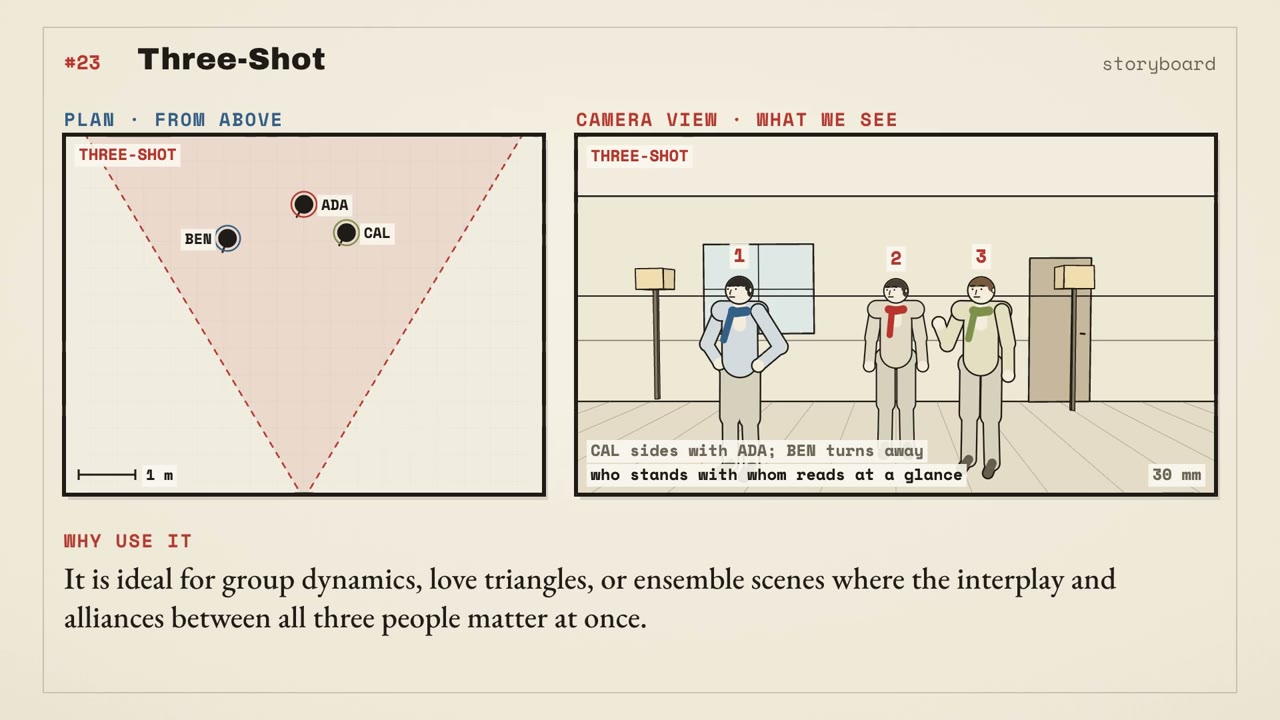 0:2523
It is ideal for group dynamics, love triangles, or ensemble scenes where the interplay and alliances between all three people matter at once.
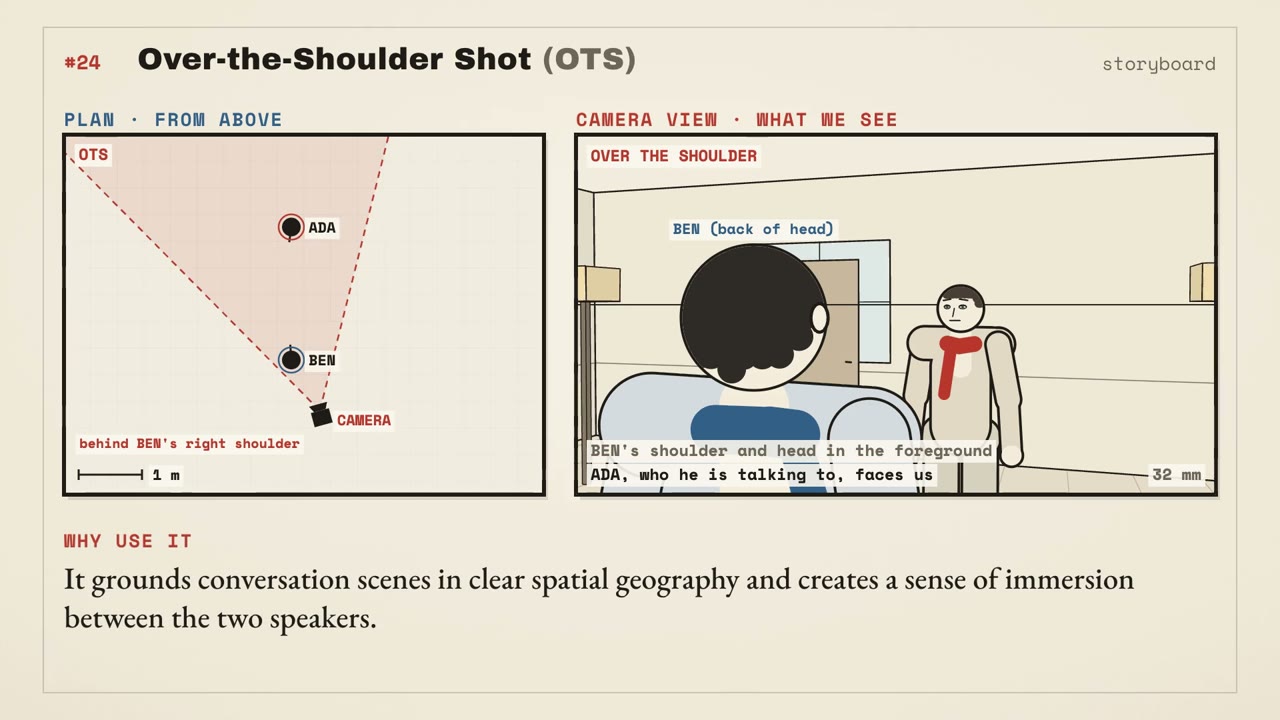 0:2524 · OTS
It grounds conversation scenes in clear spatial geography and creates a sense of immersion between the two speakers.
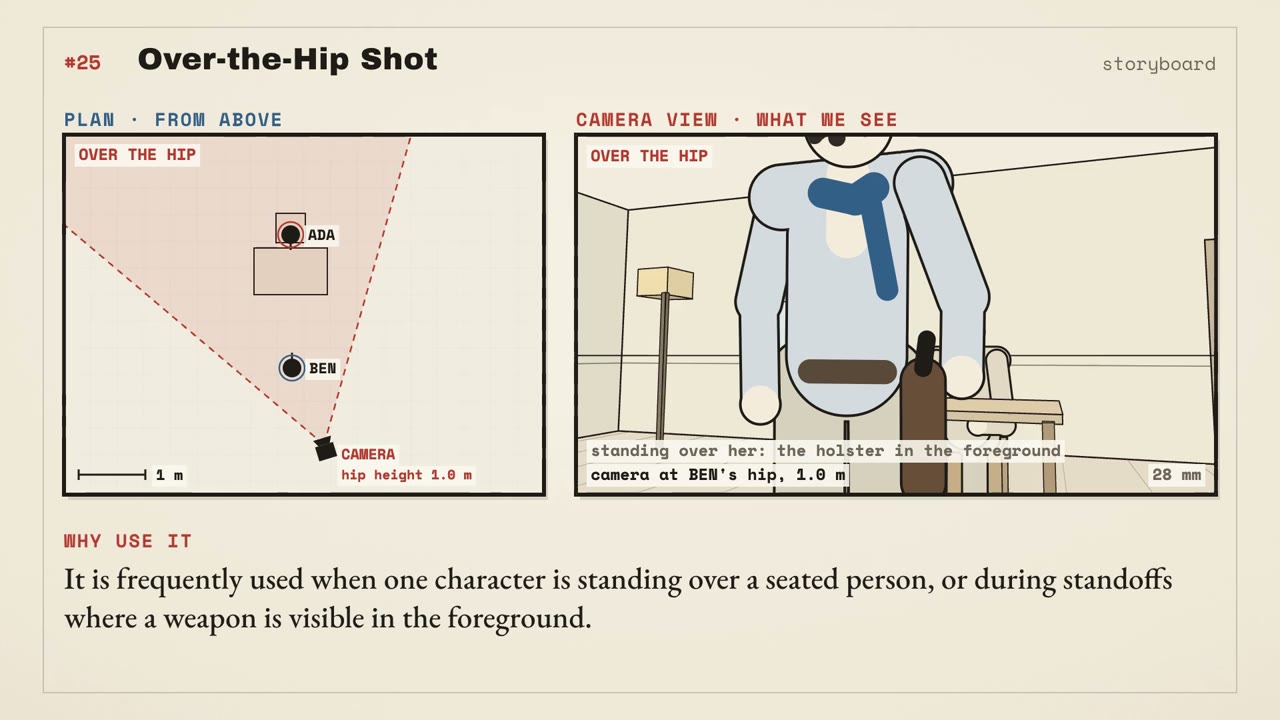 0:2525
It is frequently used when one character is standing over a seated person, or during standoffs where a weapon is visible in the foreground.
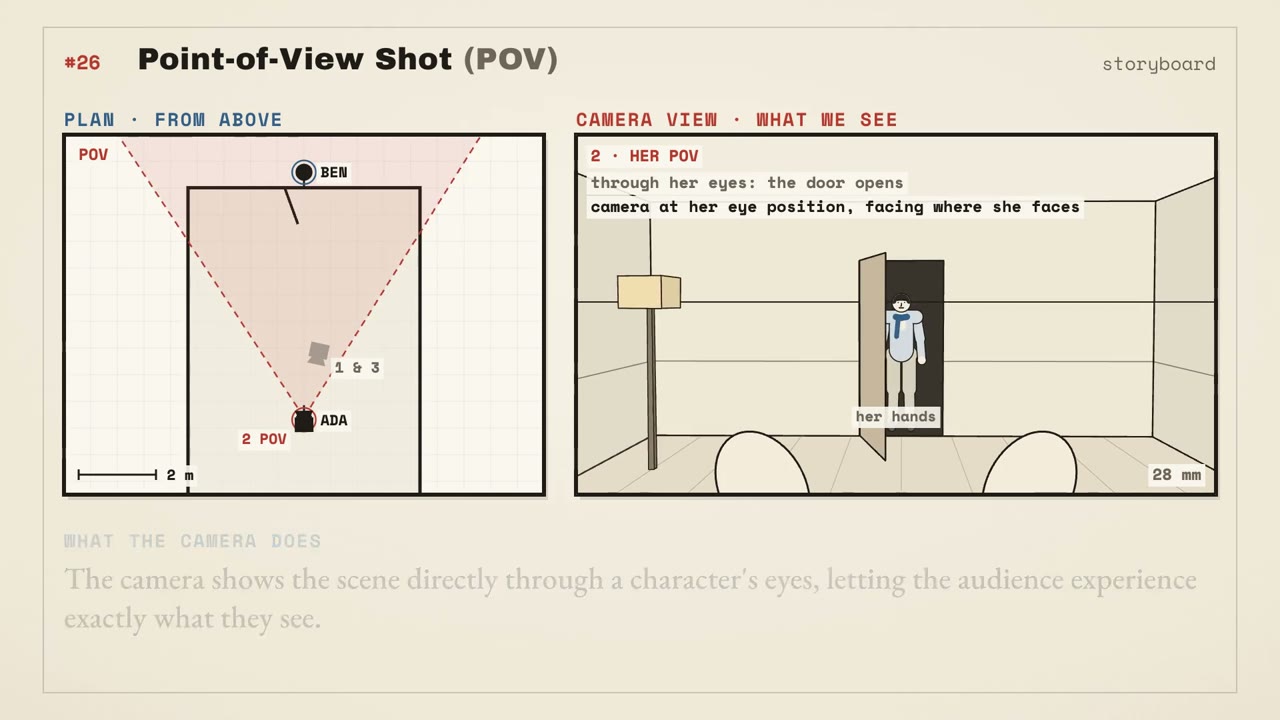 0:2526 · POV
It is often sandwiched between shots of the character looking and reacting, building strong empathy or terror.
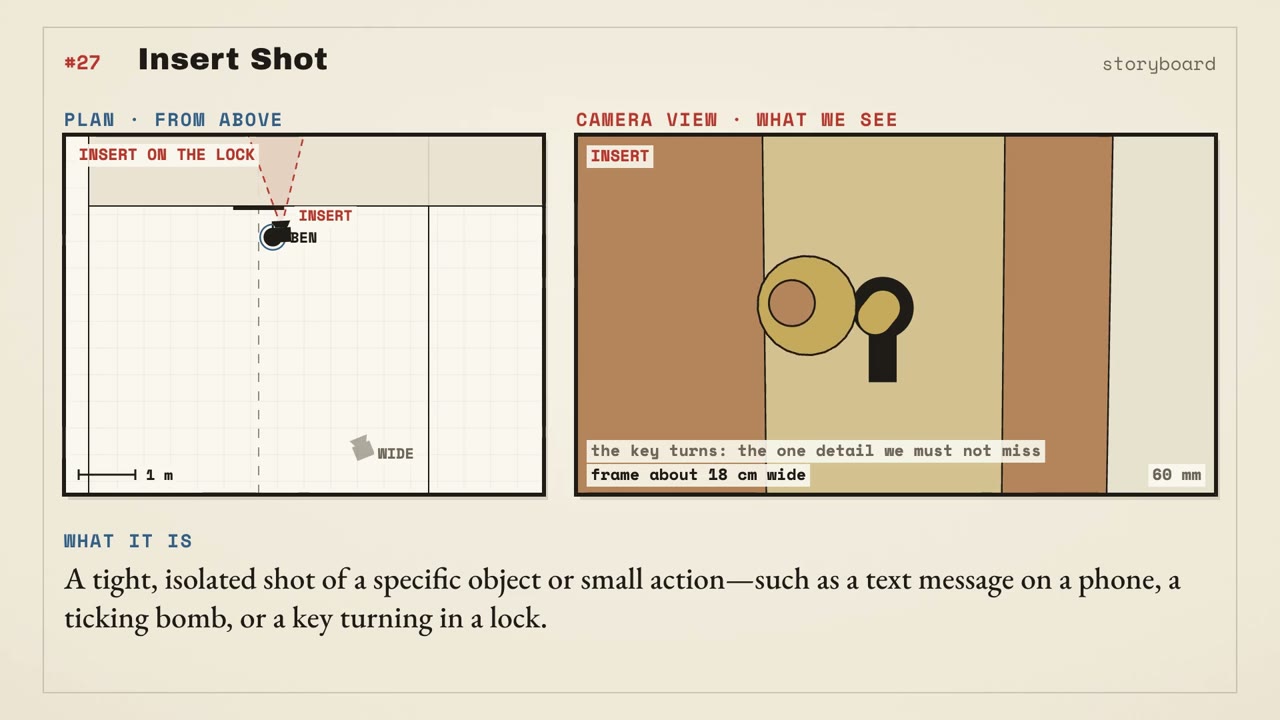 0:2527
It pauses the broader scene for a beat to deliver crucial plot information the audience cannot miss.
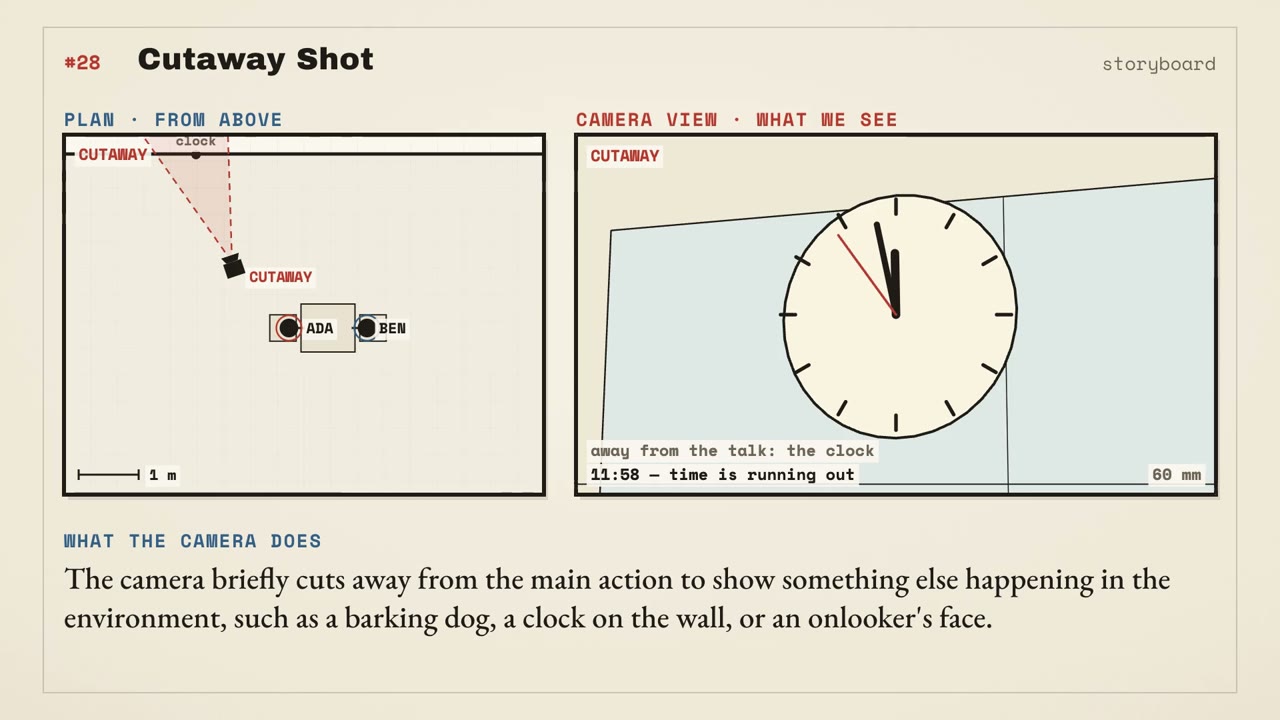 0:2528
It is used to build tension, provide comedic timing, or bridge continuity gaps in editing.
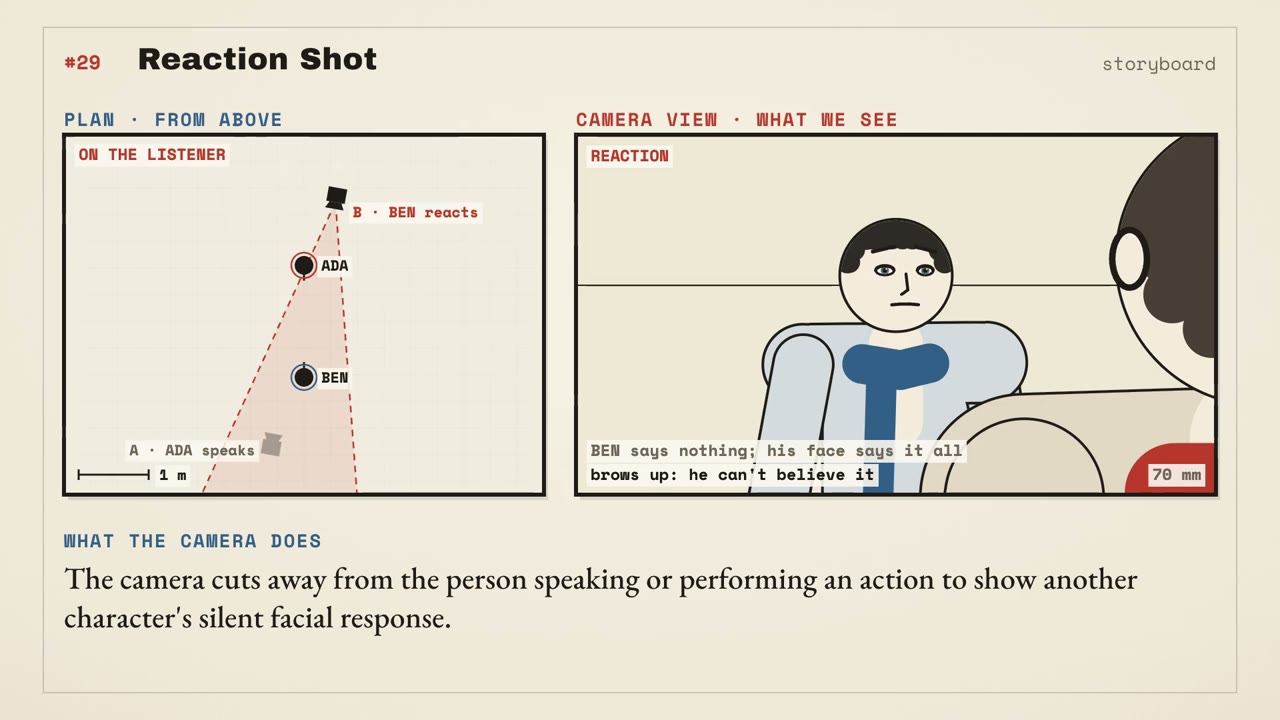 0:2529
Often more powerful than the dialogue itself, it tells the audience how to feel about what just happened.
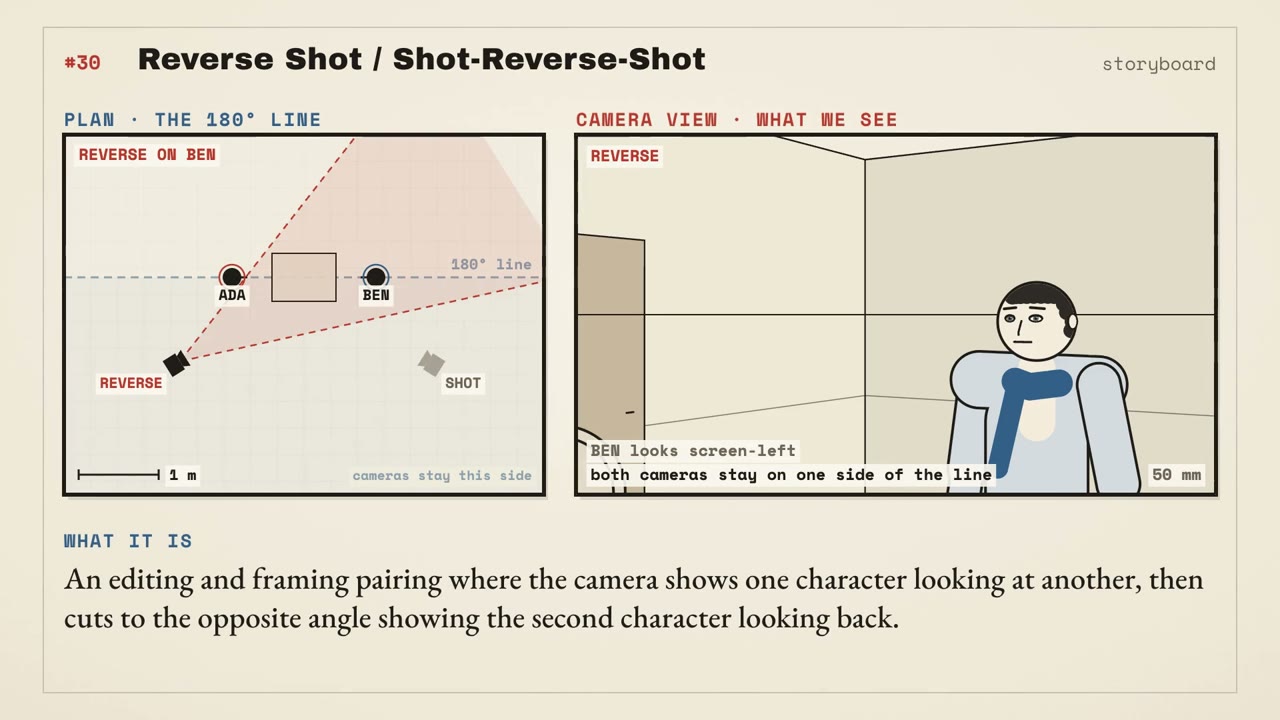 0:2530
It is the backbone of cinematic dialogue, keeping conversations fluid and easy to follow.
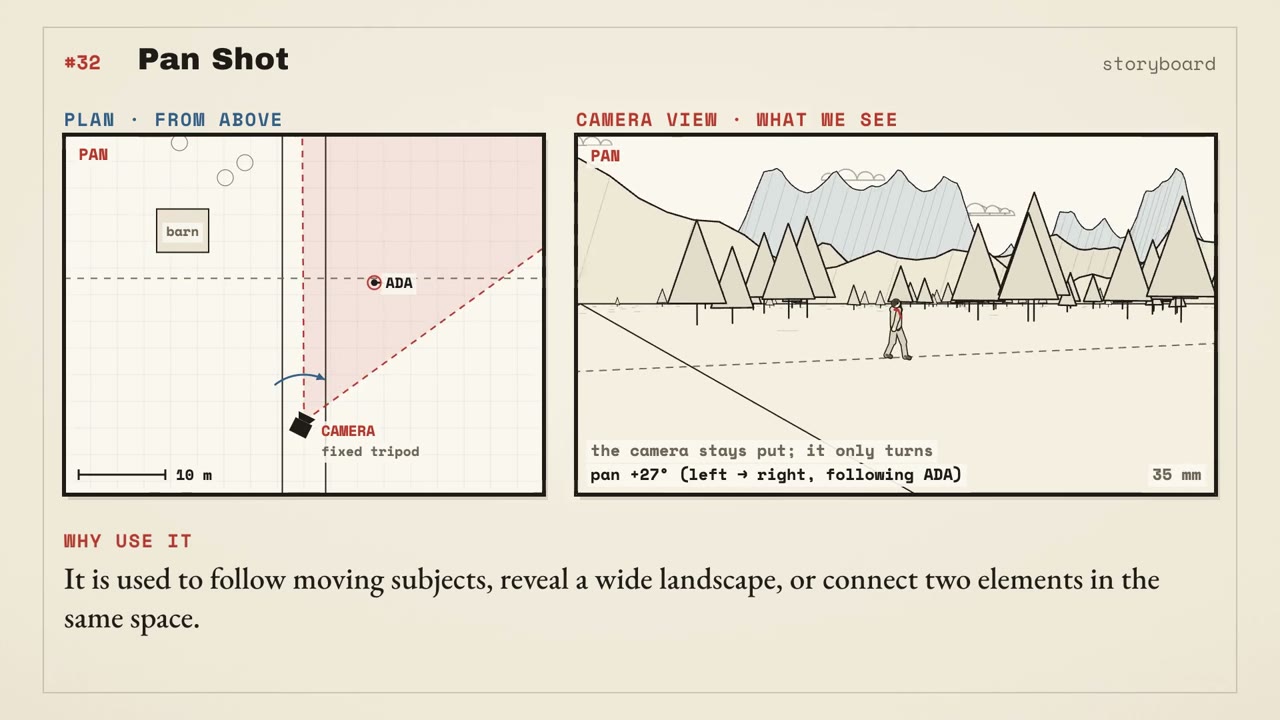 0:2532
It is used to follow moving subjects, reveal a wide landscape, or connect two elements in the same space.
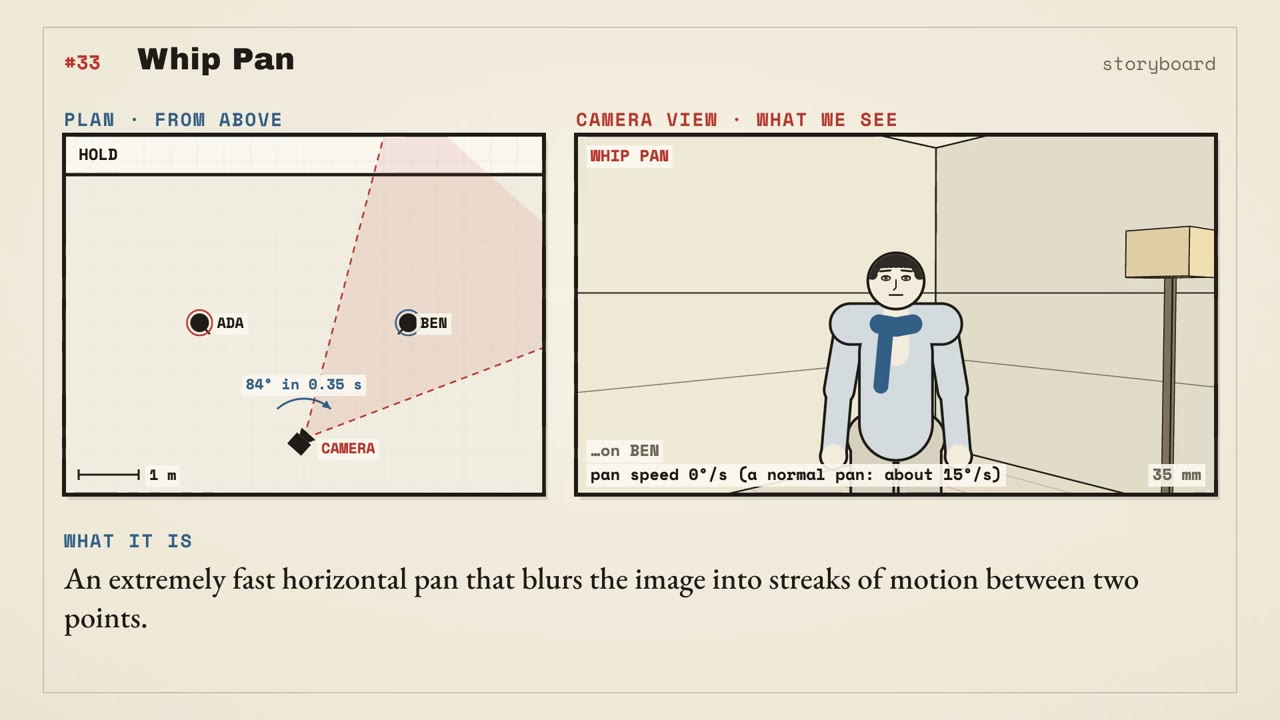 0:2533
Filmmakers use it to inject sudden energy, create snappy comedic transitions, or show a character's frantic disorientation.
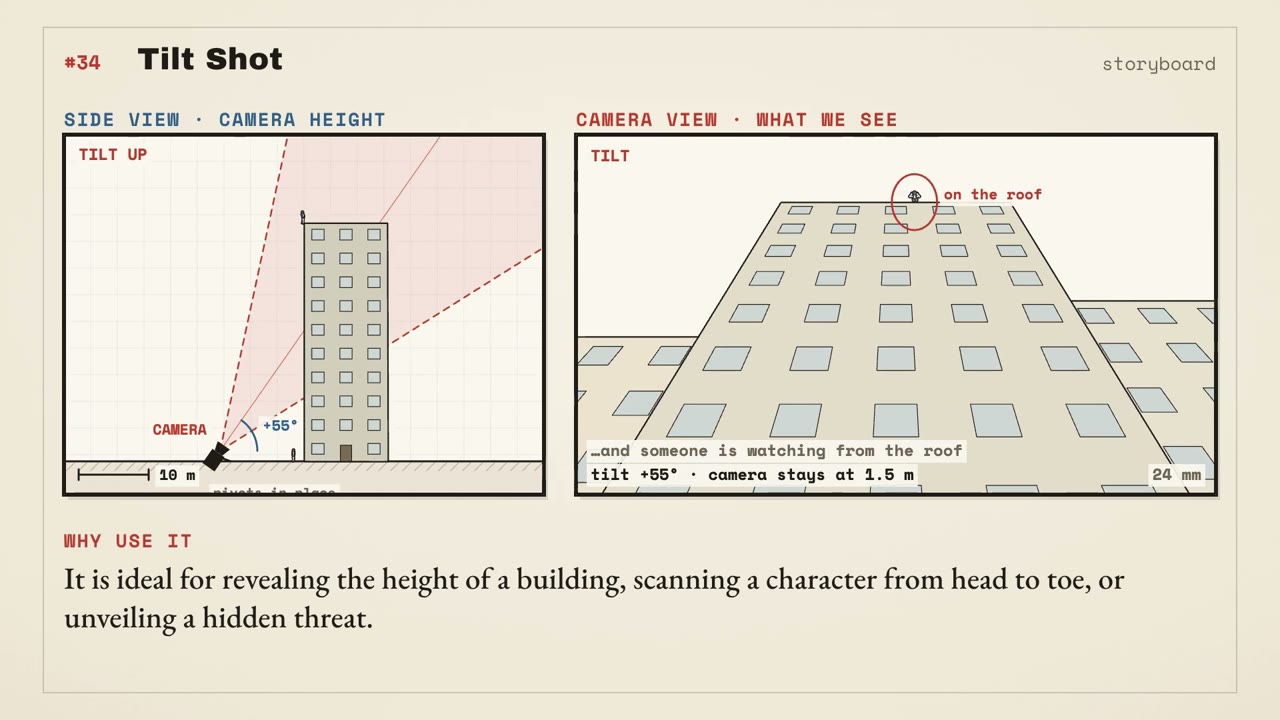 0:2534
It is ideal for revealing the height of a building, scanning a character from head to toe, or unveiling a hidden threat.
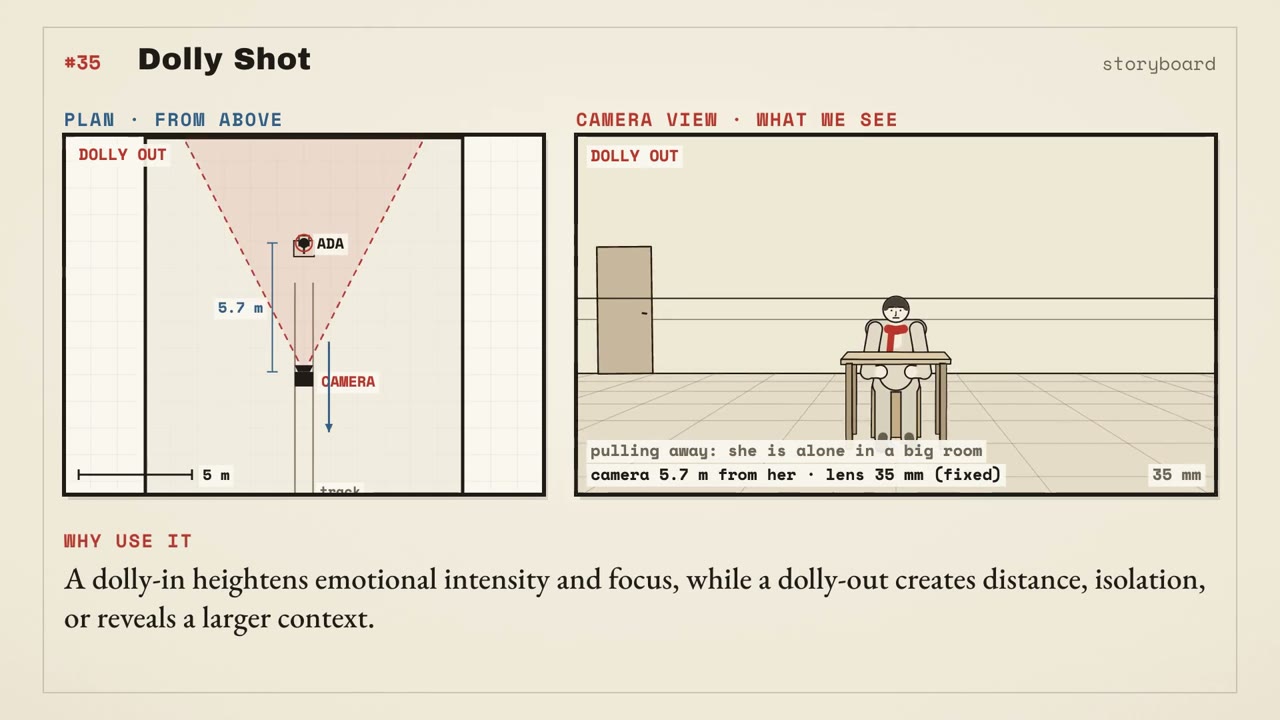 0:2535
A dolly-in heightens emotional intensity and focus, while a dolly-out creates distance, isolation, or reveals a larger context.
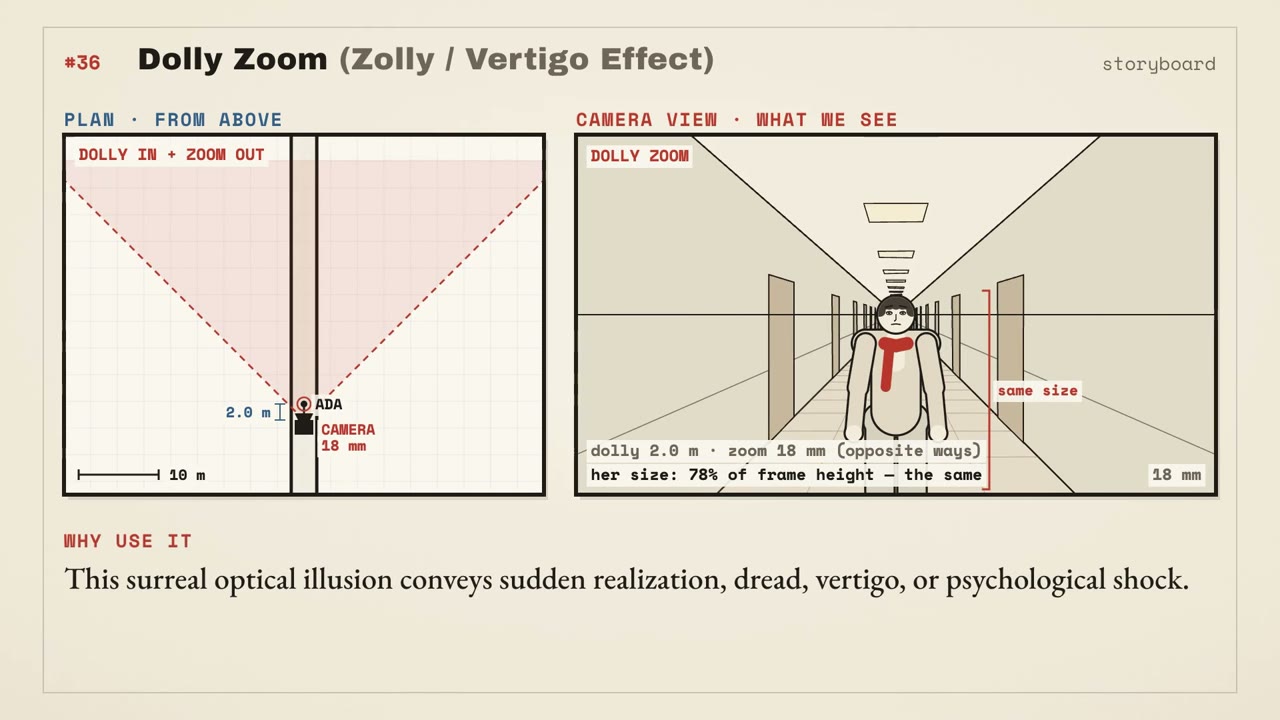 0:2536 · Zolly / Vertigo Effect
This surreal optical illusion conveys sudden realization, dread, vertigo, or psychological shock.
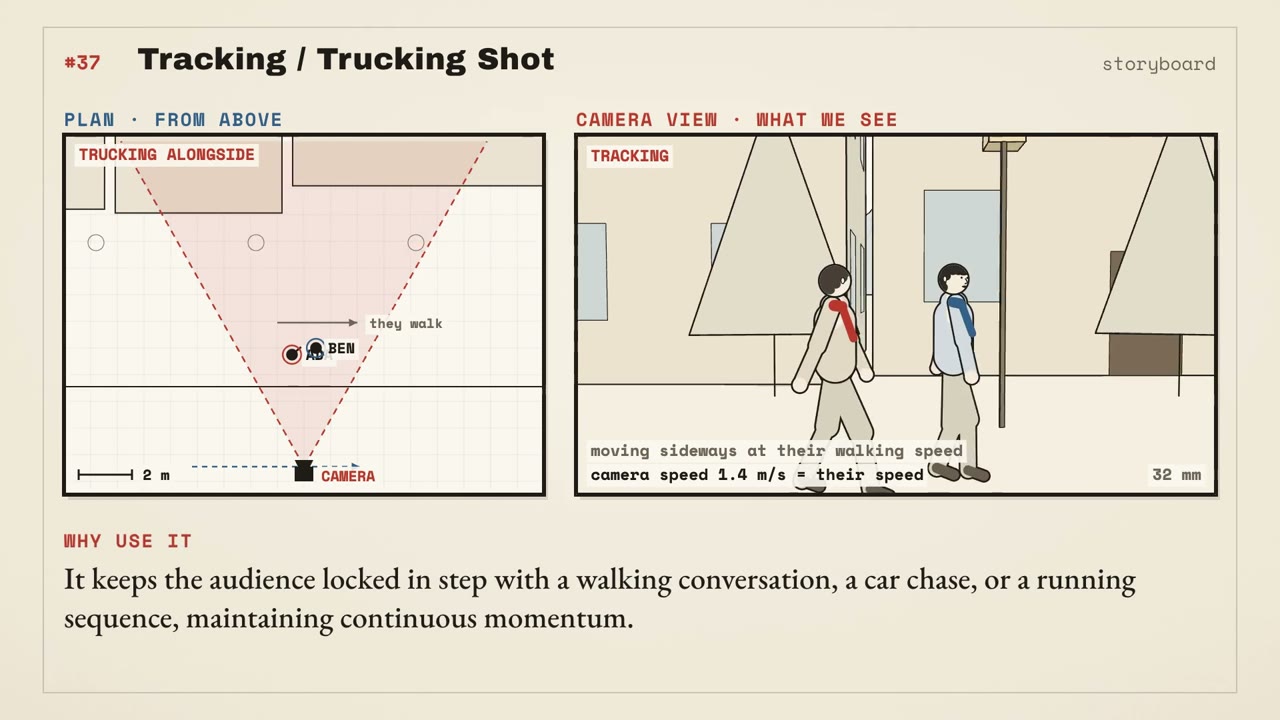 0:2537
It keeps the audience locked in step with a walking conversation, a car chase, or a running sequence, maintaining continuous momentum.
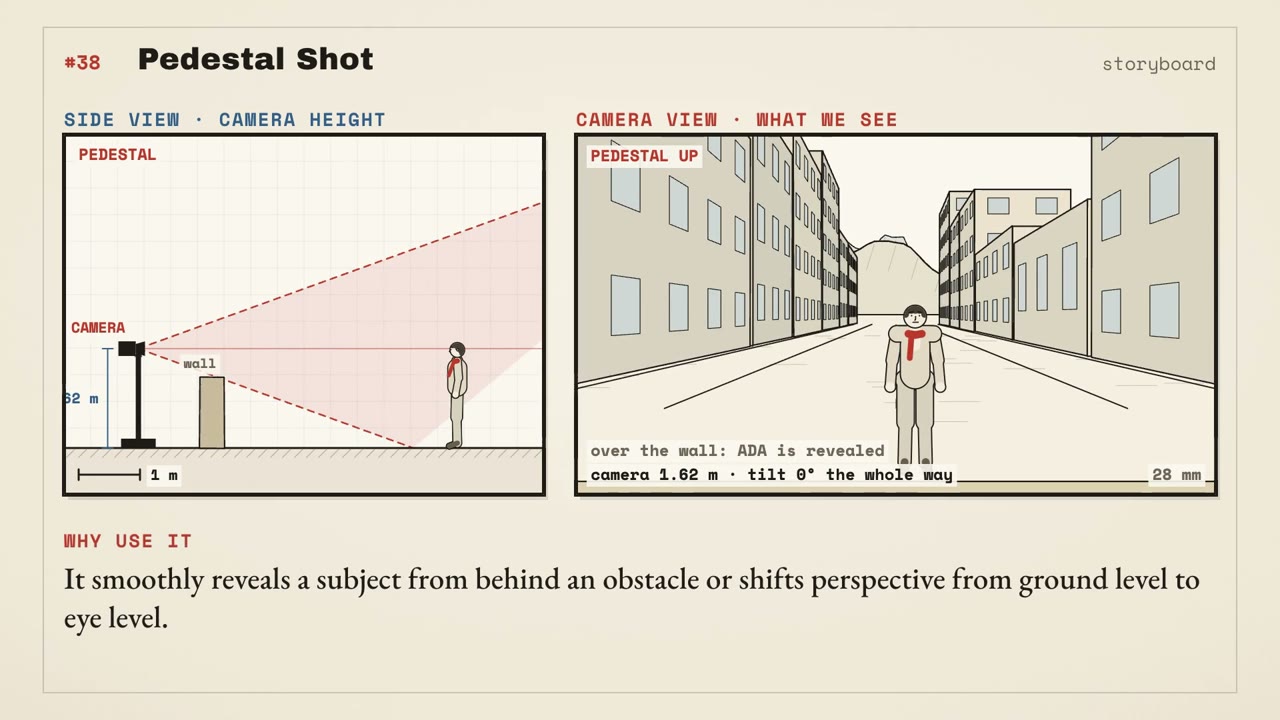 0:2538
It smoothly reveals a subject from behind an obstacle or shifts perspective from ground level to eye level.
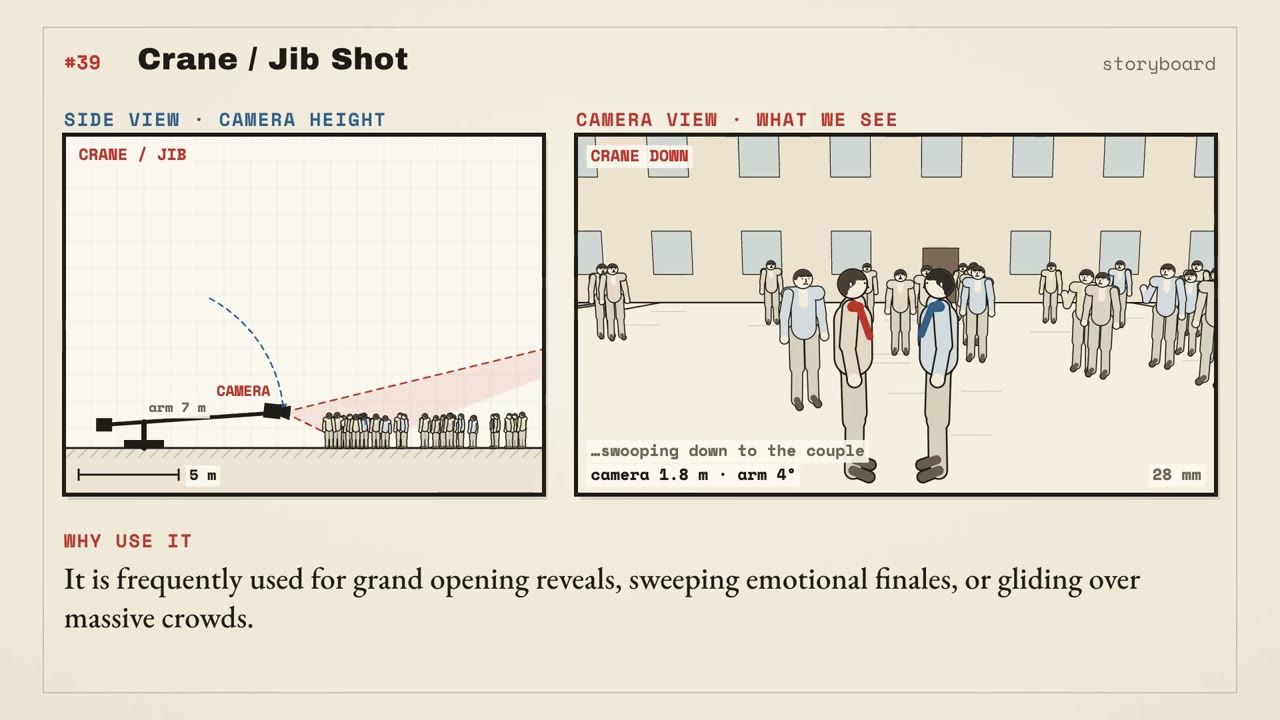 0:2539
It is frequently used for grand opening reveals, sweeping emotional finales, or gliding over massive crowds.
 0:2540
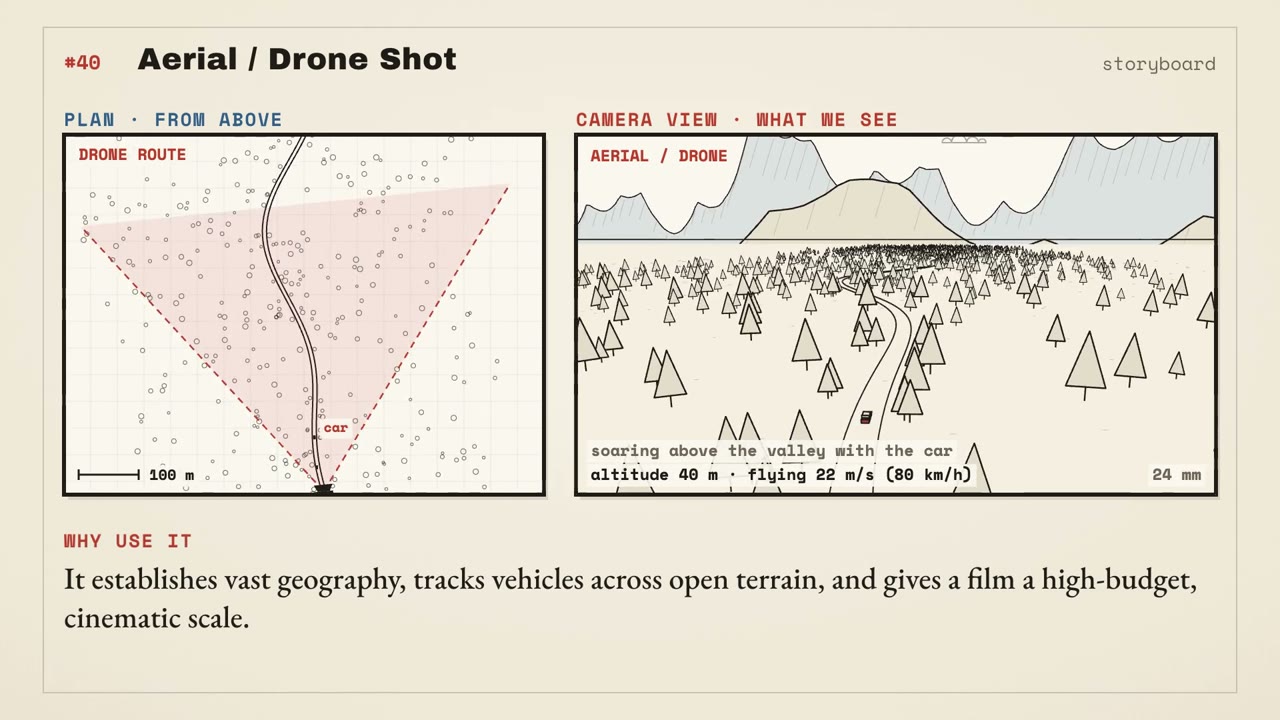
It establishes vast geography, tracks vehicles across open terrain, and gives a film a high-budget, cinematic scale.
 0:2541
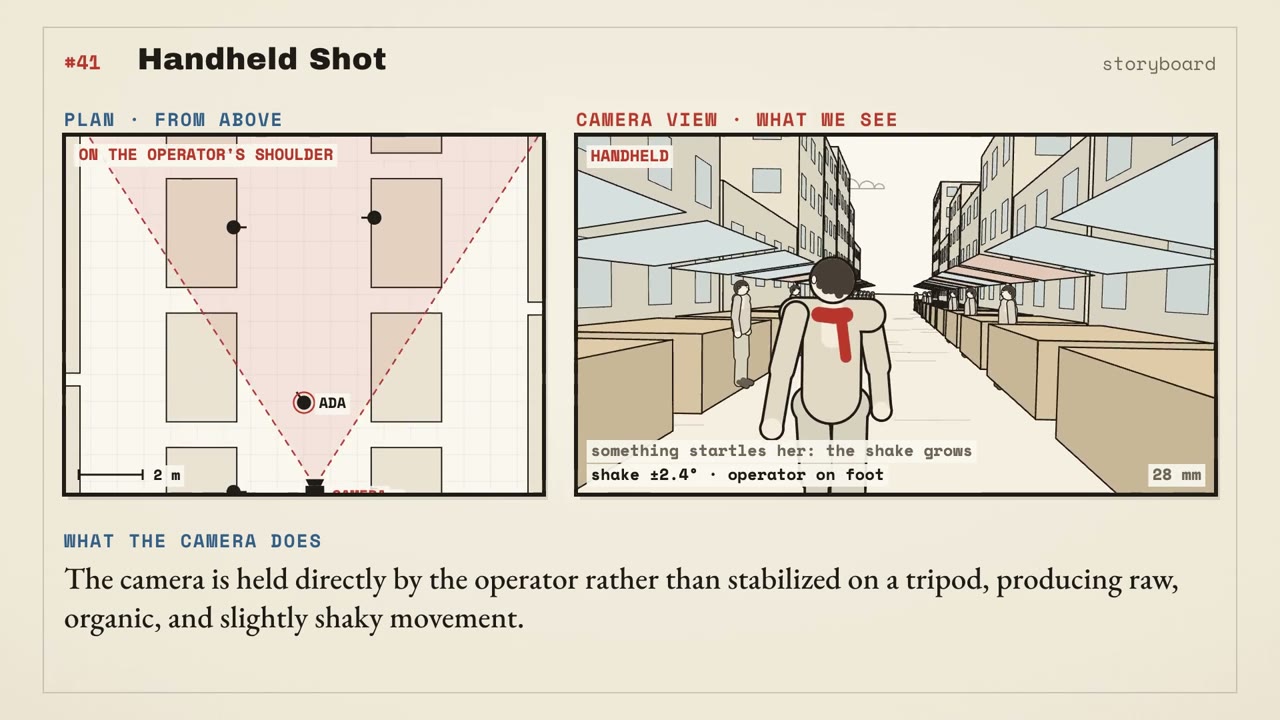
It creates an immediate sense of realism, urgency, chaos, or documentary-style intimacy.
 0:2542
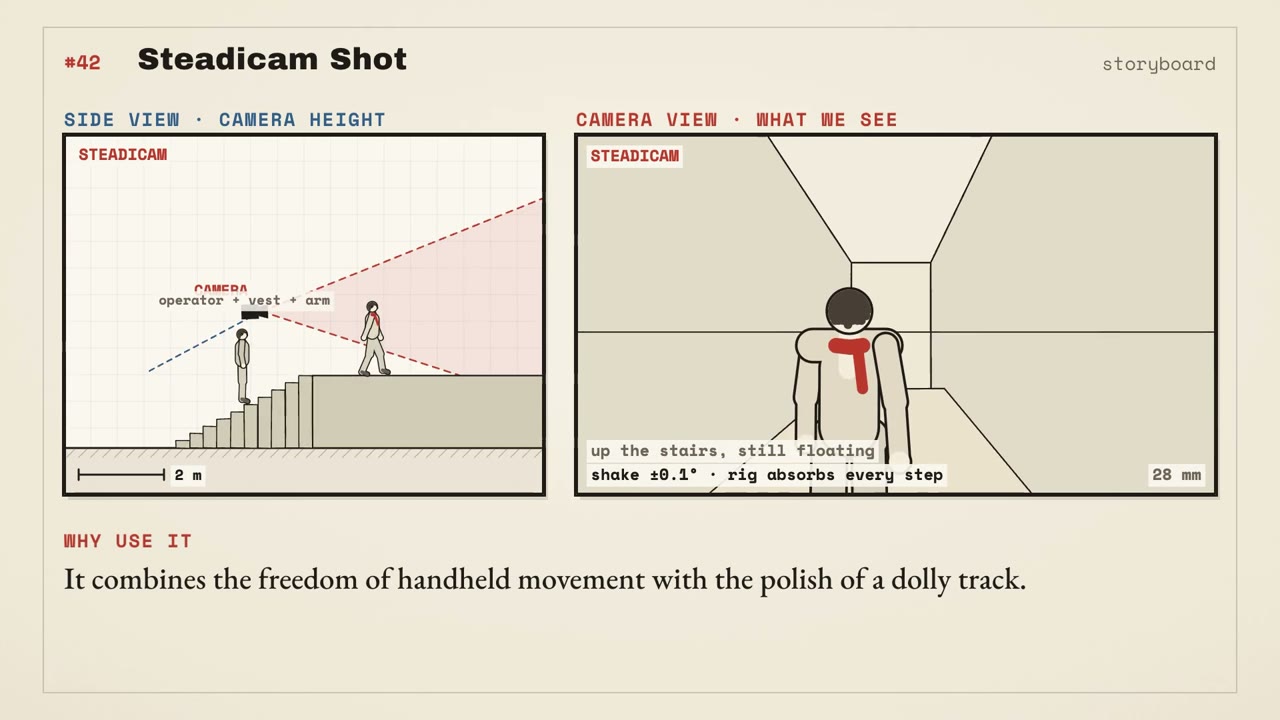
It combines the freedom of handheld movement with the polish of a dolly track.
 0:2545 · Focus Pull
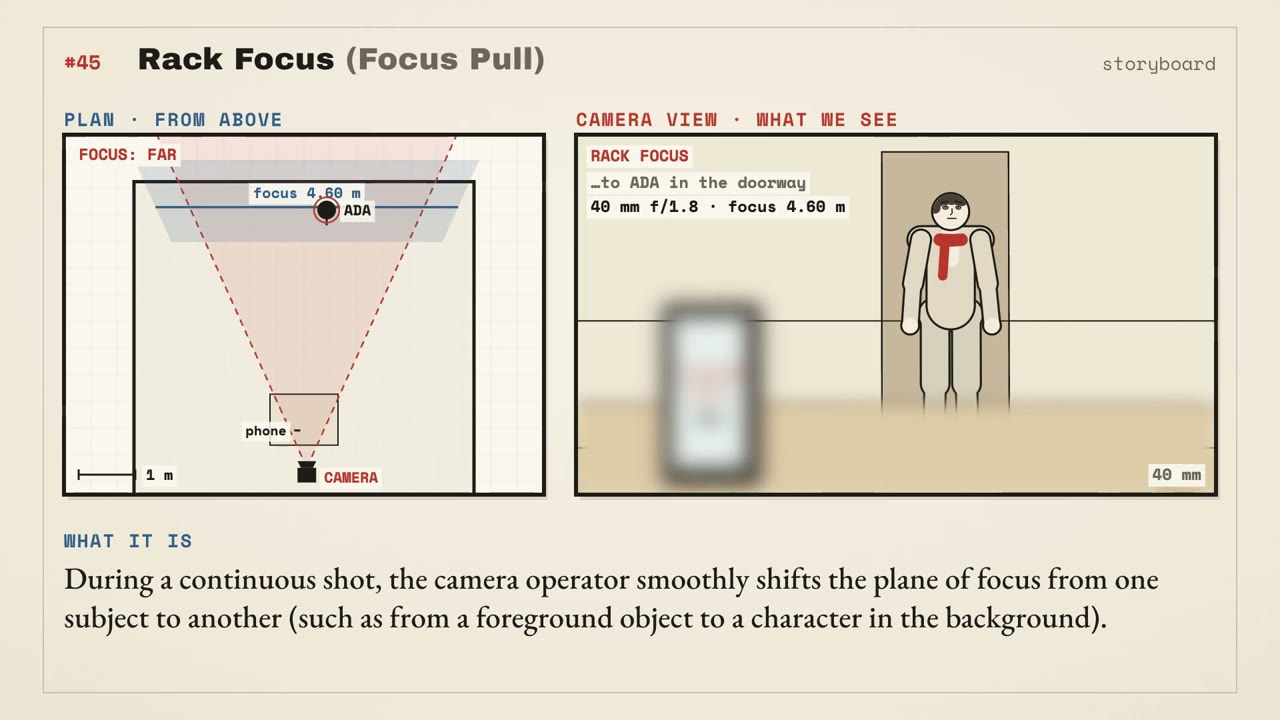
It acts as an invisible cut, redirecting the audience's attention to a sudden reveal or reaction.
 0:2549
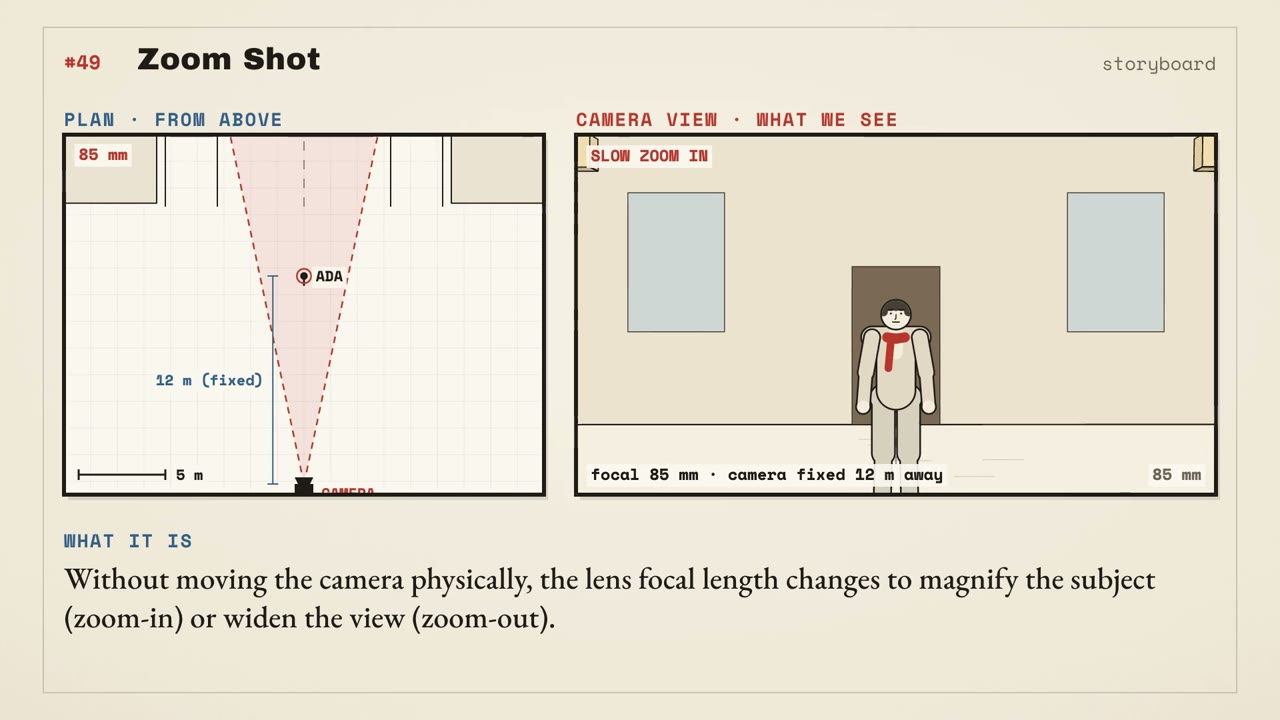
A slow zoom builds creeping dread, while a sudden "crash zoom" adds dramatic punch, retro flair, or comedic shock.
 0:2550 · Oner
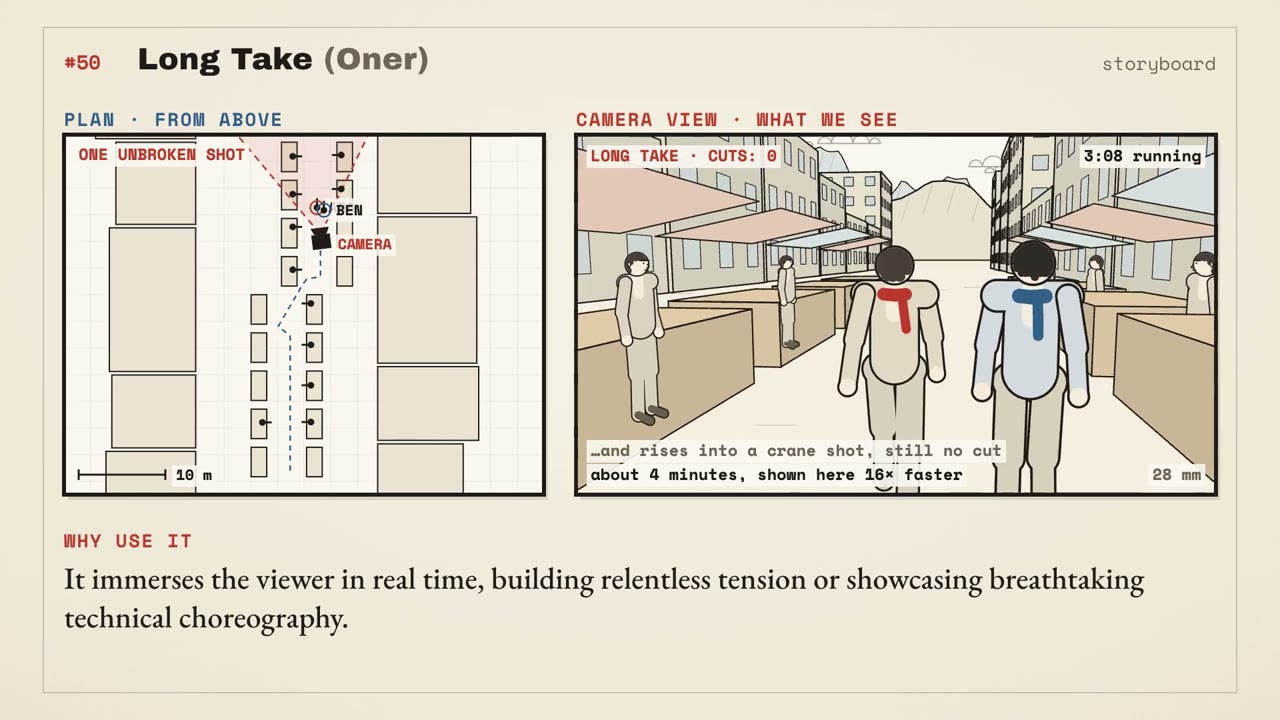
It immerses the viewer in real time, building relentless tension or showcasing breathtaking technical choreography.