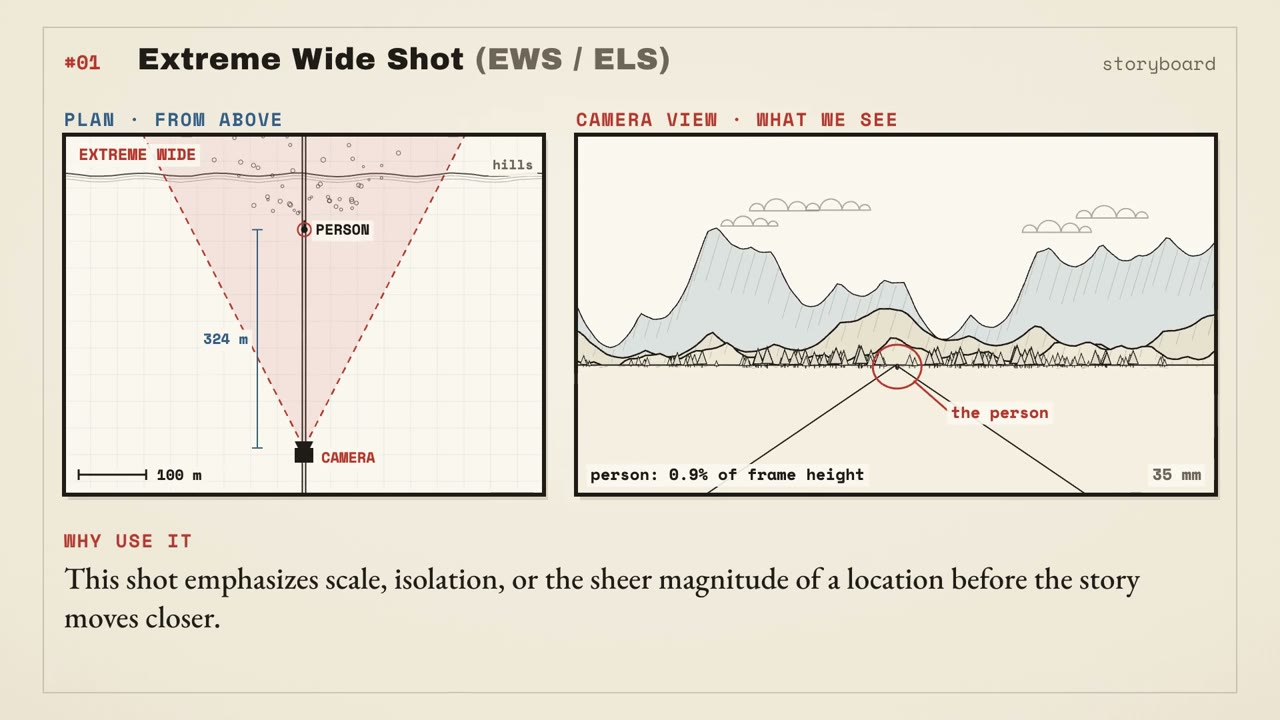
 0:2501 · EWS / ELS
Extreme Wide Shot
This shot emphasizes scale, isolation, or the sheer magnitude of a location before the story moves closer.
Chapterframe training / Camera shots
Each shot is a 25-second animated storyboard. The left panel shows where the camera stands, from above or from the side. The right panel shows what that camera sees, drawn in true perspective from the same scene.
Use them when you write a take’s visual direction: name the shot, and Chapterframe and your rendering model know what you mean.
1–10
0:2501 · EWS / ELSThis shot emphasizes scale, isolation, or the sheer magnitude of a location before the story moves closer.
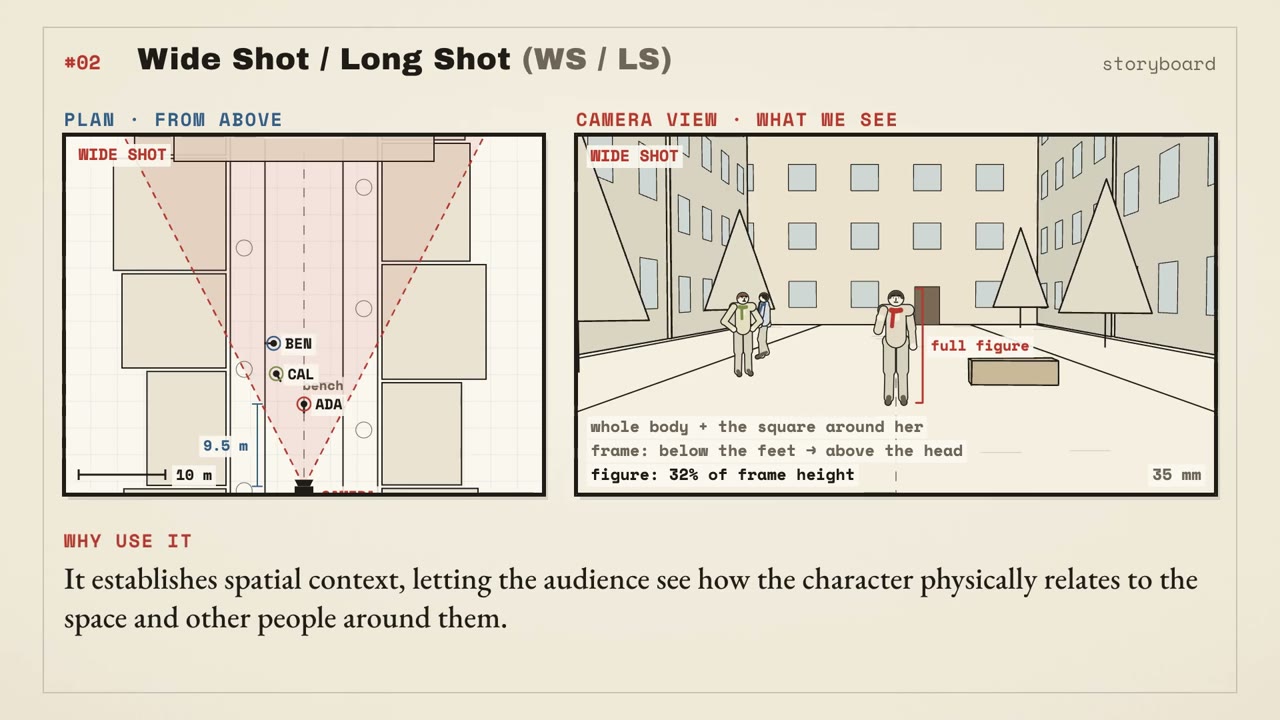 0:2502 · WS / LS
It establishes spatial context, letting the audience see how the character physically relates to the space and other people around them.
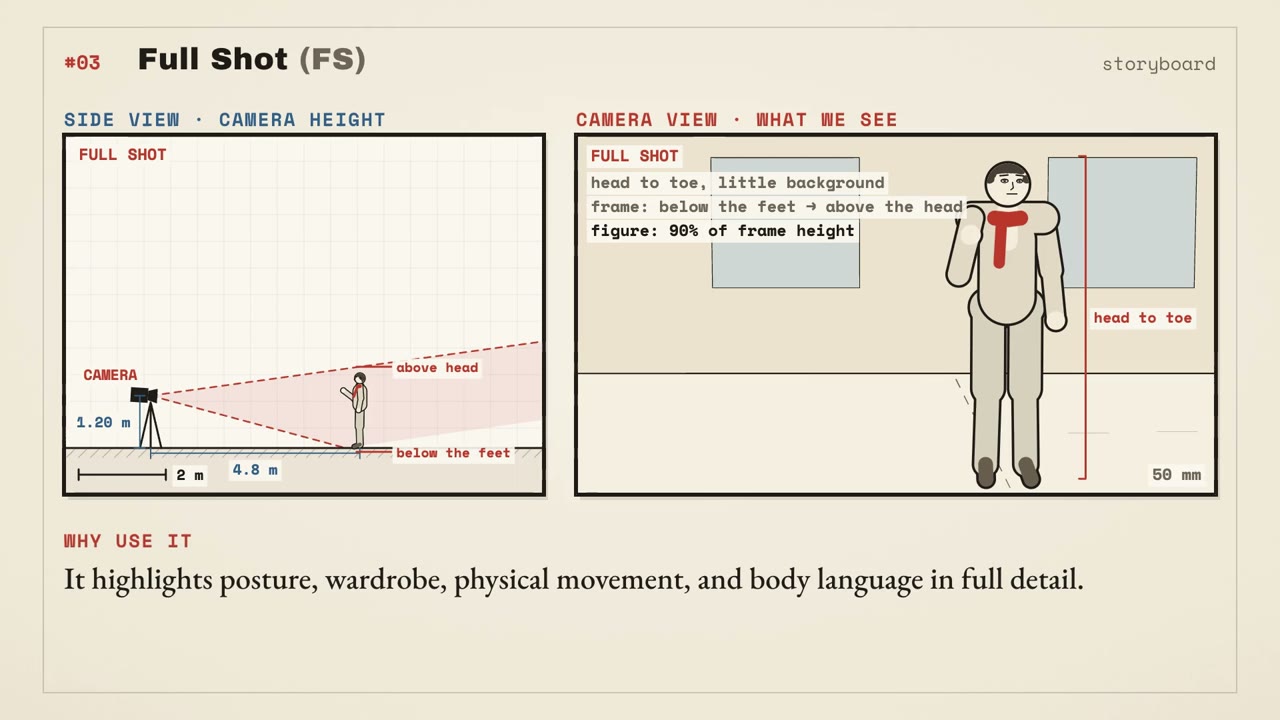 0:2503 · FS
It highlights posture, wardrobe, physical movement, and body language in full detail.
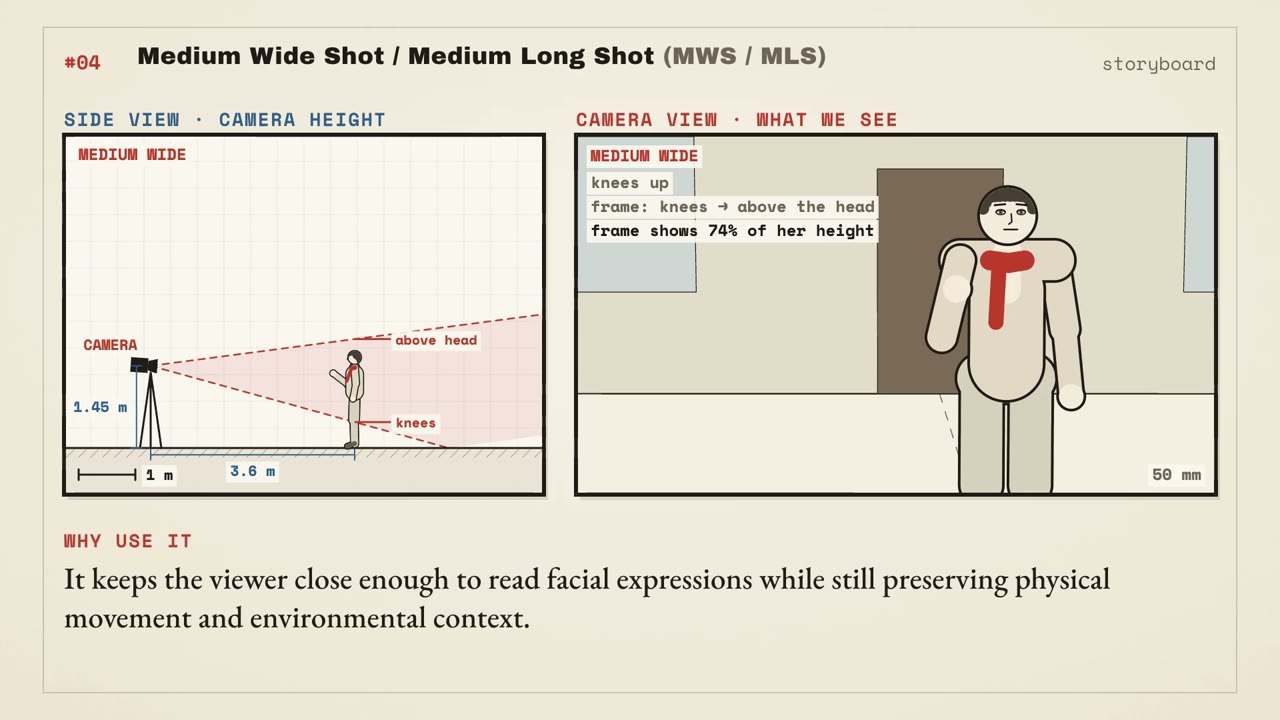 0:2504 · MWS / MLS
It keeps the viewer close enough to read facial expressions while still preserving physical movement and environmental context.
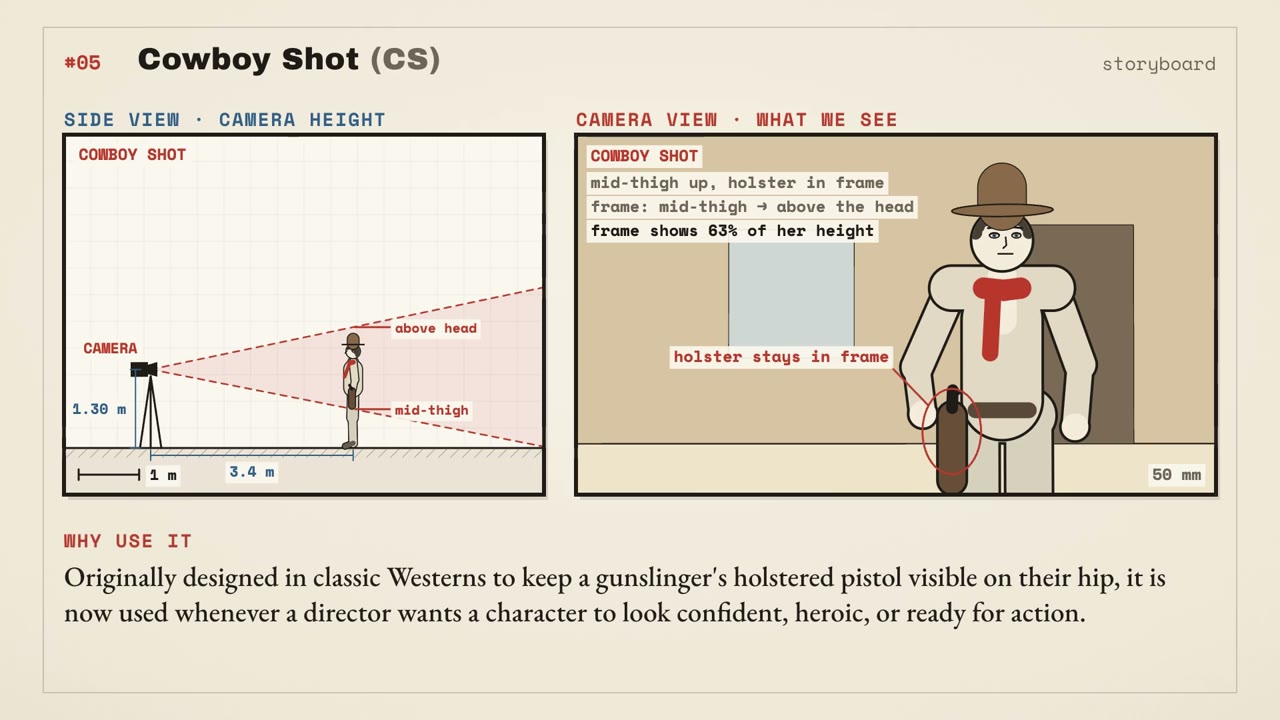 0:2505 · CS
Originally designed in classic Westerns to keep a gunslinger's holstered pistol visible on their hip, it is now used whenever a director wants a character to look confident, heroic, or ready for action.
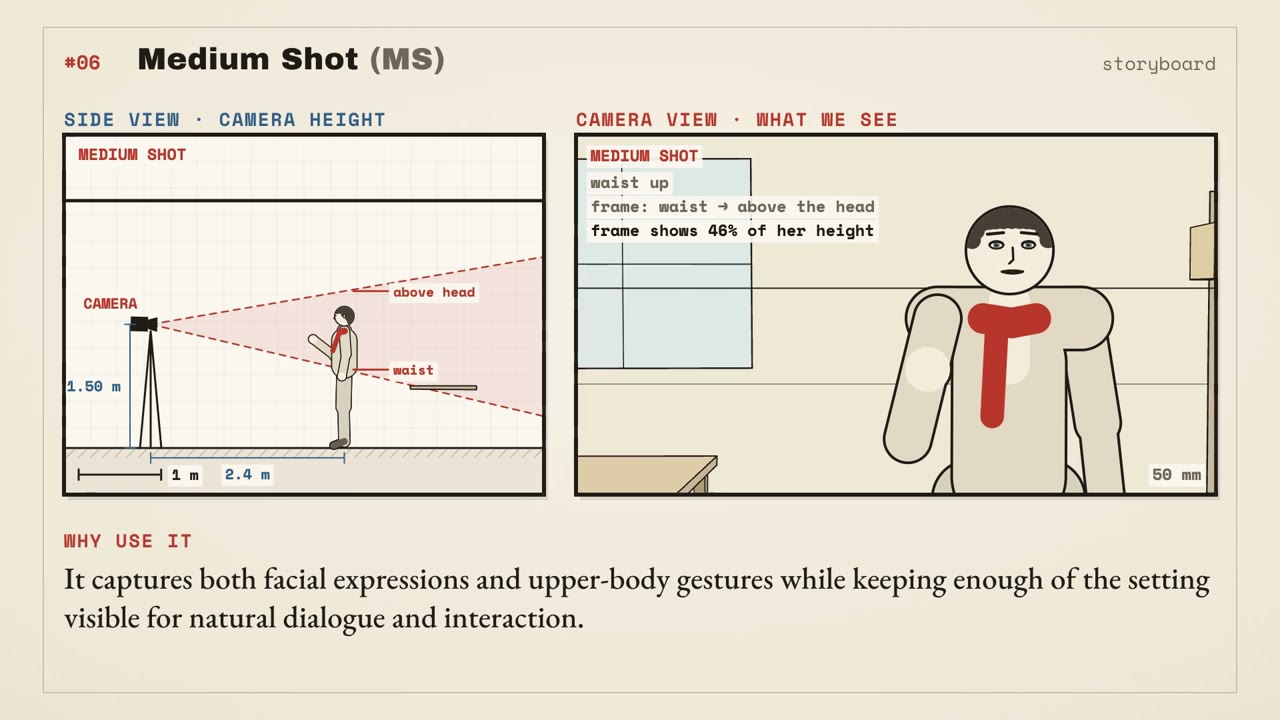 0:2506 · MS
It captures both facial expressions and upper-body gestures while keeping enough of the setting visible for natural dialogue and interaction.
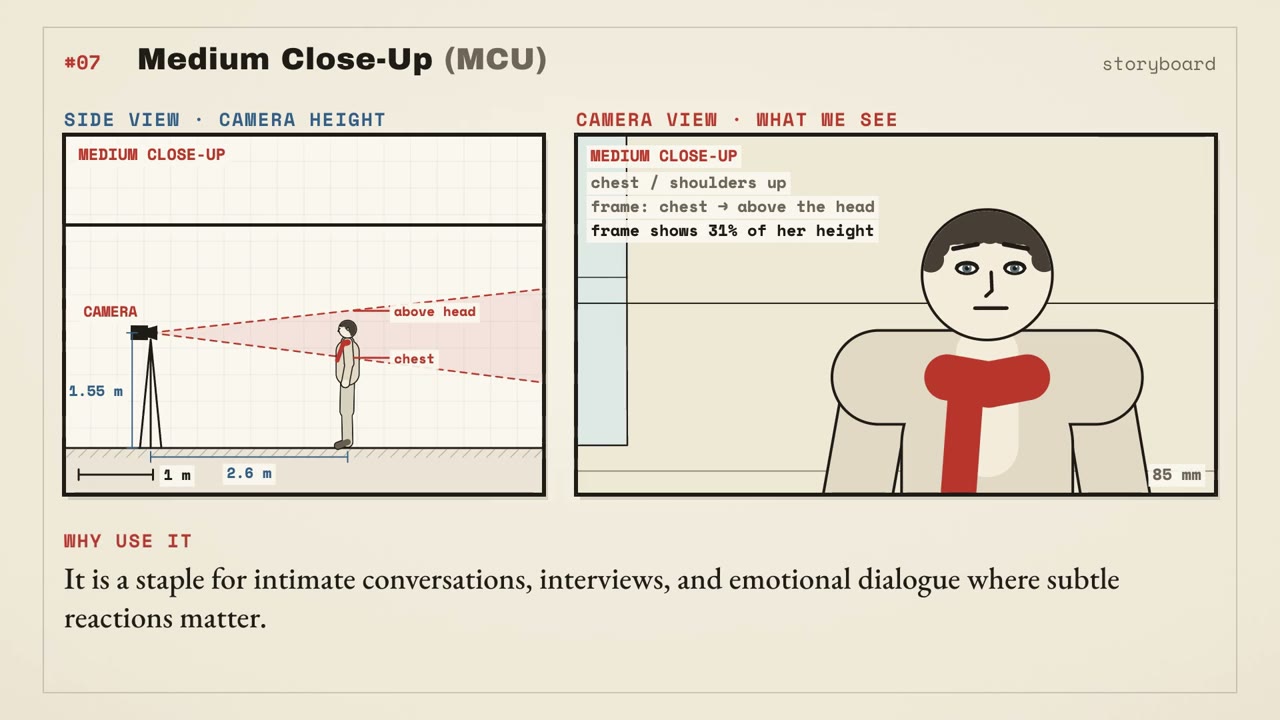 0:2507 · MCU
It is a staple for intimate conversations, interviews, and emotional dialogue where subtle reactions matter.
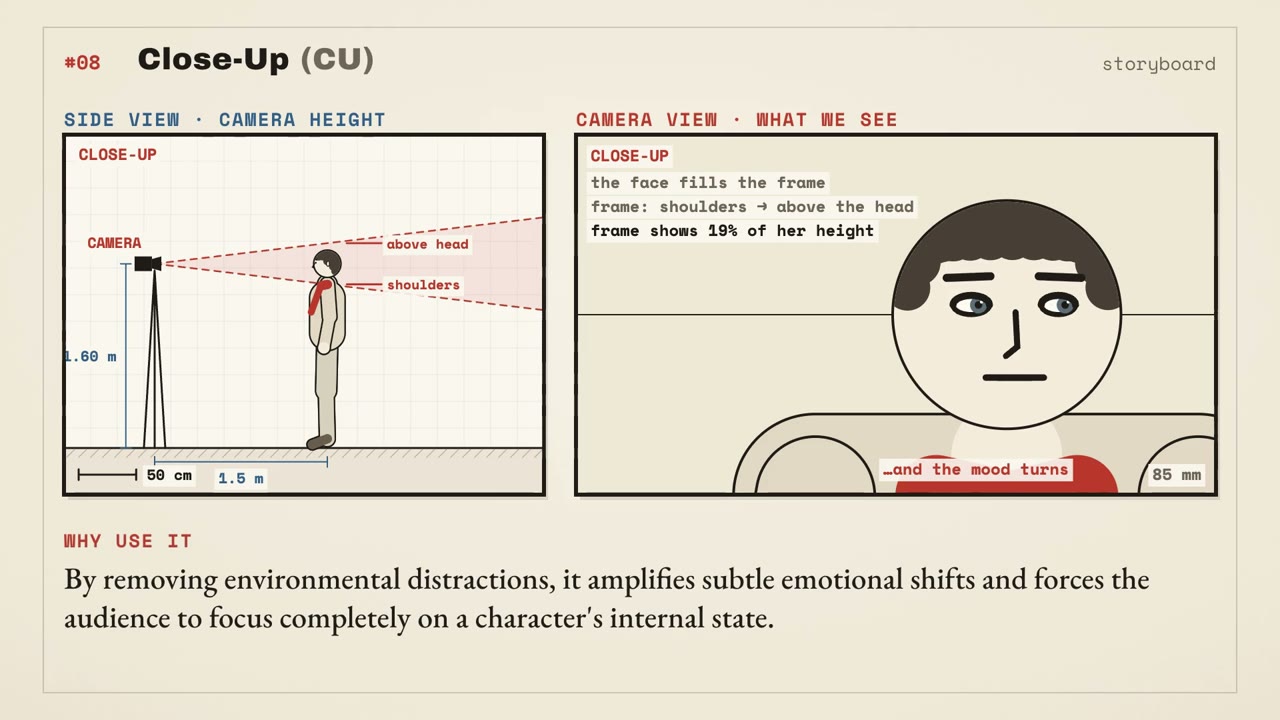 0:2508 · CU
By removing environmental distractions, it amplifies subtle emotional shifts and forces the audience to focus completely on a character's internal state.
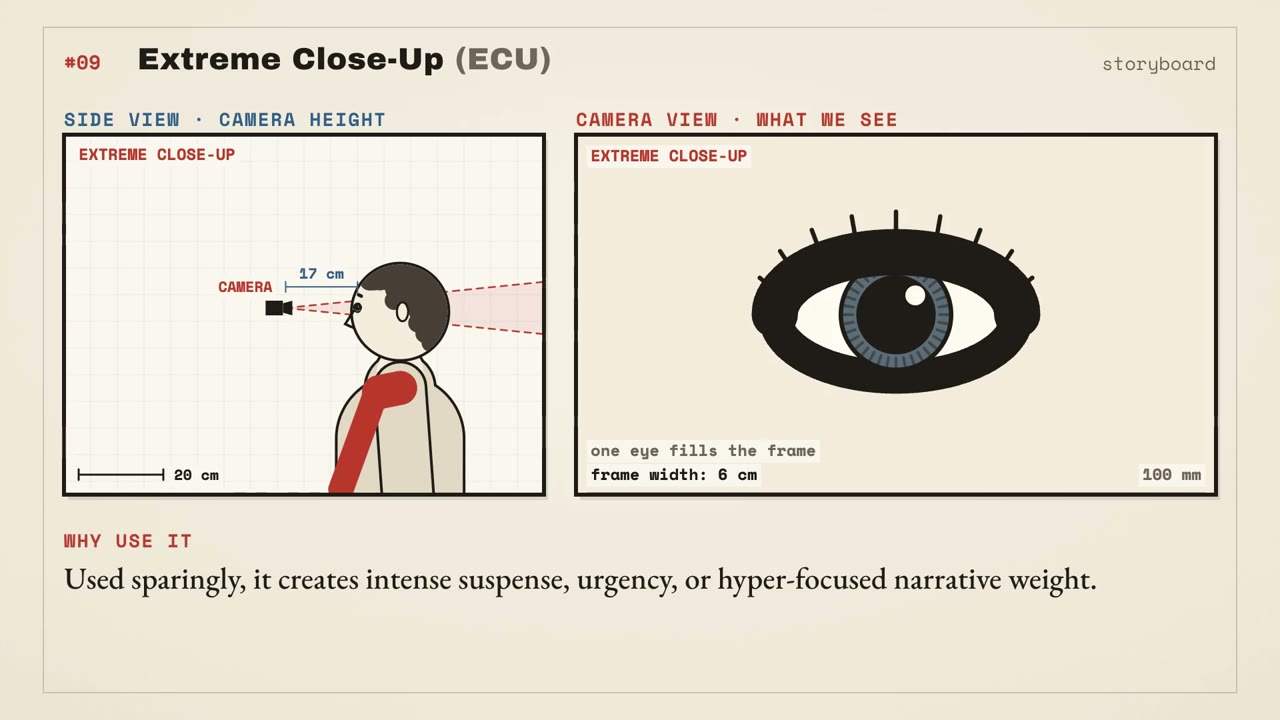 0:2509 · ECU
Used sparingly, it creates intense suspense, urgency, or hyper-focused narrative weight.
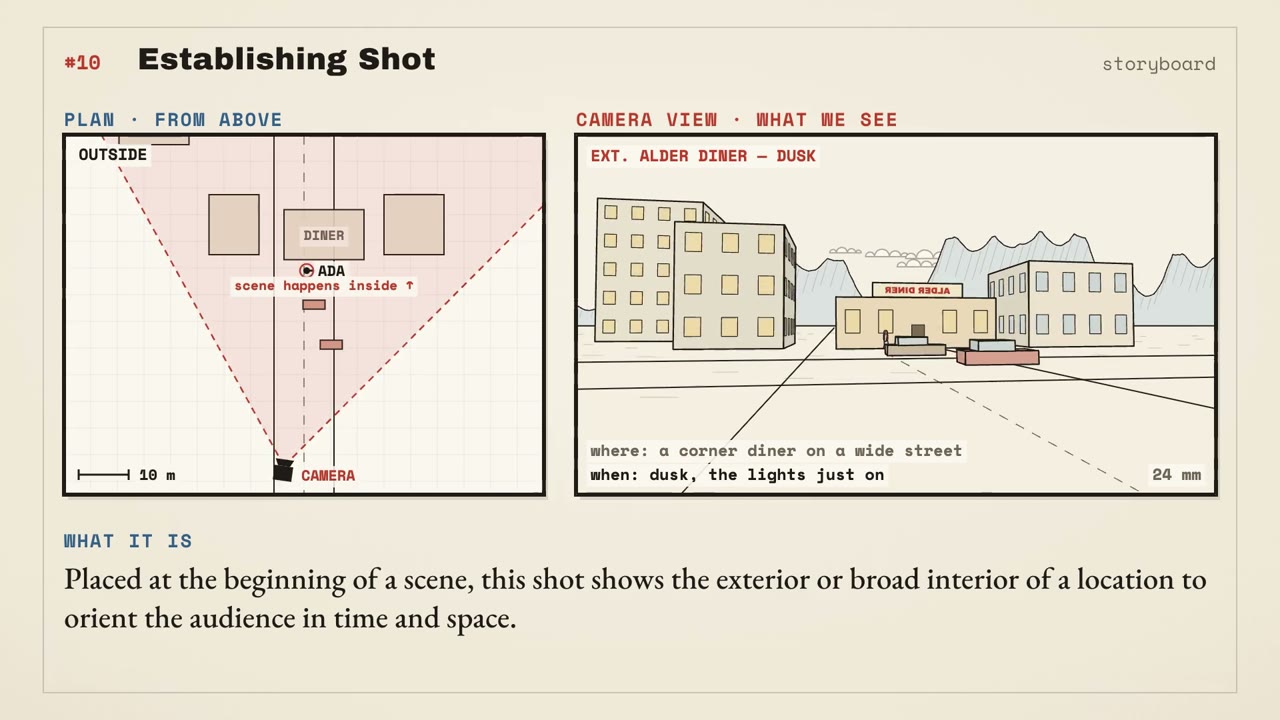 0:2510
While often a wide or aerial shot, it can be any framing that quickly communicates where the upcoming action takes place.
11–20
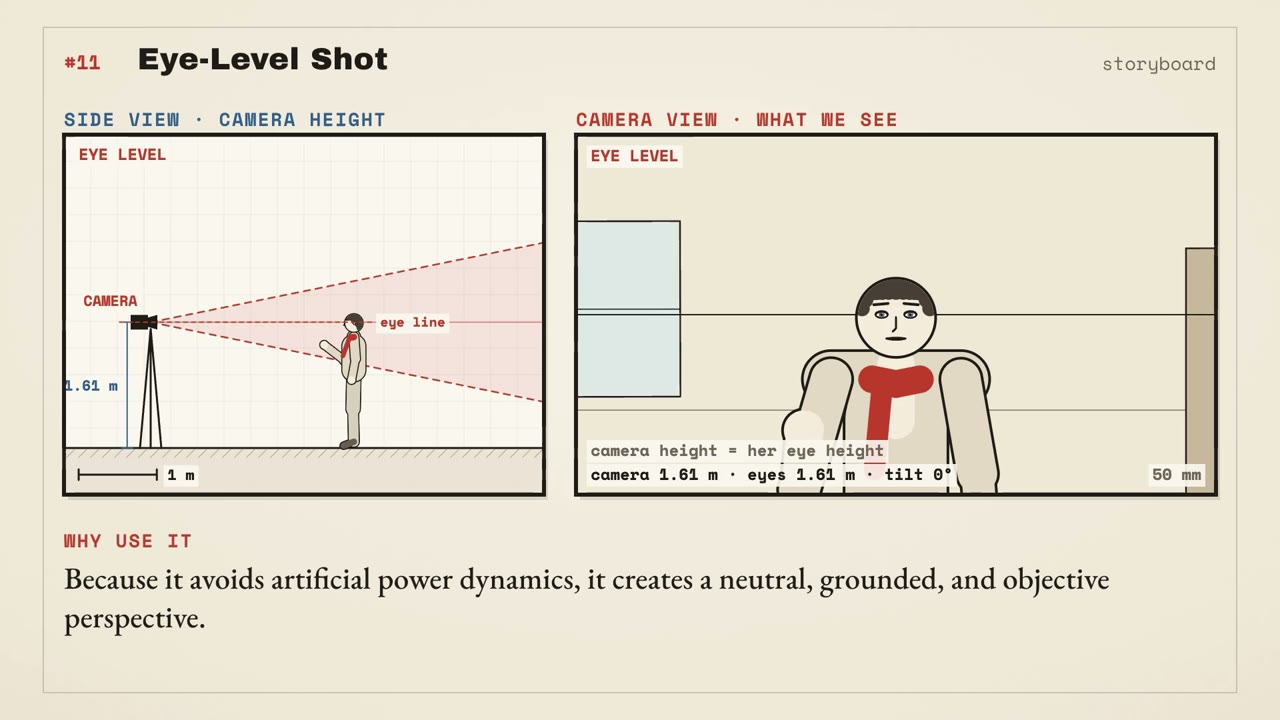 0:2511
Because it avoids artificial power dynamics, it creates a neutral, grounded, and objective perspective.
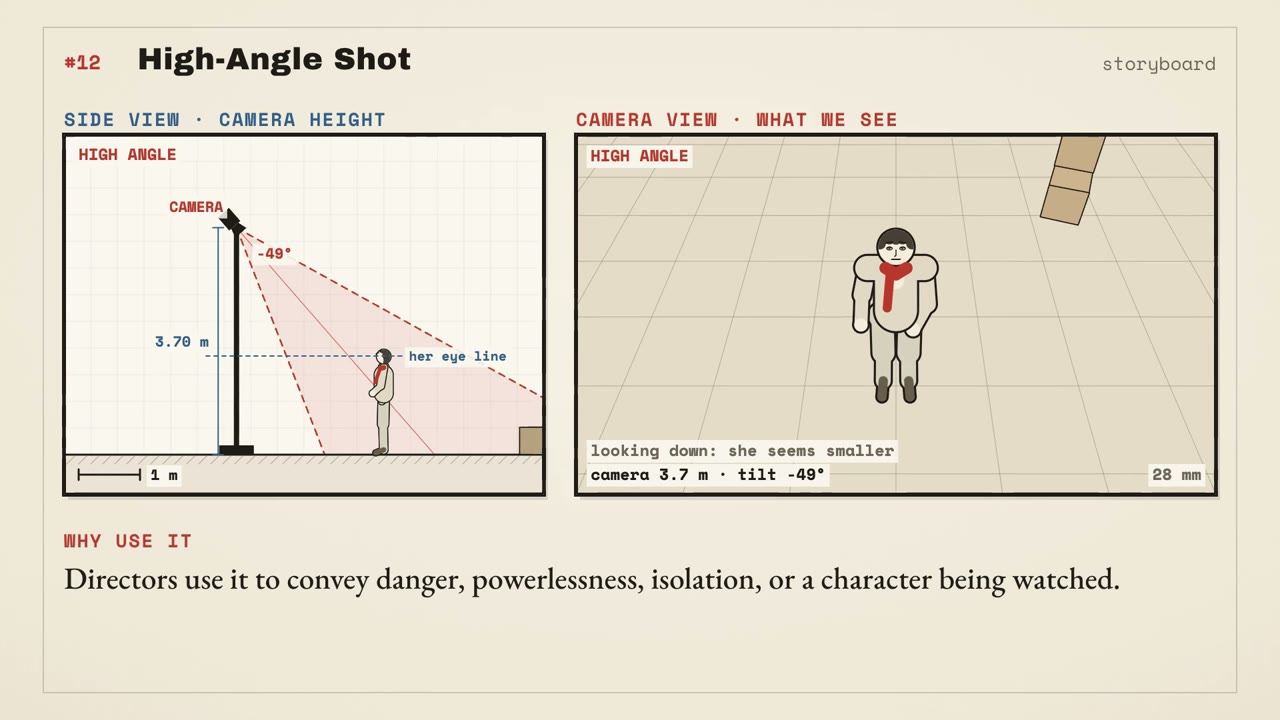 0:2512
Directors use it to convey danger, powerlessness, isolation, or a character being watched.
 0:2513
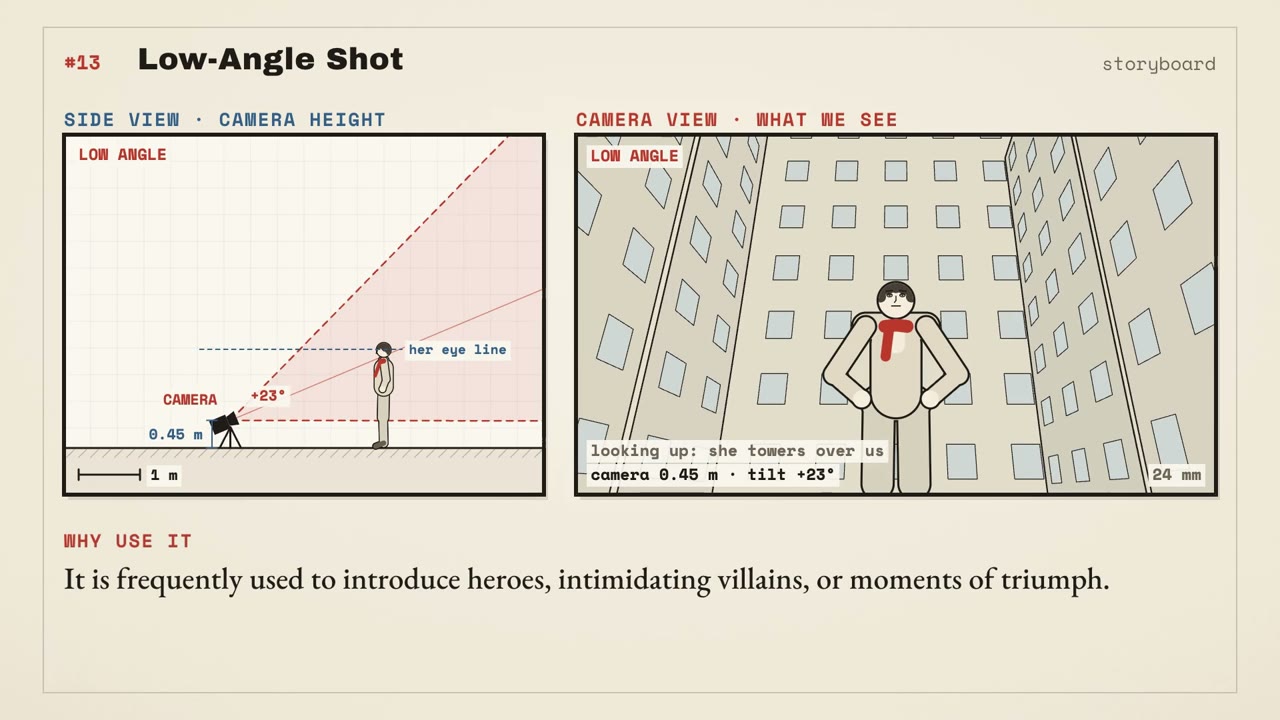
It is frequently used to introduce heroes, intimidating villains, or moments of triumph.
 0:2514
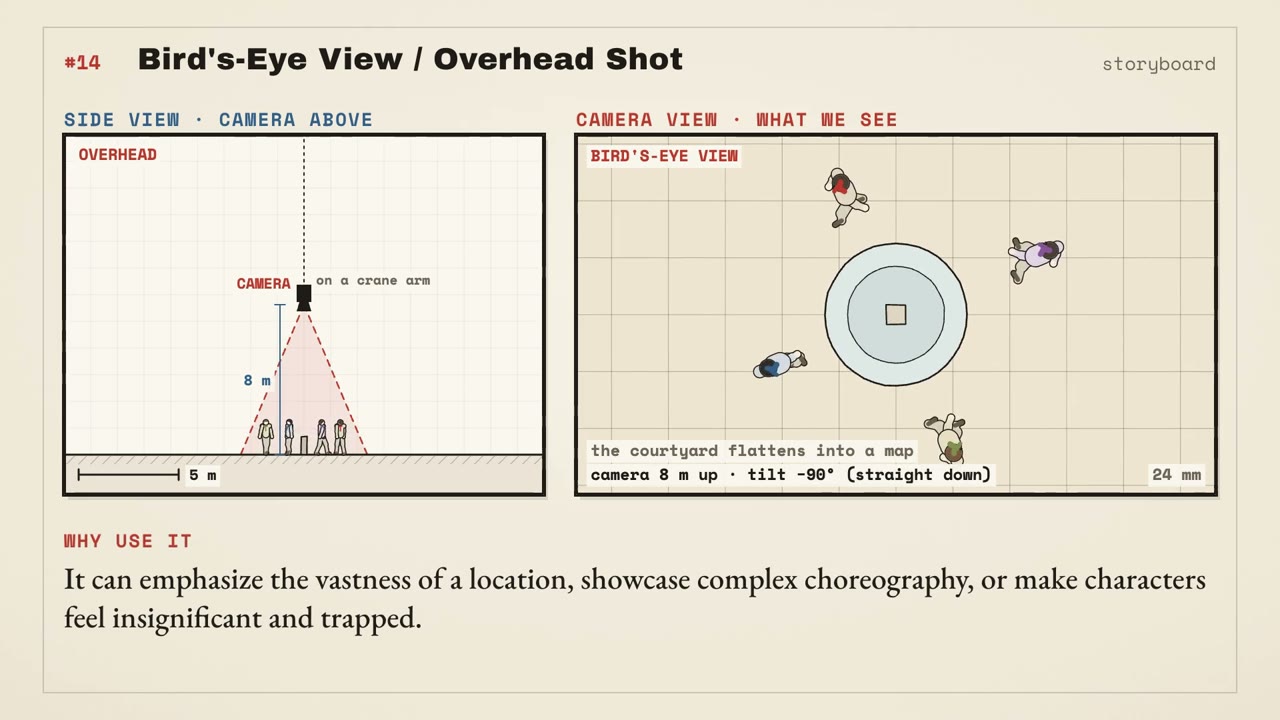
It can emphasize the vastness of a location, showcase complex choreography, or make characters feel insignificant and trapped.
 0:2515
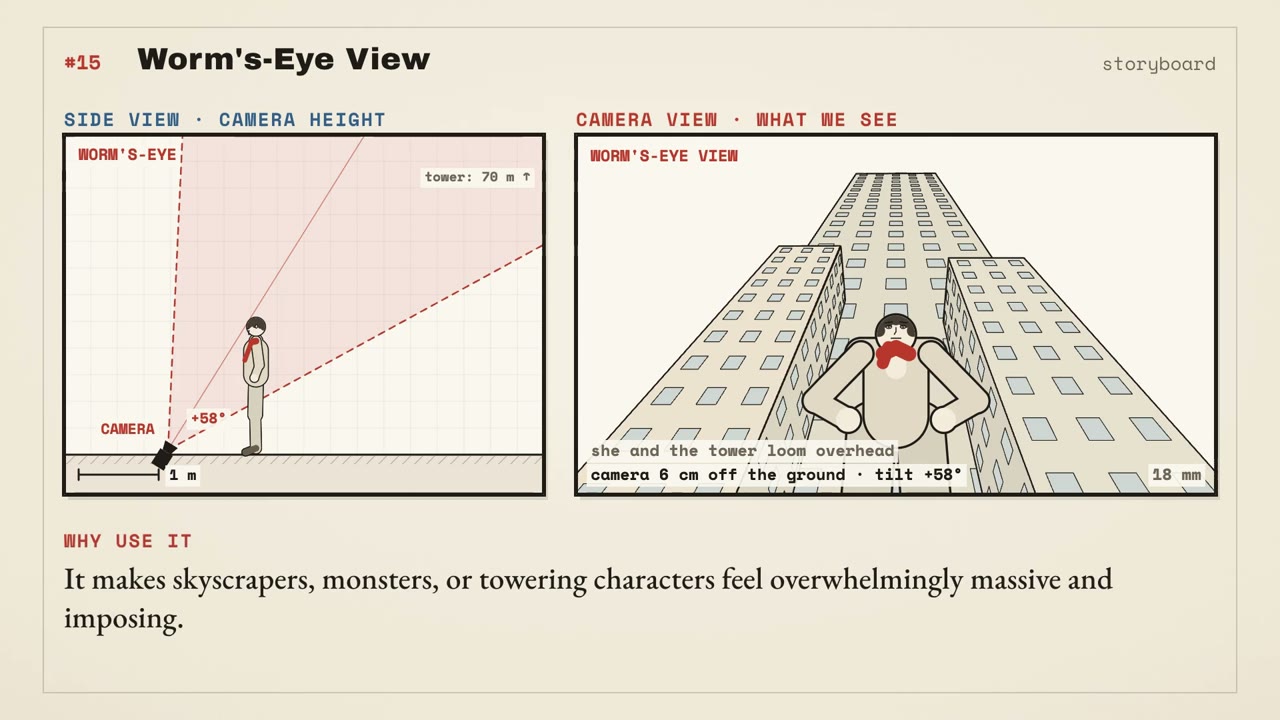
It makes skyscrapers, monsters, or towering characters feel overwhelmingly massive and imposing.
 0:2516
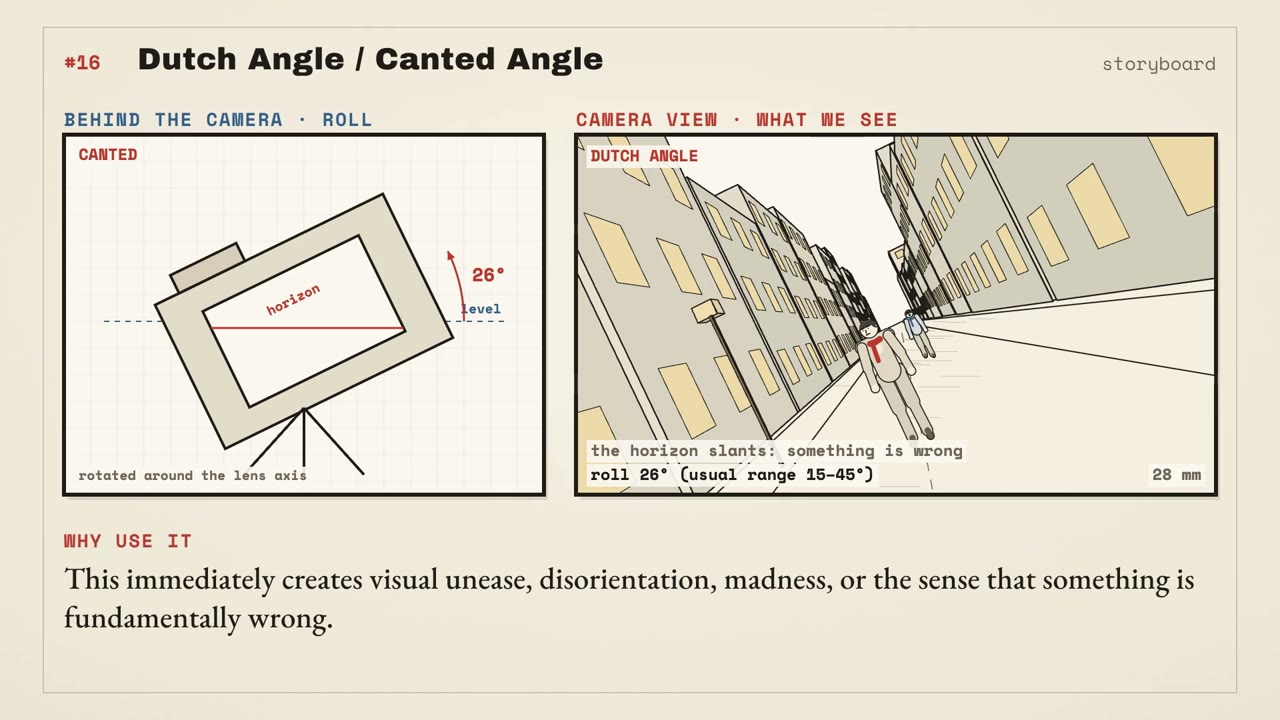
This immediately creates visual unease, disorientation, madness, or the sense that something is fundamentally wrong.
 0:2517
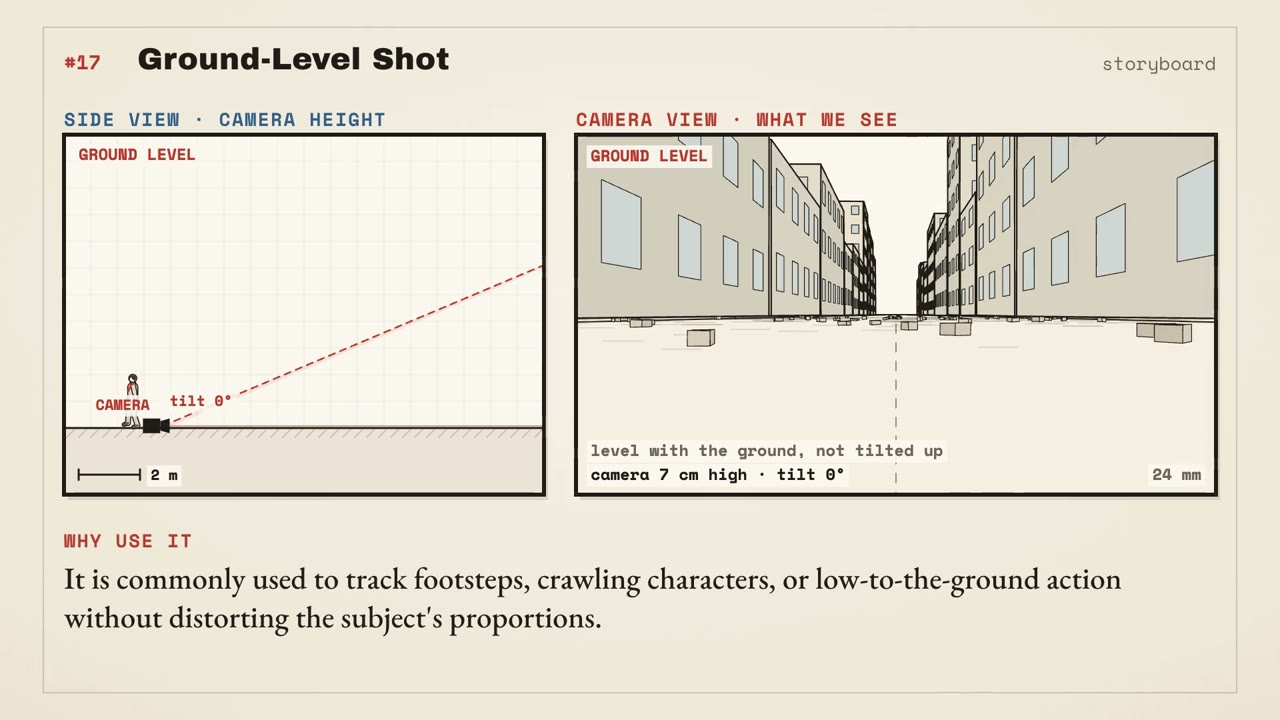
It is commonly used to track footsteps, crawling characters, or low-to-the-ground action without distorting the subject's proportions.
 0:2518
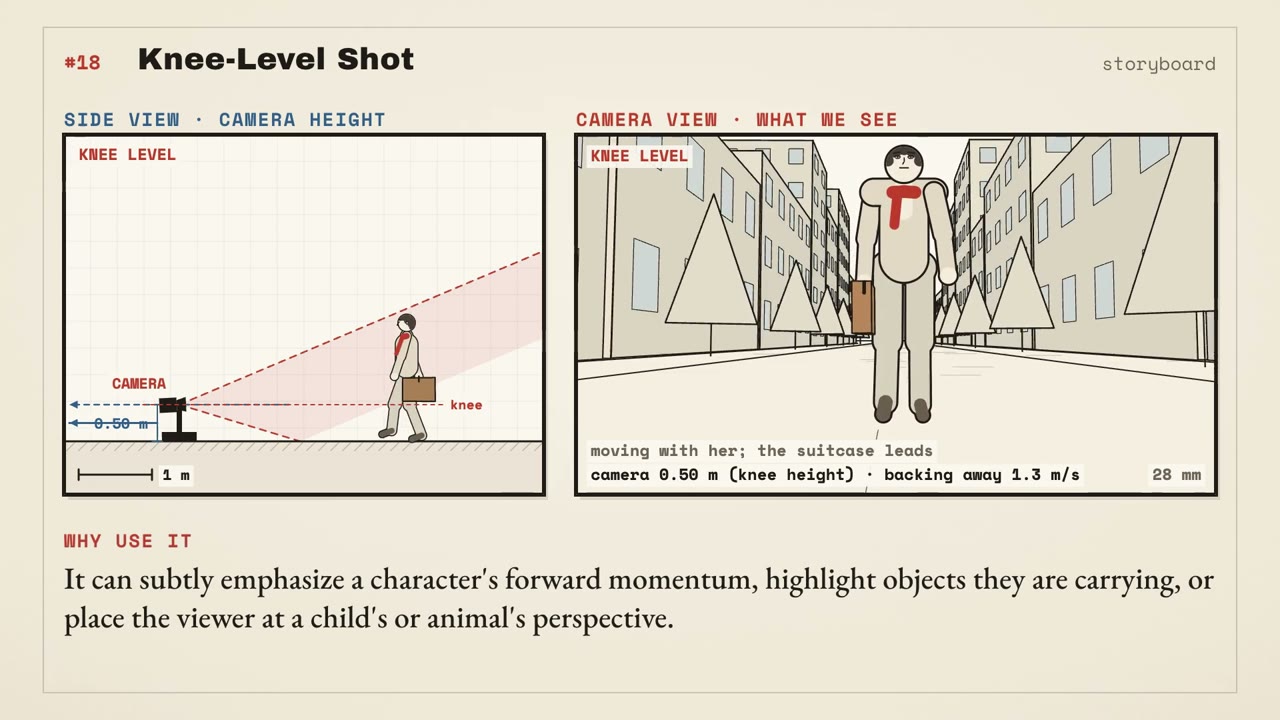
It can subtly emphasize a character's forward momentum, highlight objects they are carrying, or place the viewer at a child's or animal's perspective.
 0:2519
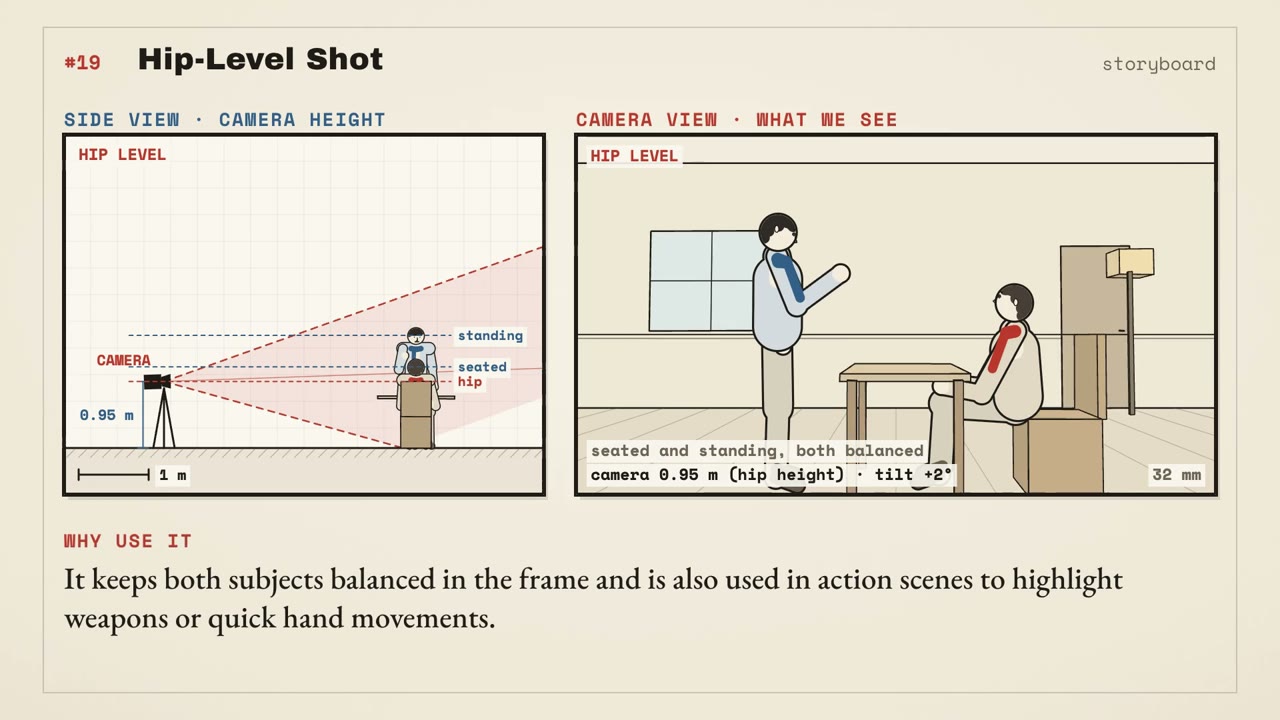
It keeps both subjects balanced in the frame and is also used in action scenes to highlight weapons or quick hand movements.
 0:2520
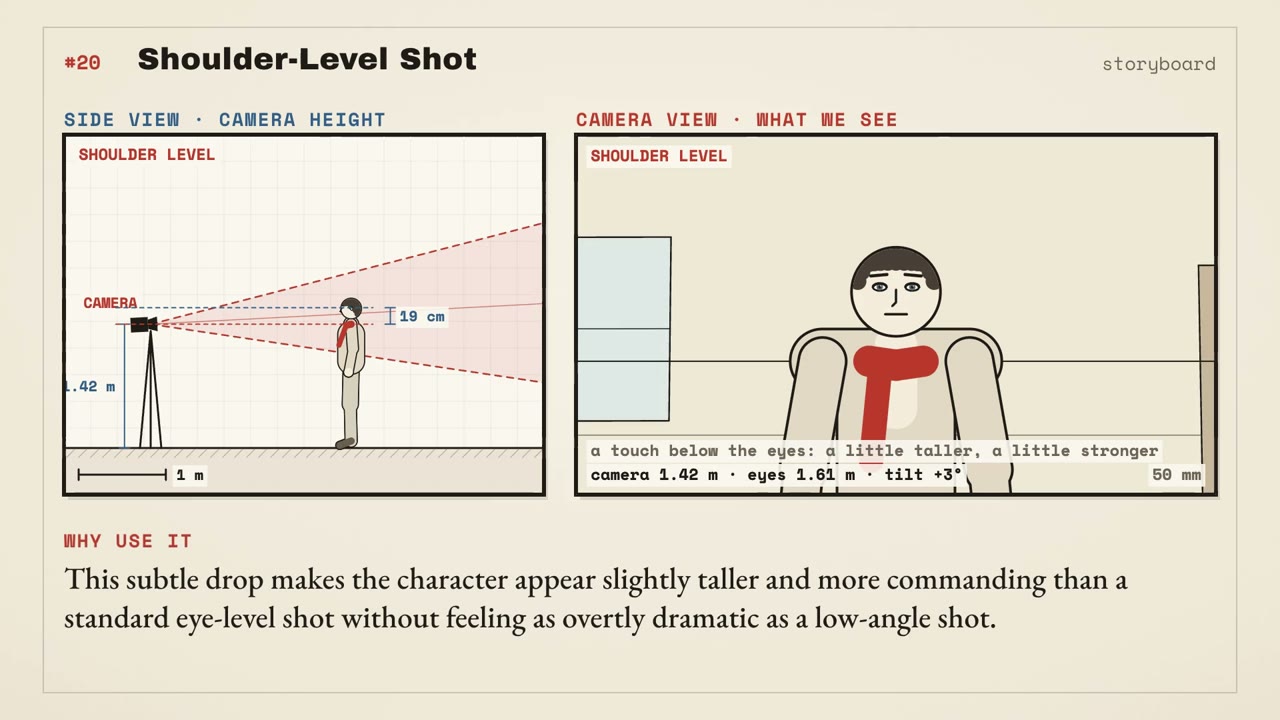
This subtle drop makes the character appear slightly taller and more commanding than a standard eye-level shot without feeling as overtly dramatic as a low-angle shot.
21–30
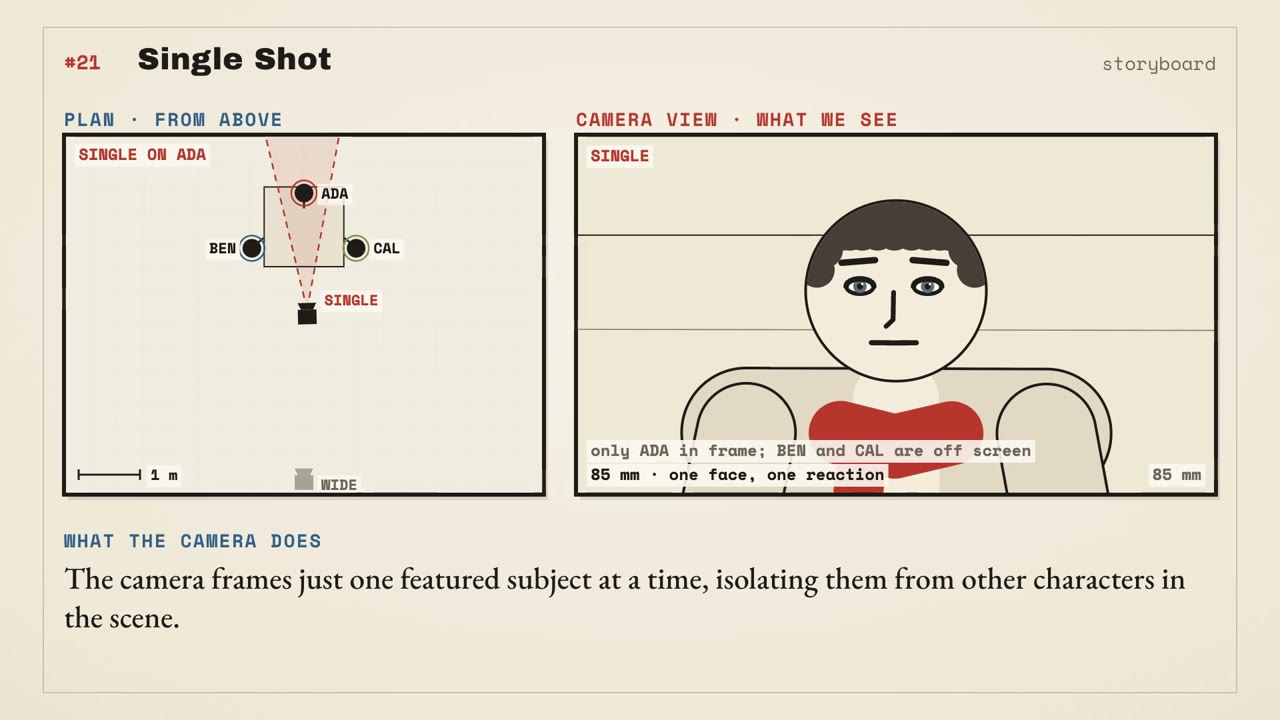 0:2521
This focuses the audience's full attention on that character's dialogue, decisions, or emotional reaction.
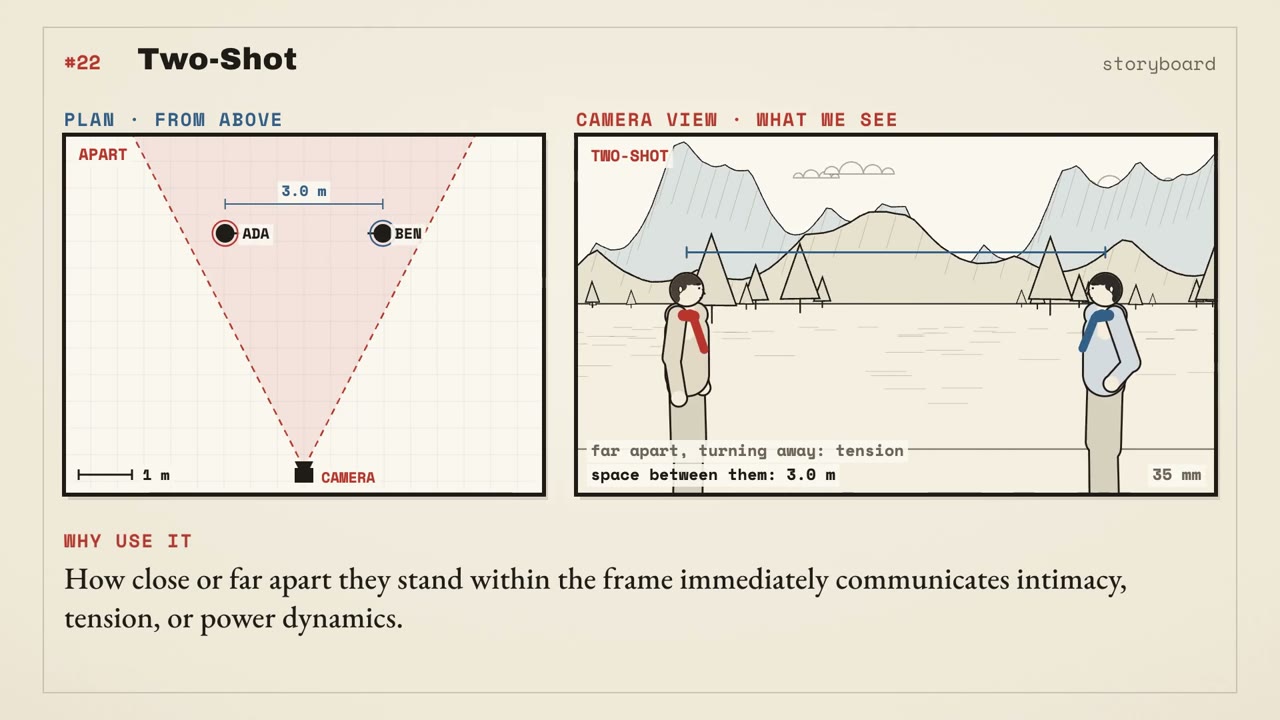 0:2522
How close or far apart they stand within the frame immediately communicates intimacy, tension, or power dynamics.
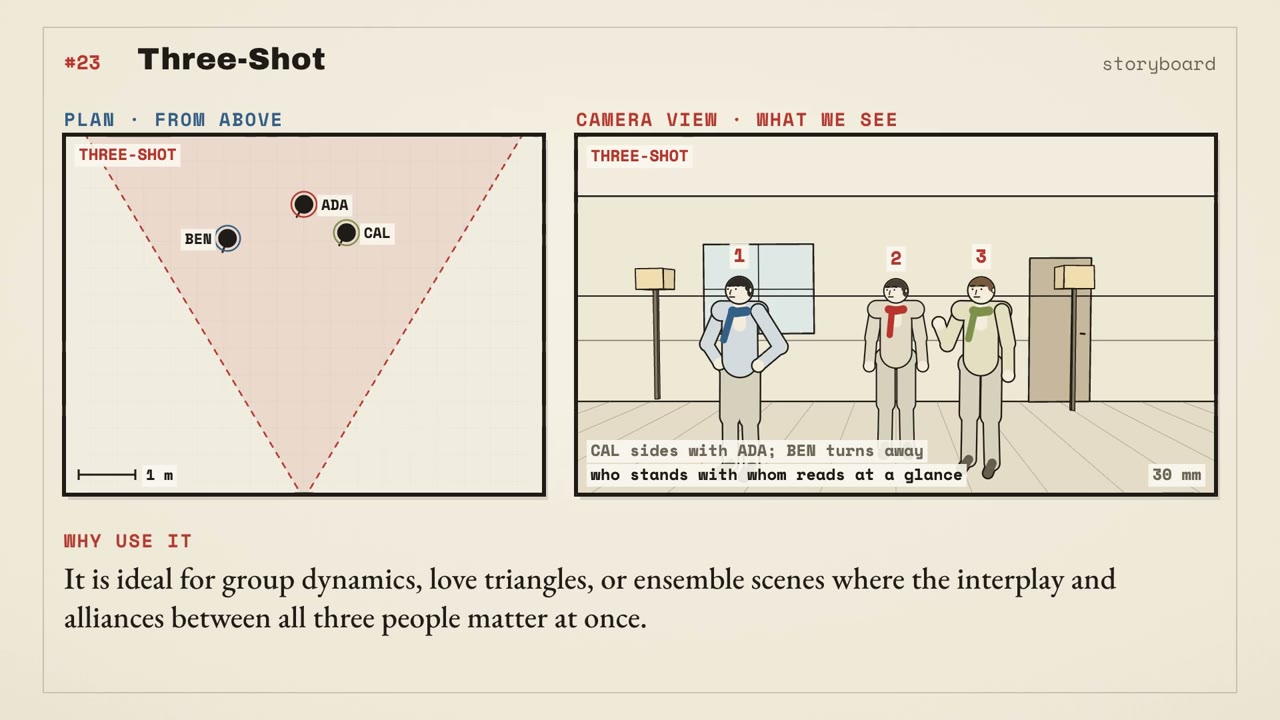 0:2523
It is ideal for group dynamics, love triangles, or ensemble scenes where the interplay and alliances between all three people matter at once.
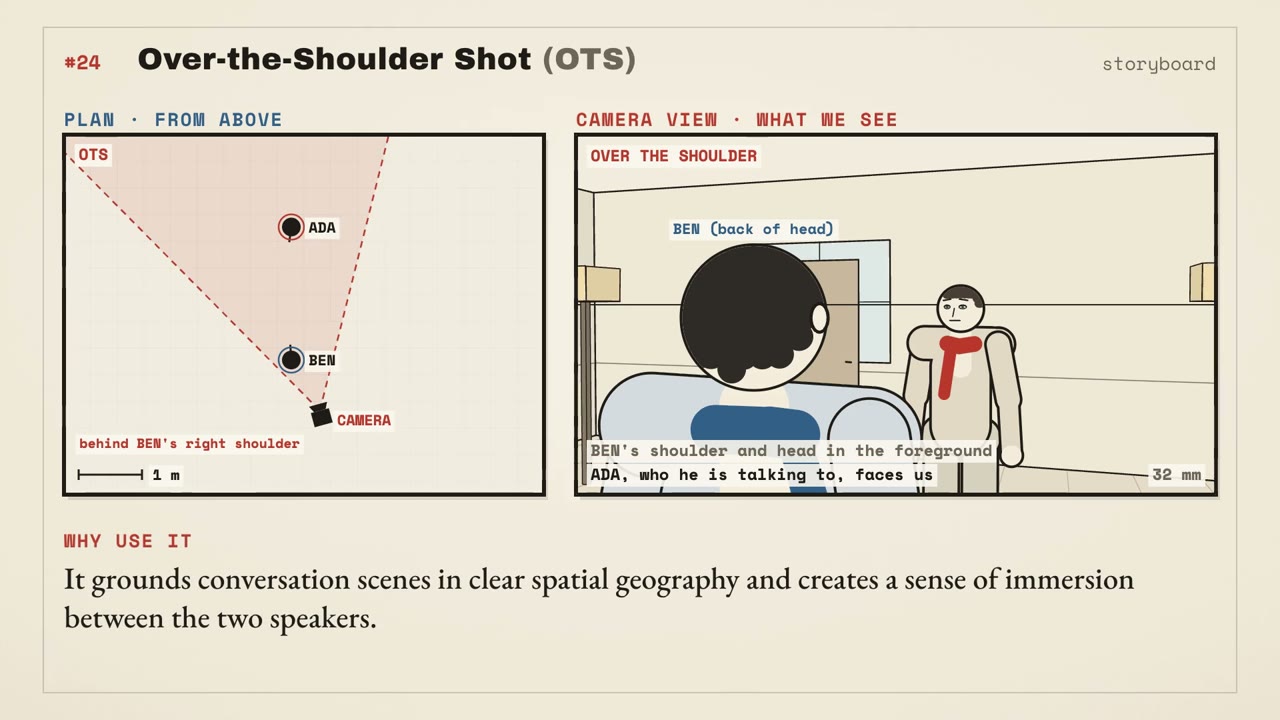 0:2524 · OTS
It grounds conversation scenes in clear spatial geography and creates a sense of immersion between the two speakers.
 0:2525
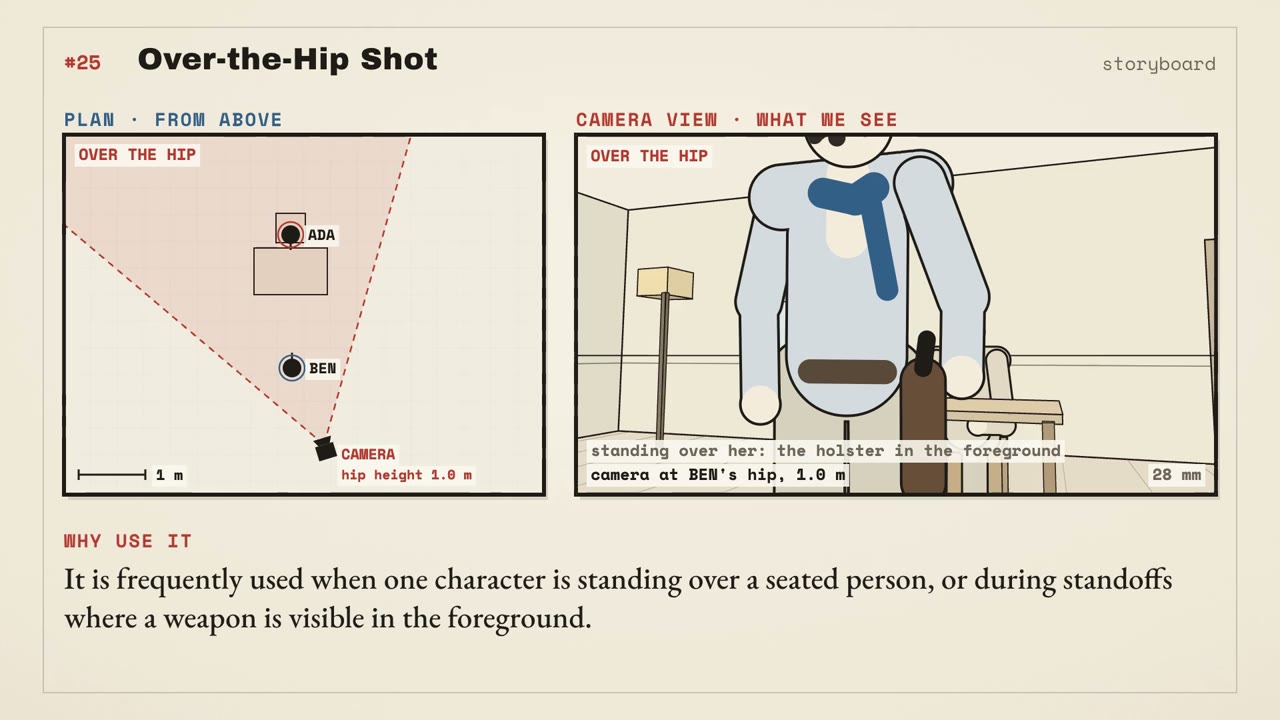
It is frequently used when one character is standing over a seated person, or during standoffs where a weapon is visible in the foreground.
 0:2526 · POV
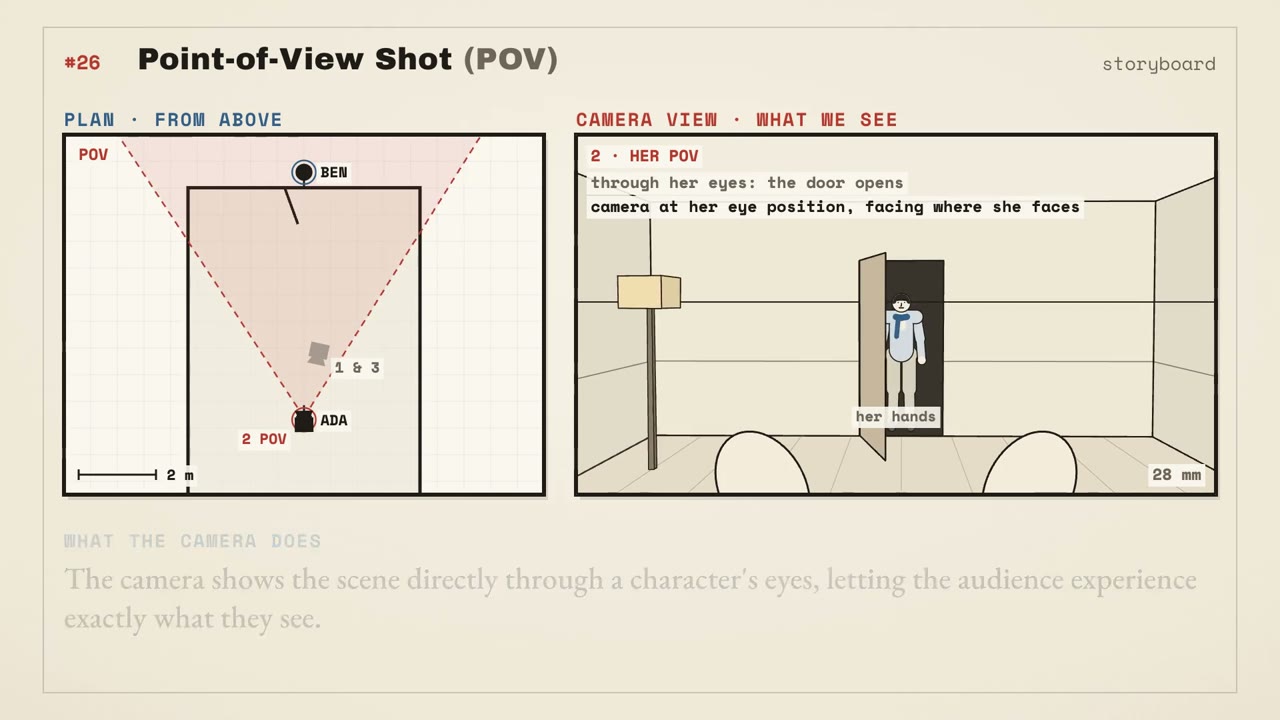
It is often sandwiched between shots of the character looking and reacting, building strong empathy or terror.
 0:2527
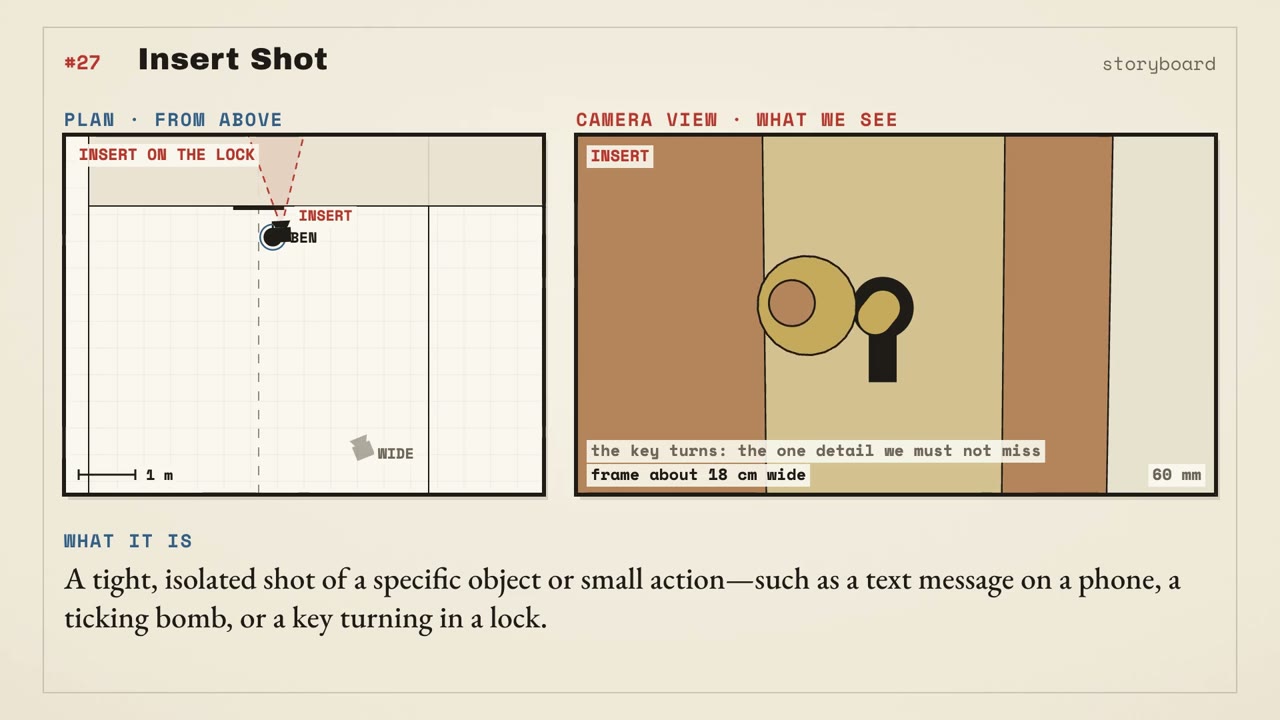
It pauses the broader scene for a beat to deliver crucial plot information the audience cannot miss.
 0:2528
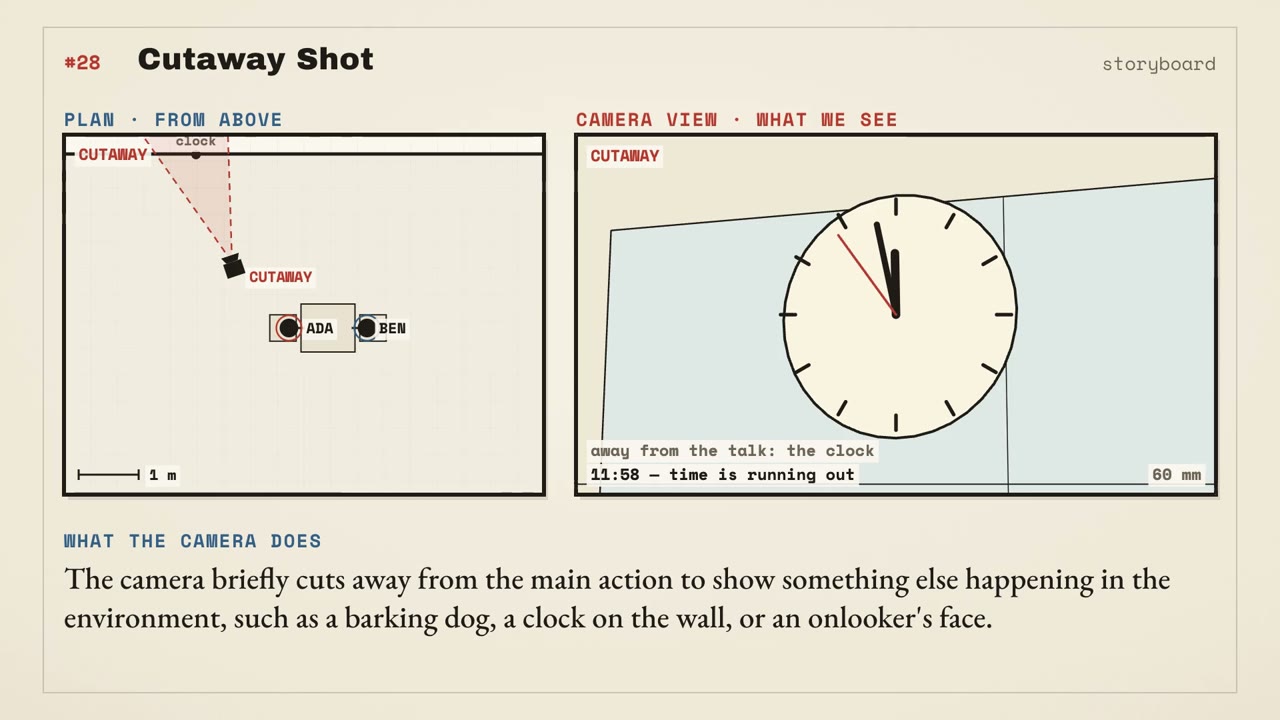
It is used to build tension, provide comedic timing, or bridge continuity gaps in editing.
 0:2529
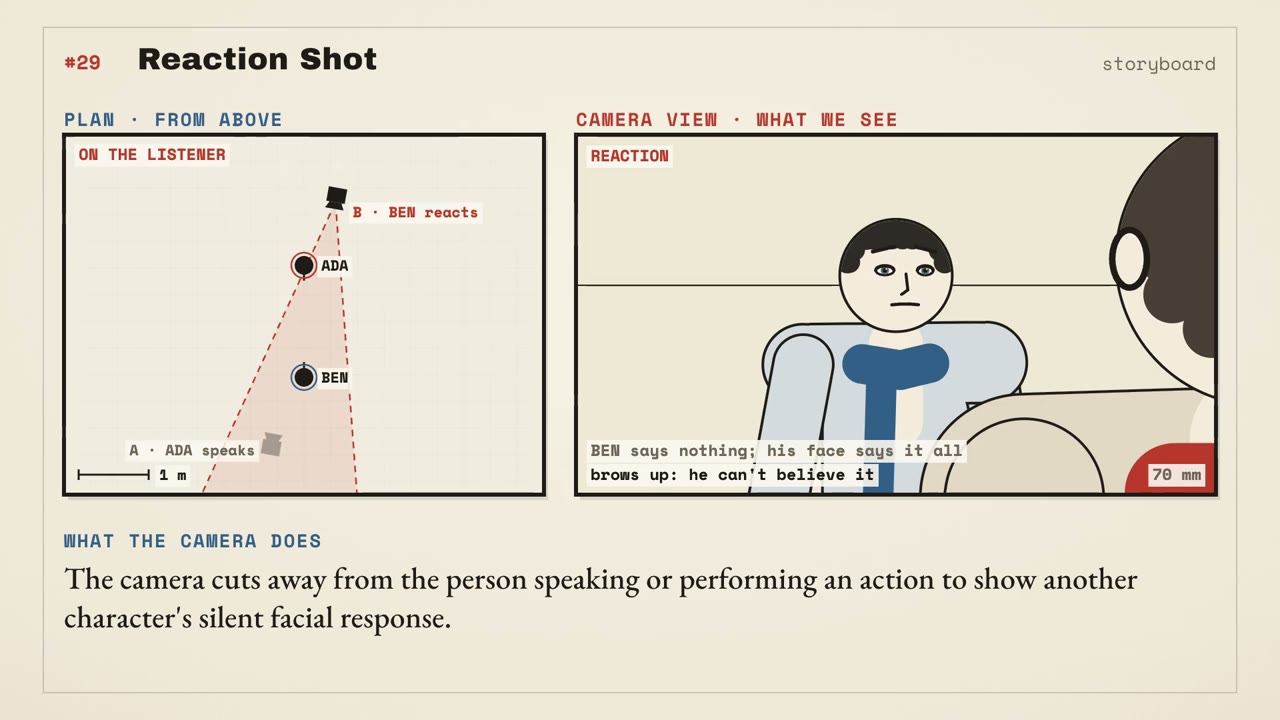
Often more powerful than the dialogue itself, it tells the audience how to feel about what just happened.
 0:2530
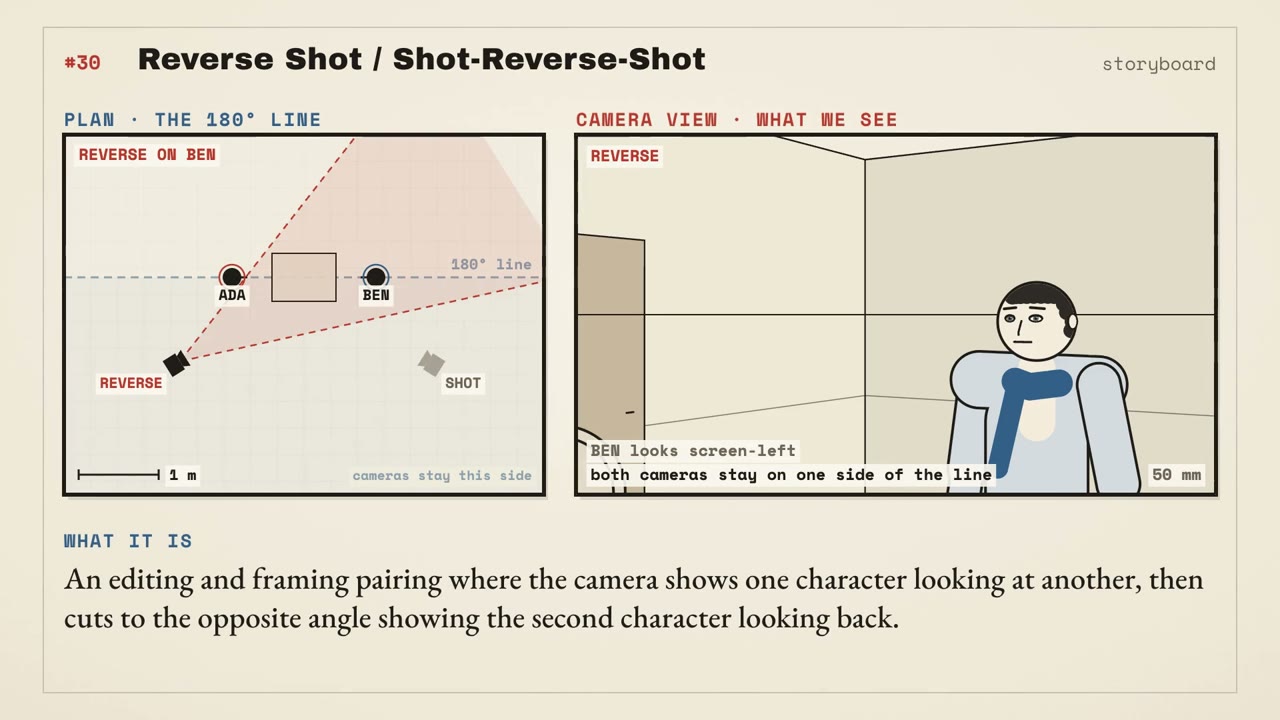
It is the backbone of cinematic dialogue, keeping conversations fluid and easy to follow.
31–42
 0:2531
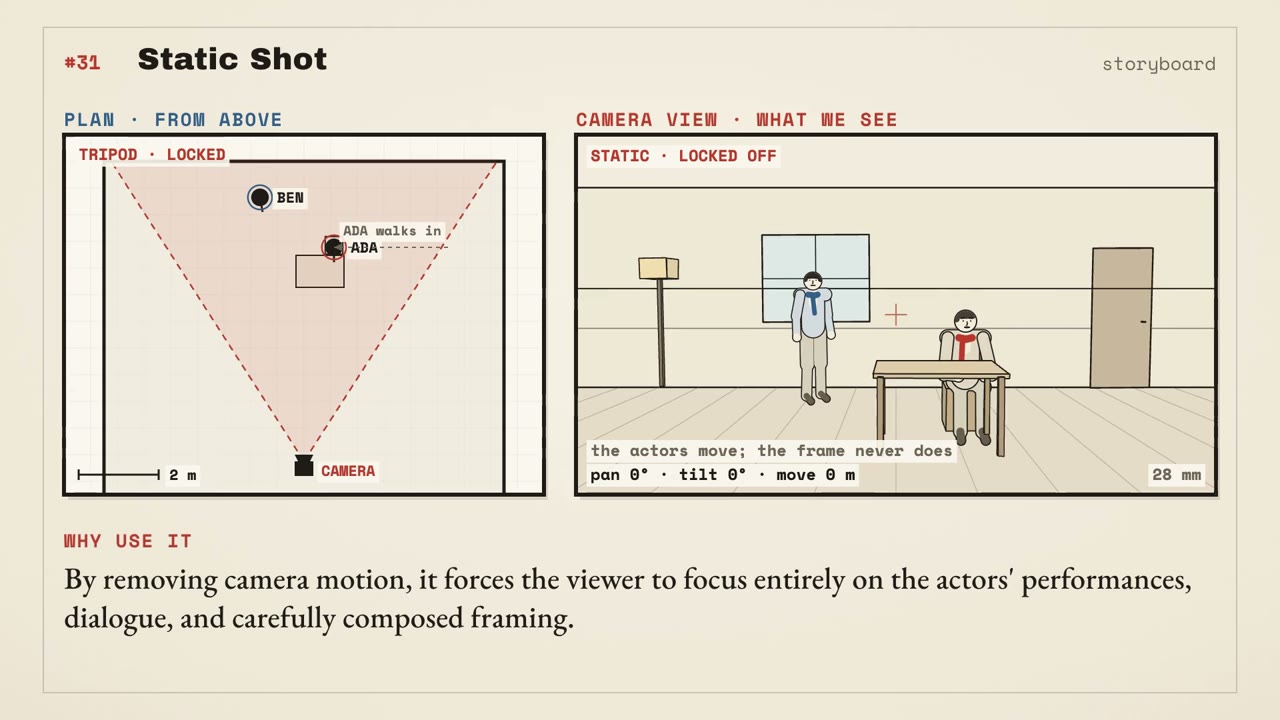
By removing camera motion, it forces the viewer to focus entirely on the actors' performances, dialogue, and carefully composed framing.
 0:2532
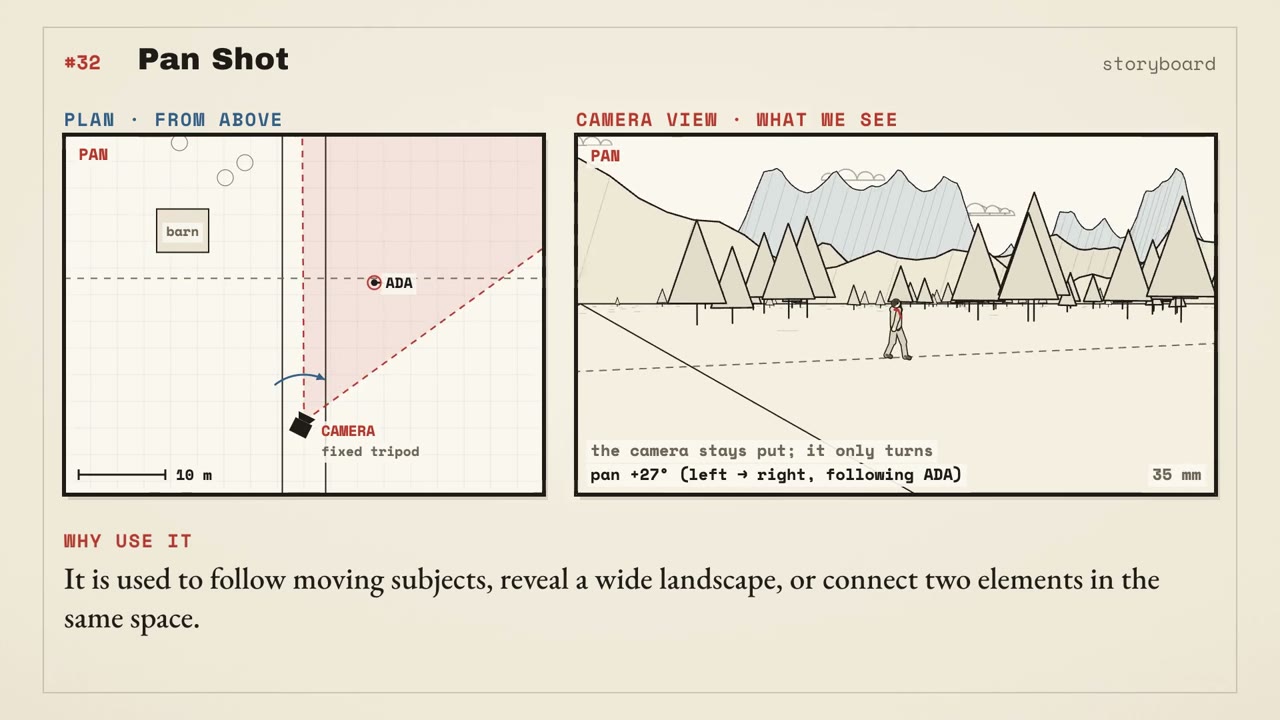
It is used to follow moving subjects, reveal a wide landscape, or connect two elements in the same space.
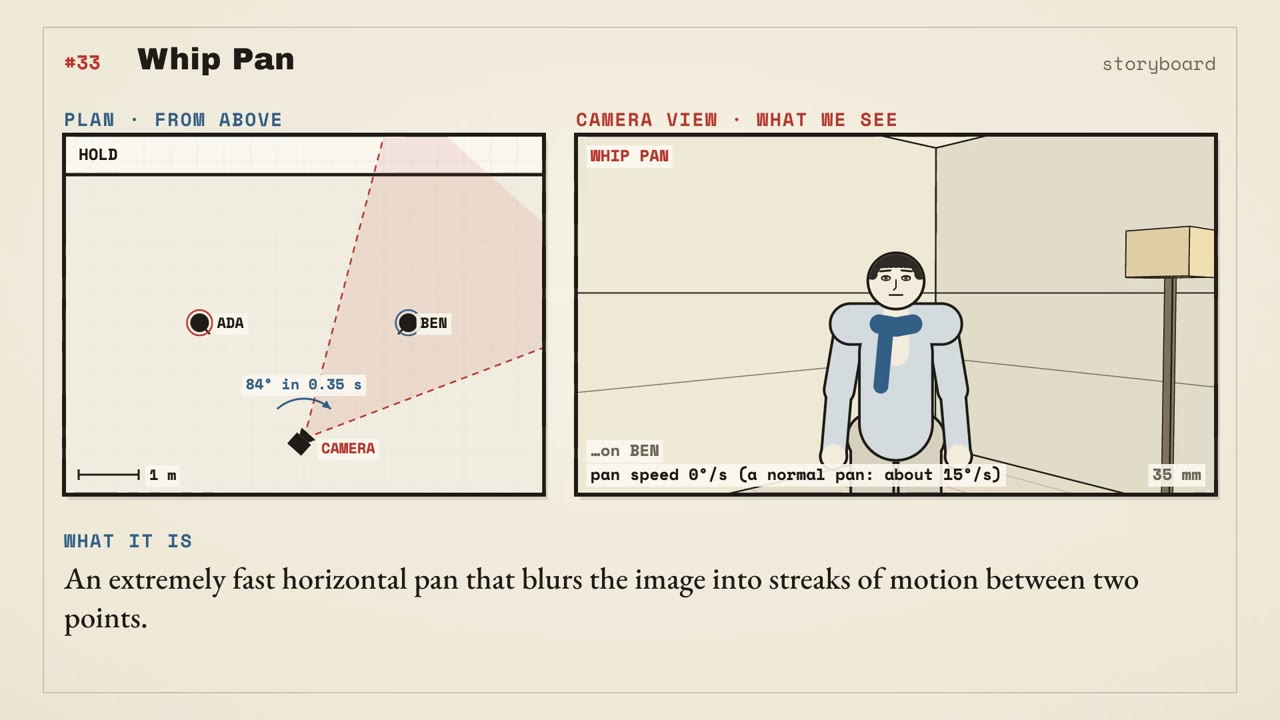 0:2533
Filmmakers use it to inject sudden energy, create snappy comedic transitions, or show a character's frantic disorientation.
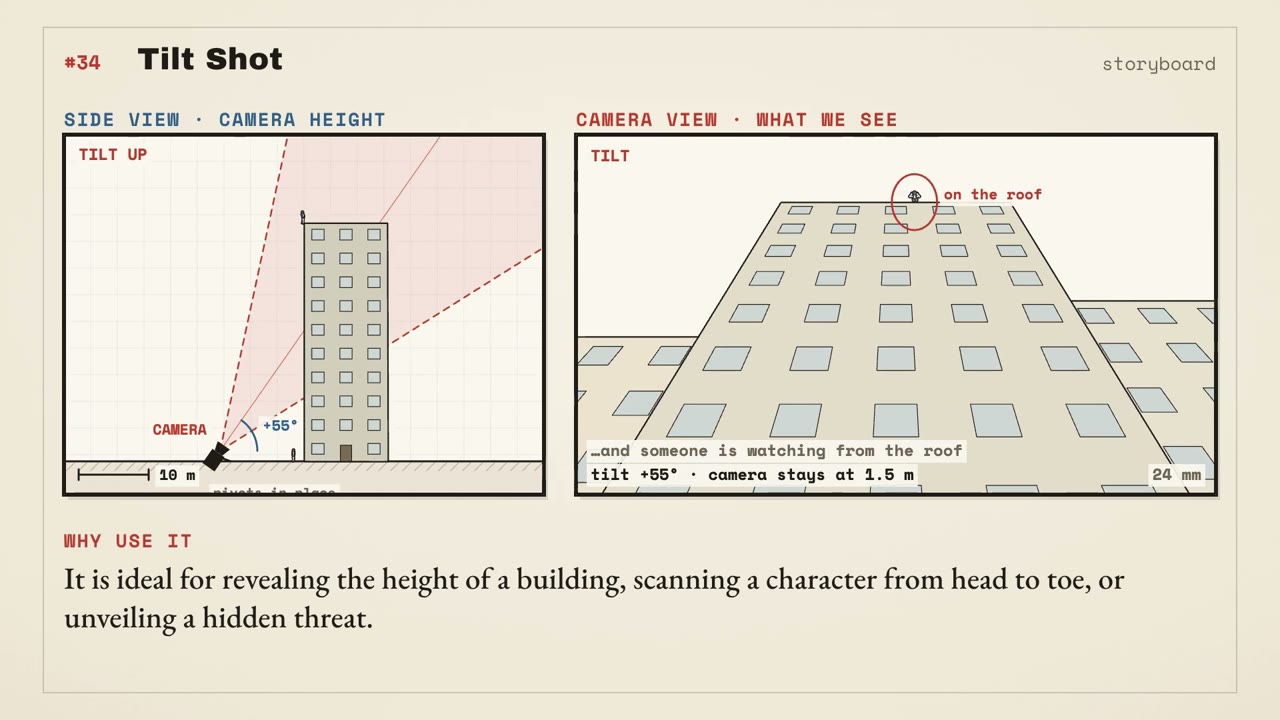 0:2534
It is ideal for revealing the height of a building, scanning a character from head to toe, or unveiling a hidden threat.
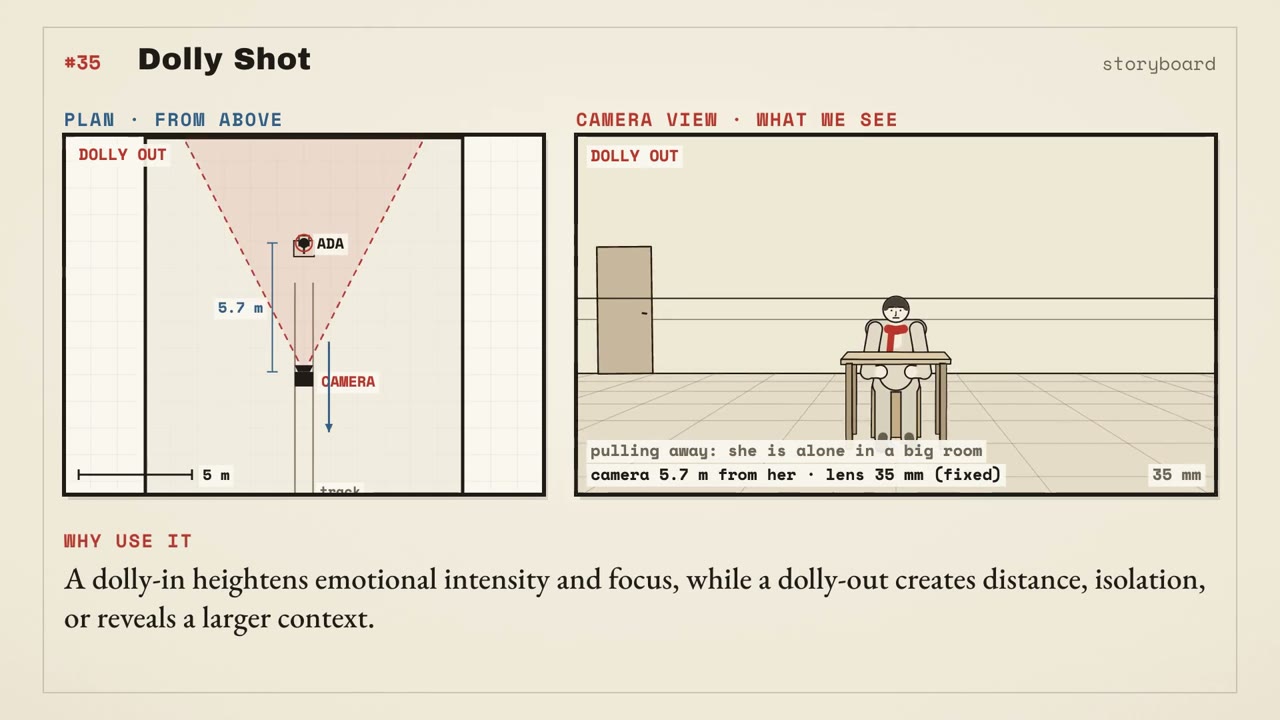 0:2535
A dolly-in heightens emotional intensity and focus, while a dolly-out creates distance, isolation, or reveals a larger context.
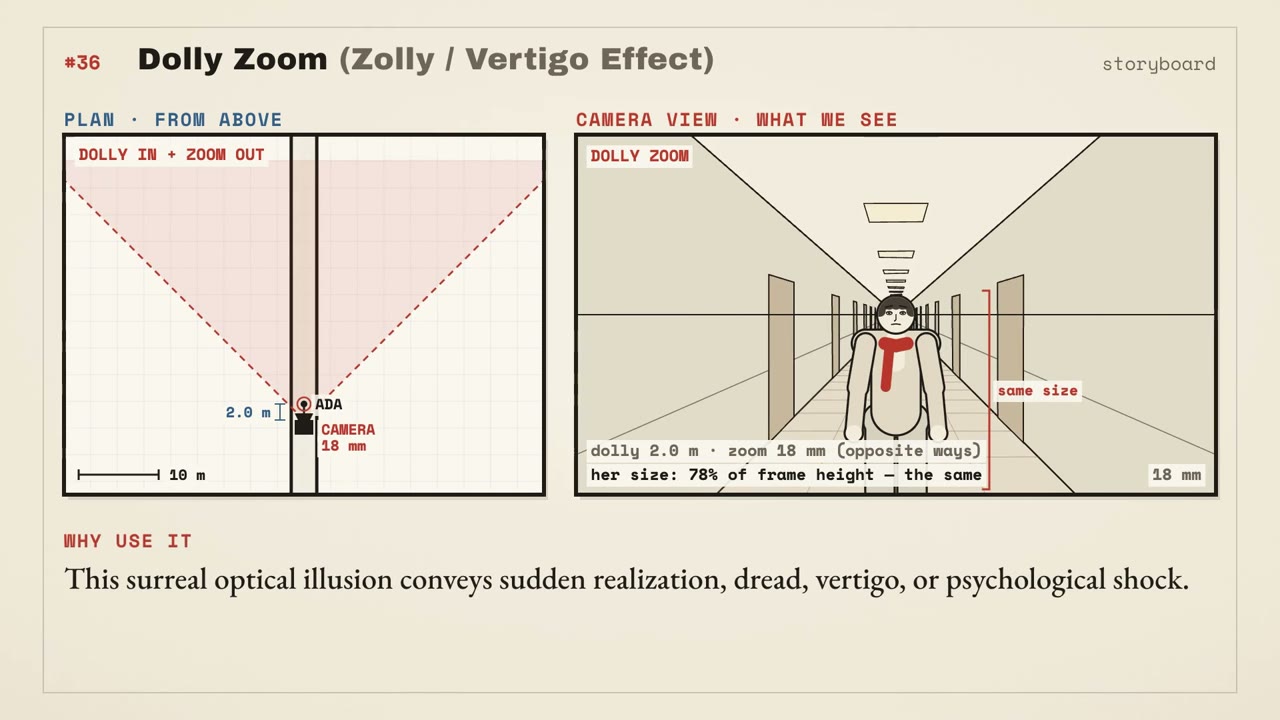 0:2536 · Zolly / Vertigo Effect
This surreal optical illusion conveys sudden realization, dread, vertigo, or psychological shock.
 0:2537
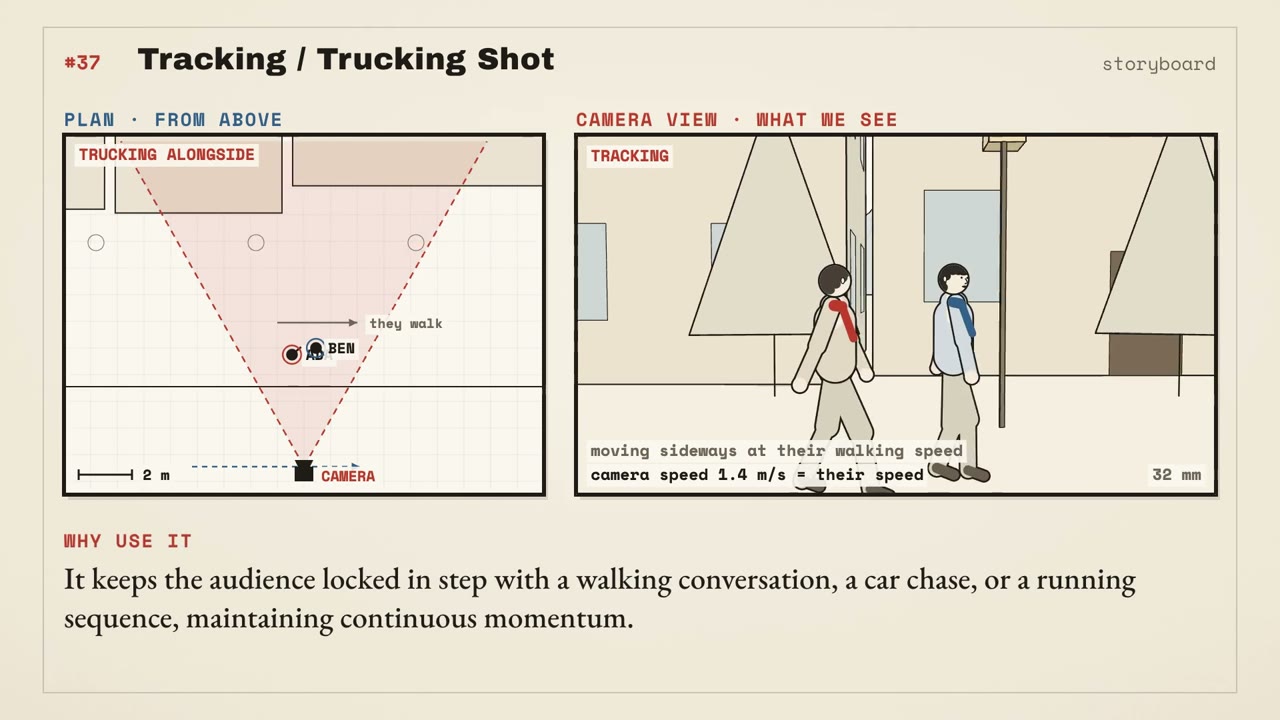
It keeps the audience locked in step with a walking conversation, a car chase, or a running sequence, maintaining continuous momentum.
 0:2538
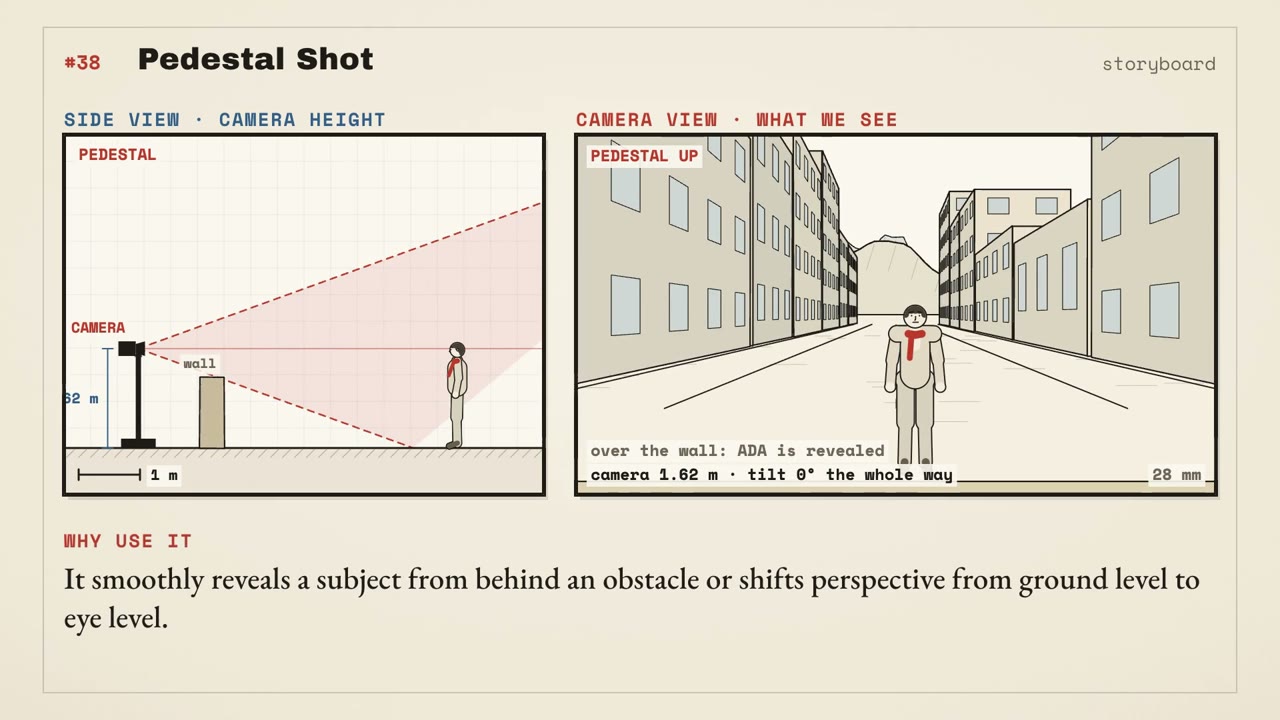
It smoothly reveals a subject from behind an obstacle or shifts perspective from ground level to eye level.
 0:2539
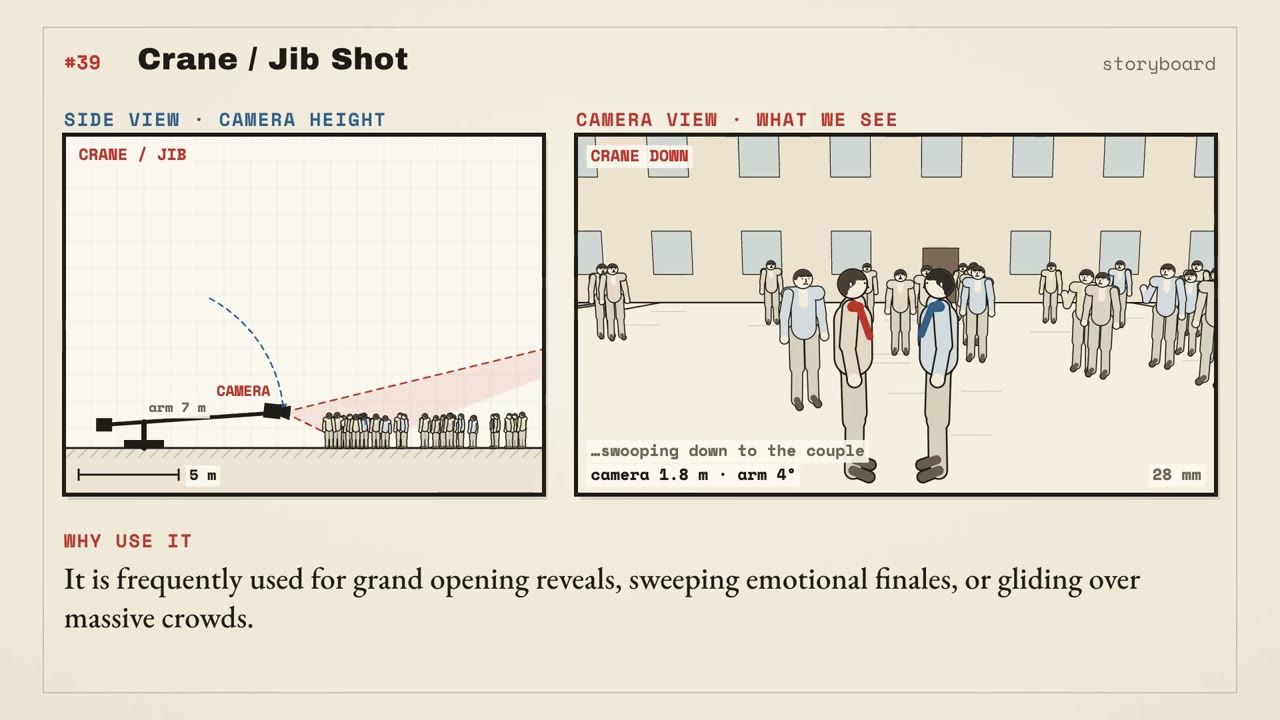
It is frequently used for grand opening reveals, sweeping emotional finales, or gliding over massive crowds.
 0:2540
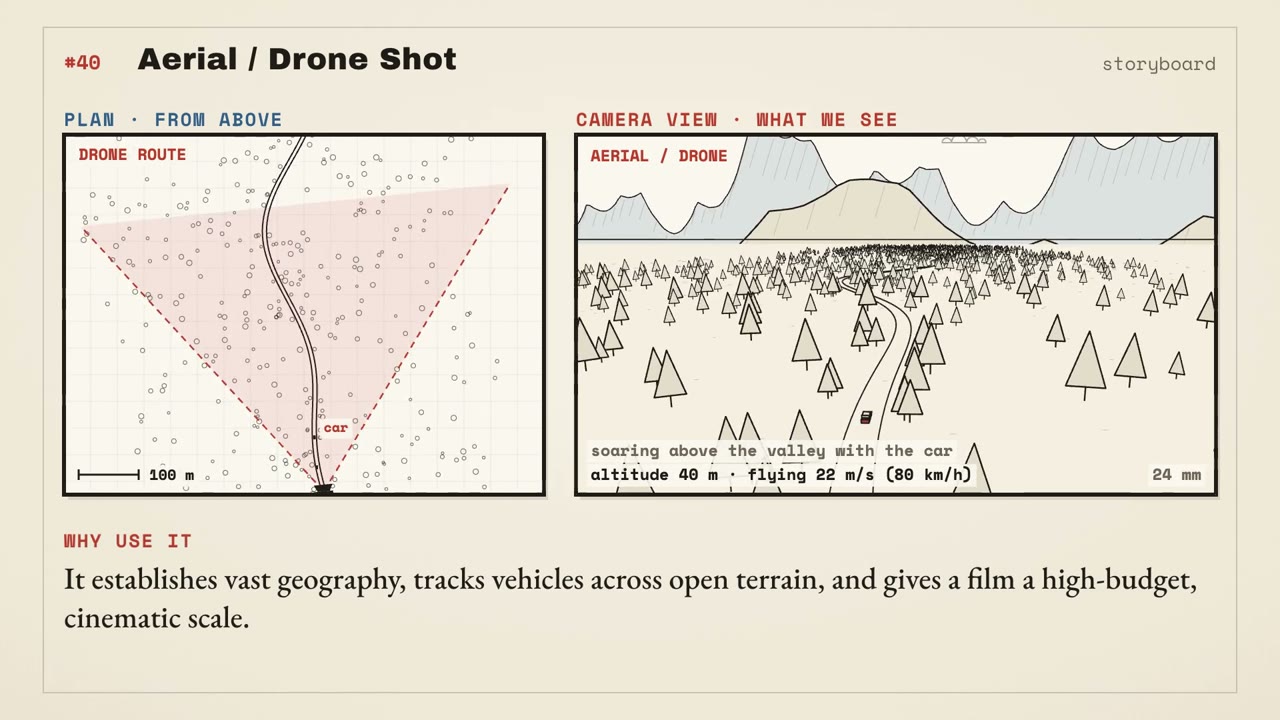
It establishes vast geography, tracks vehicles across open terrain, and gives a film a high-budget, cinematic scale.
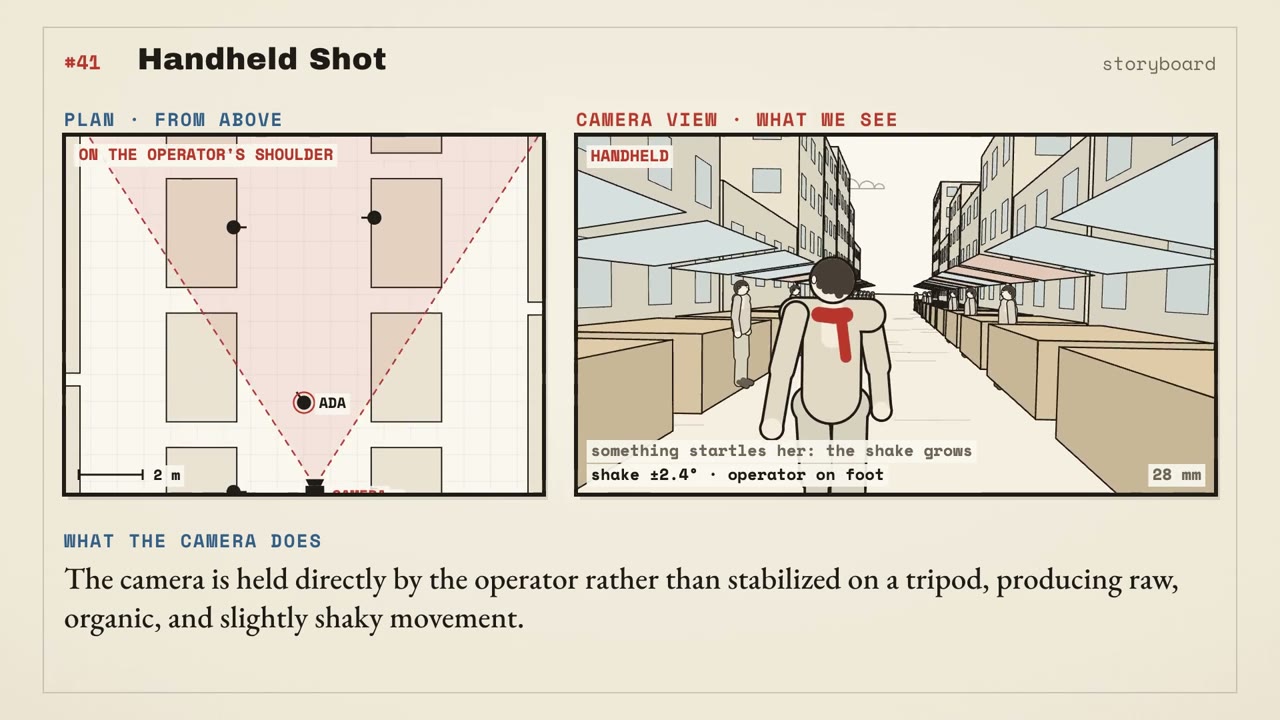 0:2541
It creates an immediate sense of realism, urgency, chaos, or documentary-style intimacy.
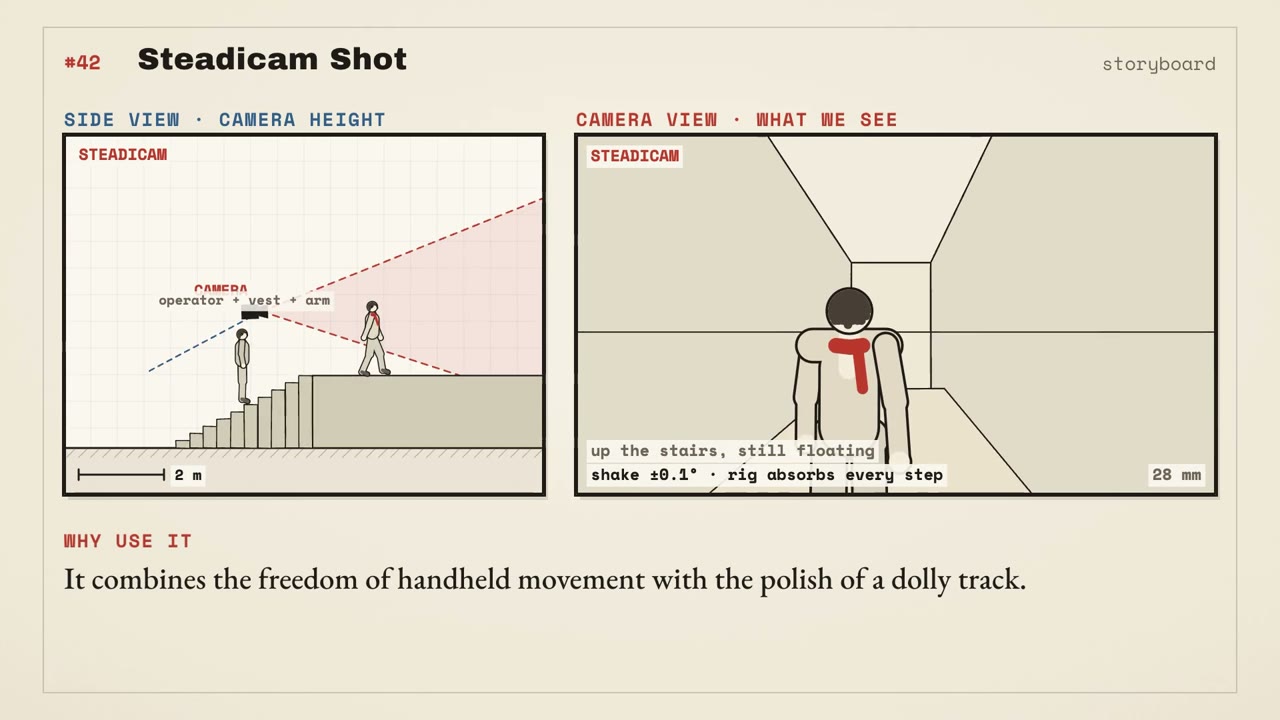 0:2542
It combines the freedom of handheld movement with the polish of a dolly track.
43–50
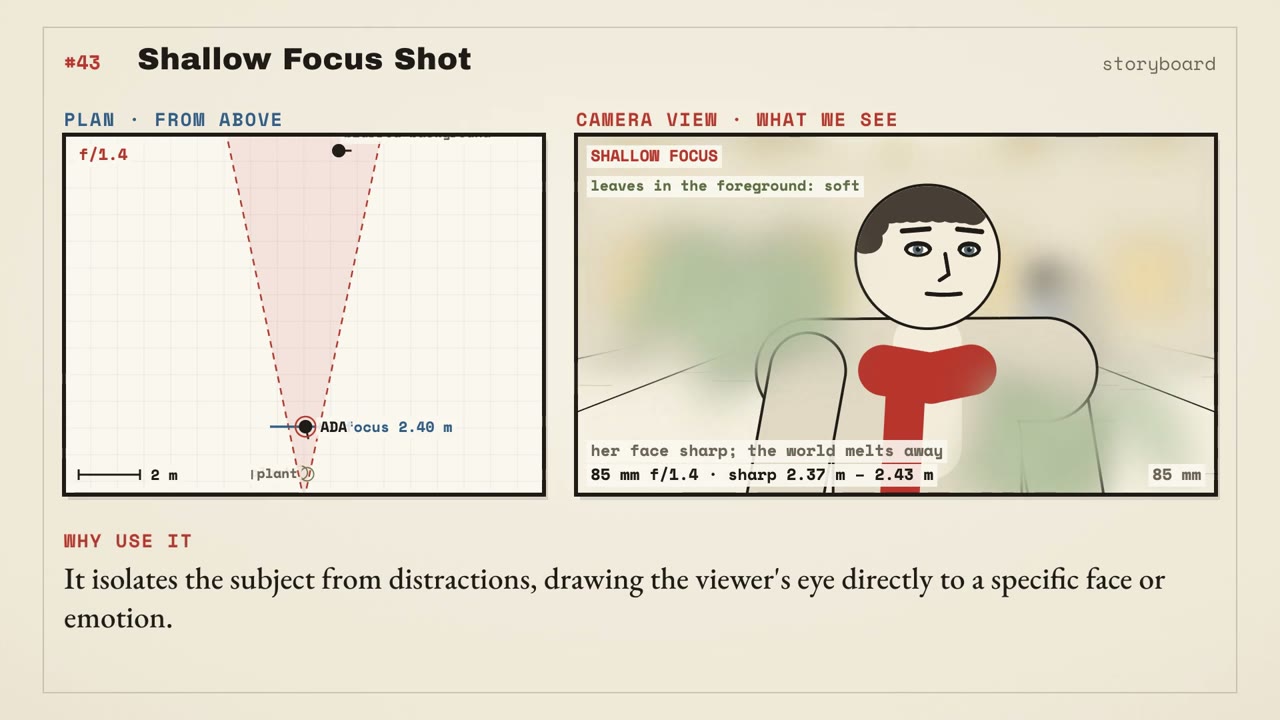 0:2543
It isolates the subject from distractions, drawing the viewer's eye directly to a specific face or emotion.
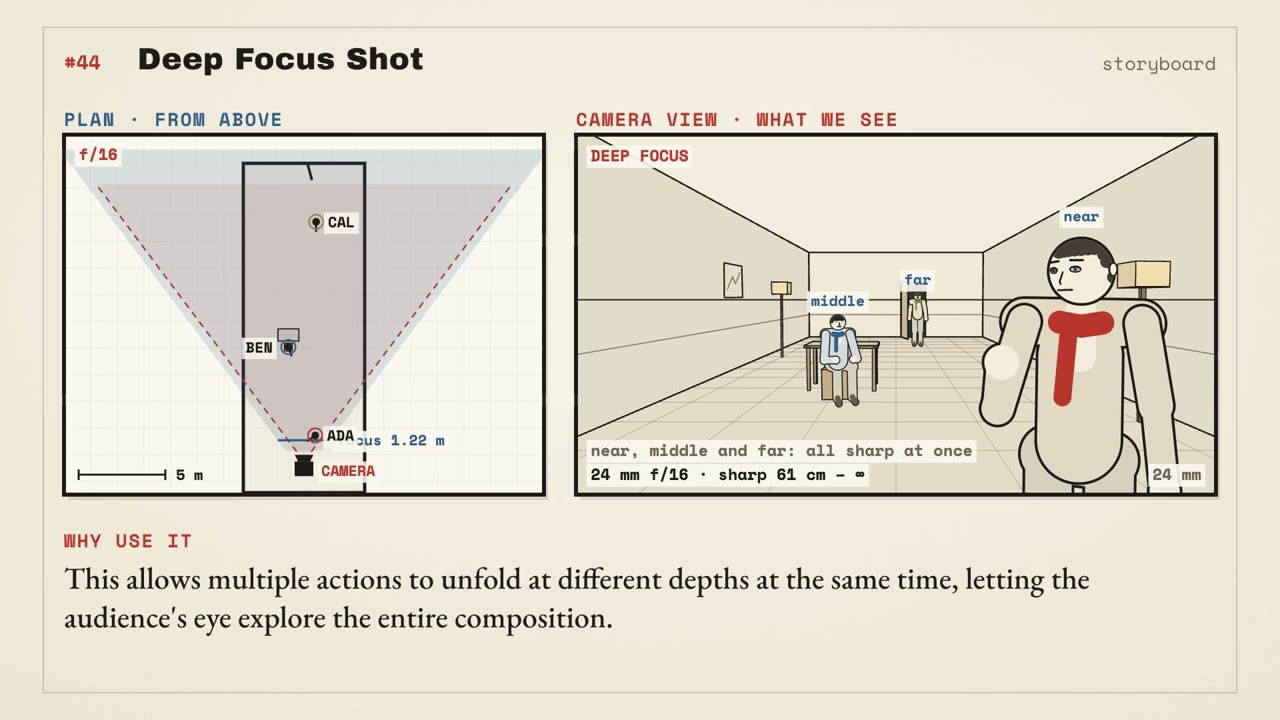 0:2544
This allows multiple actions to unfold at different depths at the same time, letting the audience's eye explore the entire composition.
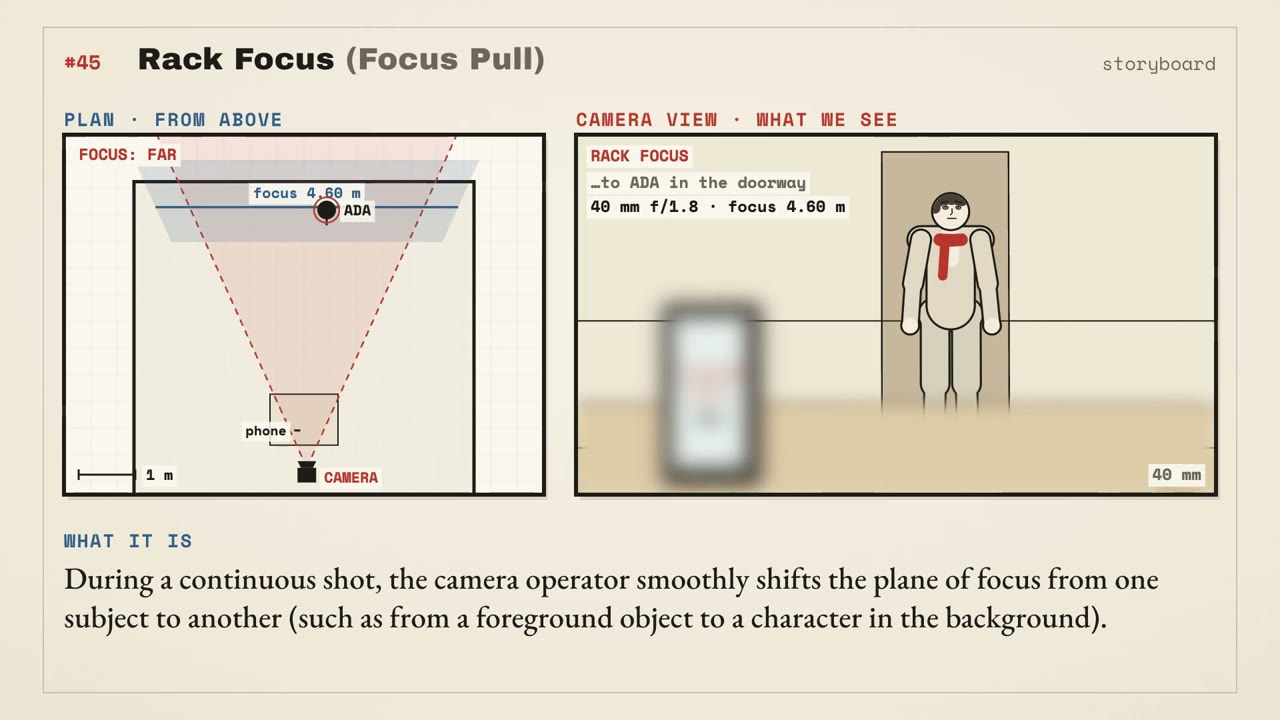 0:2545 · Focus Pull
It acts as an invisible cut, redirecting the audience's attention to a sudden reveal or reaction.
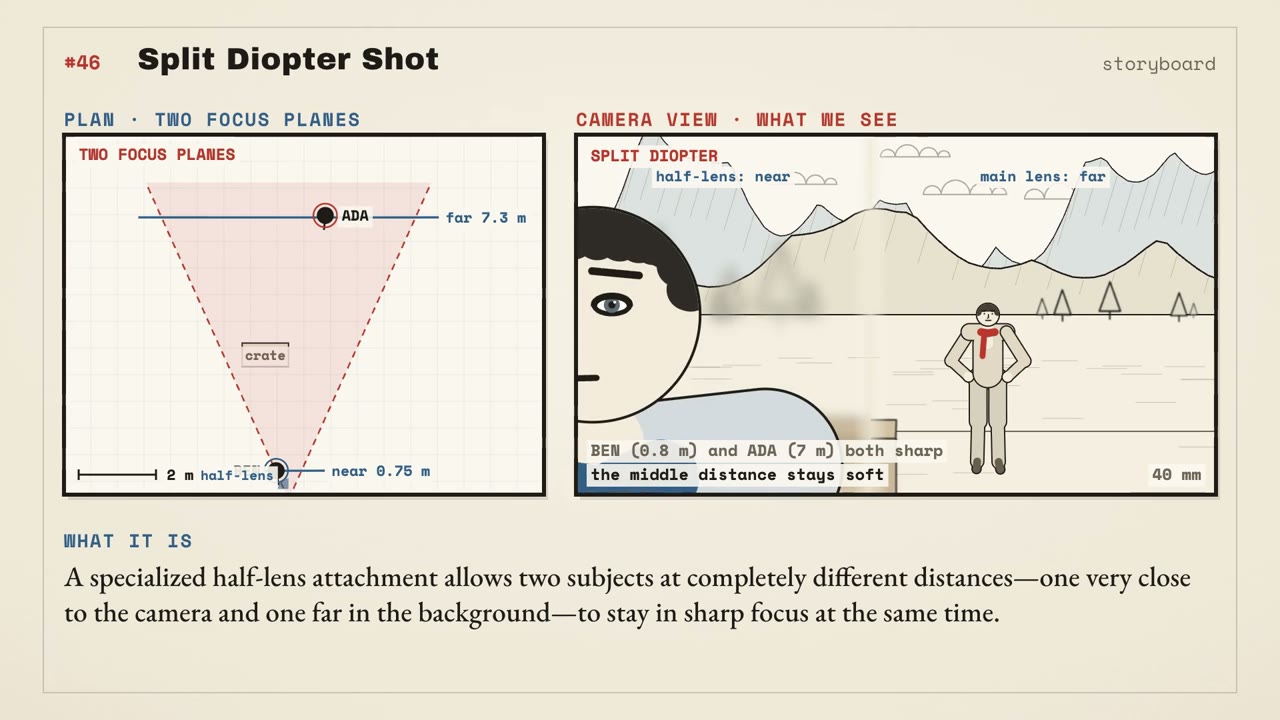 0:2546
It creates a slightly surreal, tense composition that links two characters or threats visually.
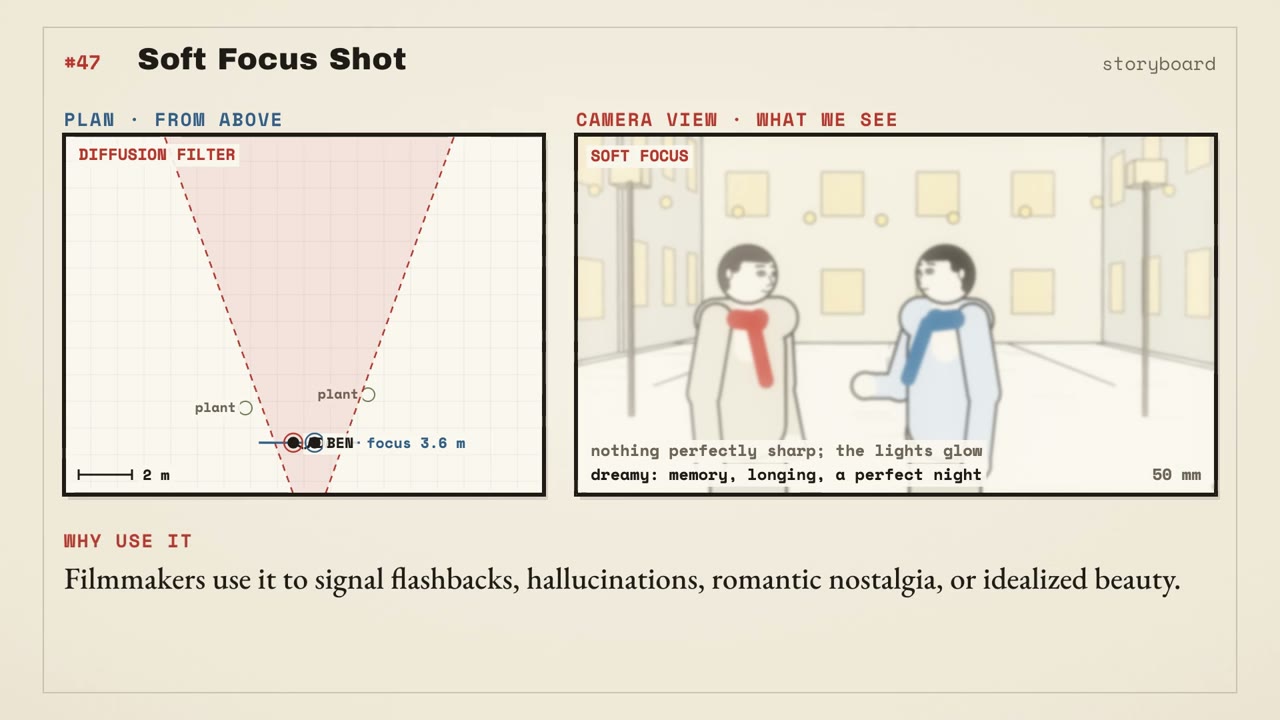 0:2547
Filmmakers use it to signal flashbacks, hallucinations, romantic nostalgia, or idealized beauty.
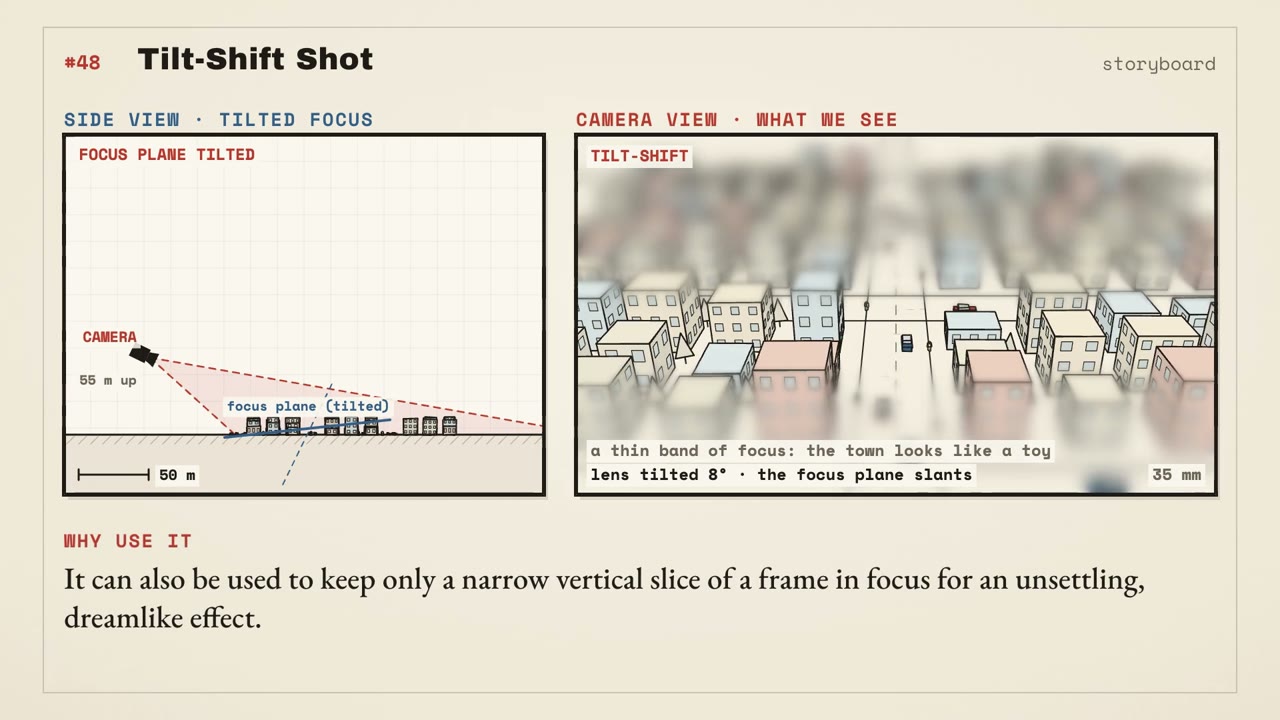 0:2548
It can also be used to keep only a narrow vertical slice of a frame in focus for an unsettling, dreamlike effect.
 0:2549
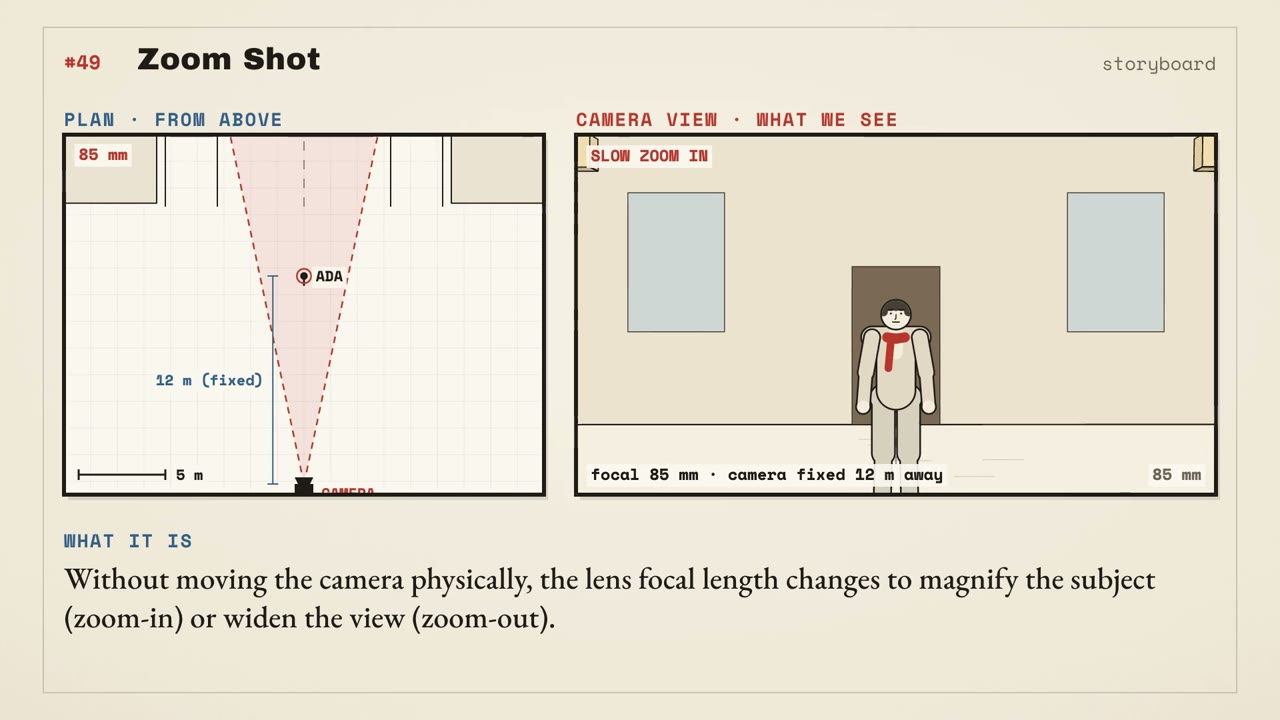
A slow zoom builds creeping dread, while a sudden "crash zoom" adds dramatic punch, retro flair, or comedic shock.
 0:2550 · Oner
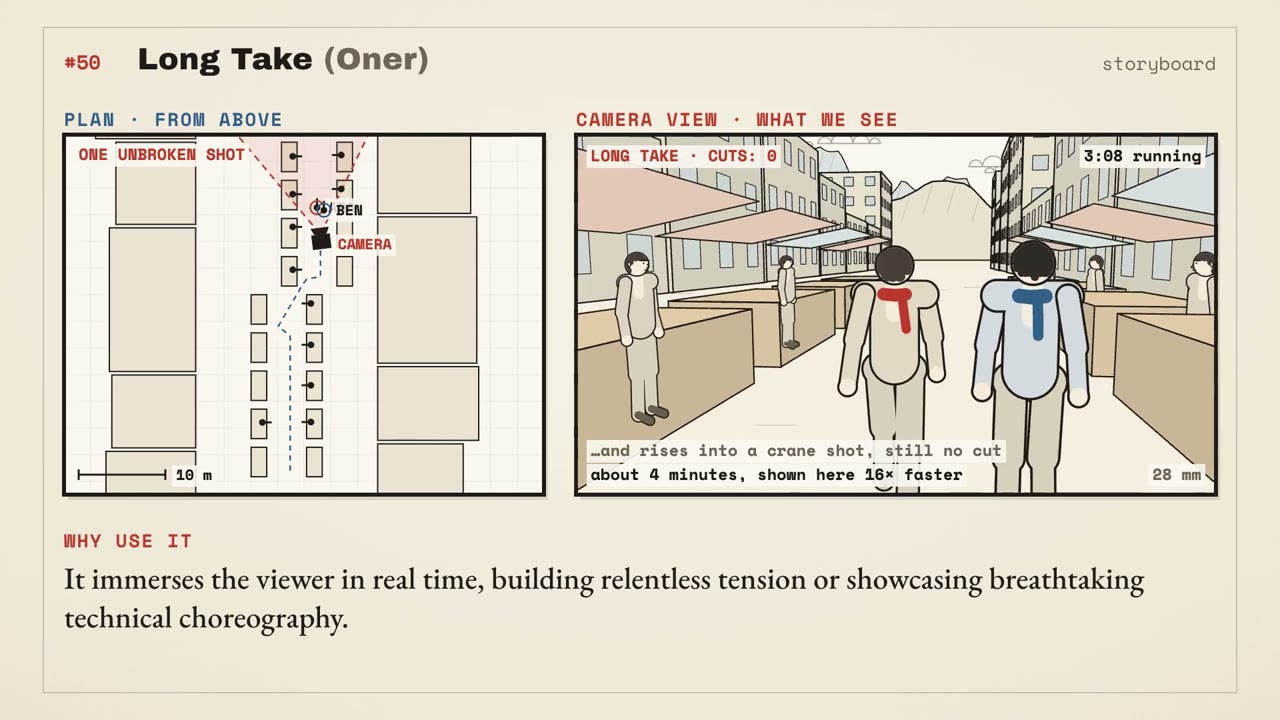
It immerses the viewer in real time, building relentless tension or showcasing breathtaking technical choreography.
Every storyboard ends with the genres that use the shot most. Pick one to see its shots together.
The storyboards use invented people and places. Lens, distance and height read-outs are worked out from the drawing’s own scene, so the two panels always agree.