 0:2504 · MWS / MLS
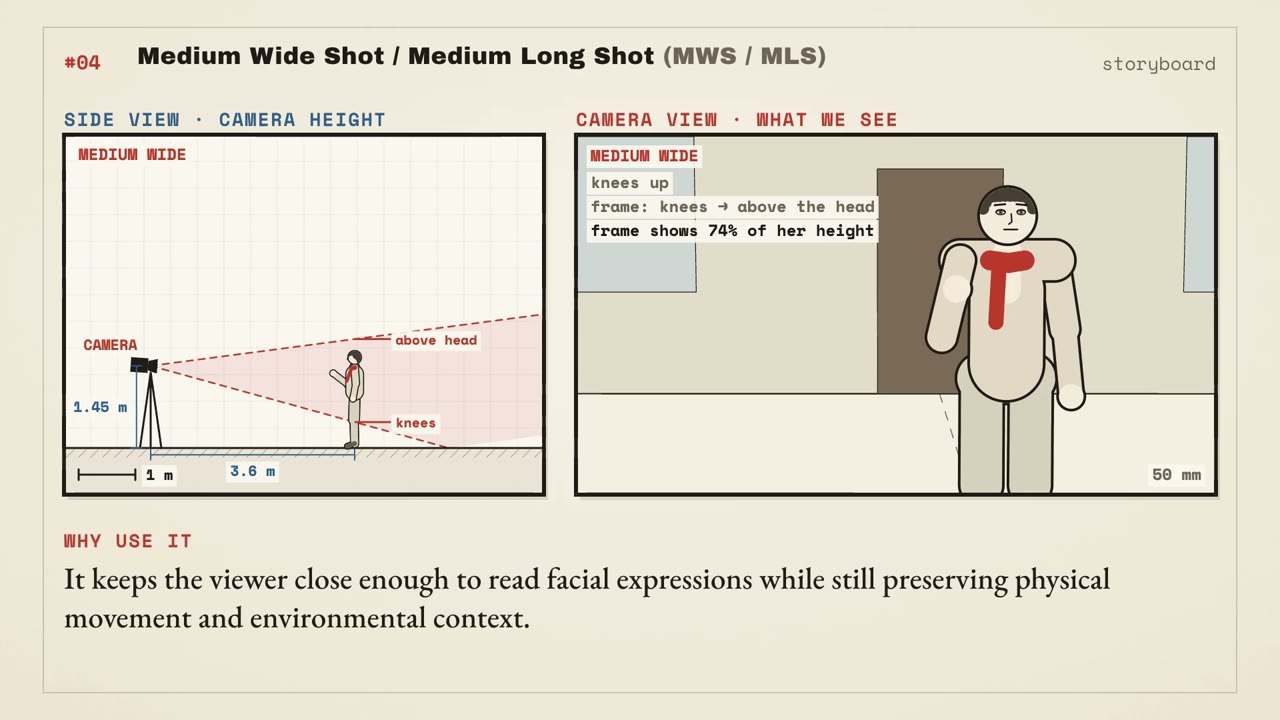
Medium Wide Shot / Medium Long Shot
It keeps the viewer close enough to read facial expressions while still preserving physical movement and environmental context.
Chapterframe training / Camera shots / Genres
21 of the 50 shots in the library are common in romance. Each one is a 25-second animated storyboard.
0:2504 · MWS / MLSIt keeps the viewer close enough to read facial expressions while still preserving physical movement and environmental context.
 0:2506 · MS
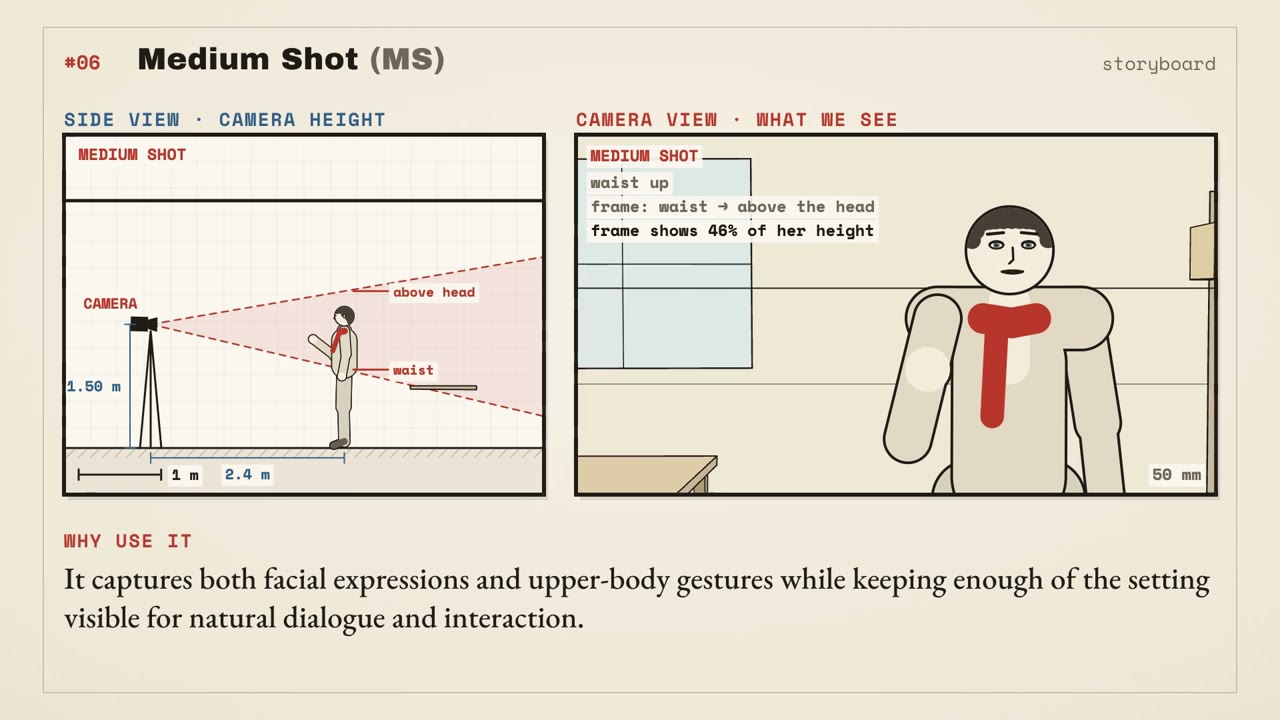
It captures both facial expressions and upper-body gestures while keeping enough of the setting visible for natural dialogue and interaction.
 0:2507 · MCU
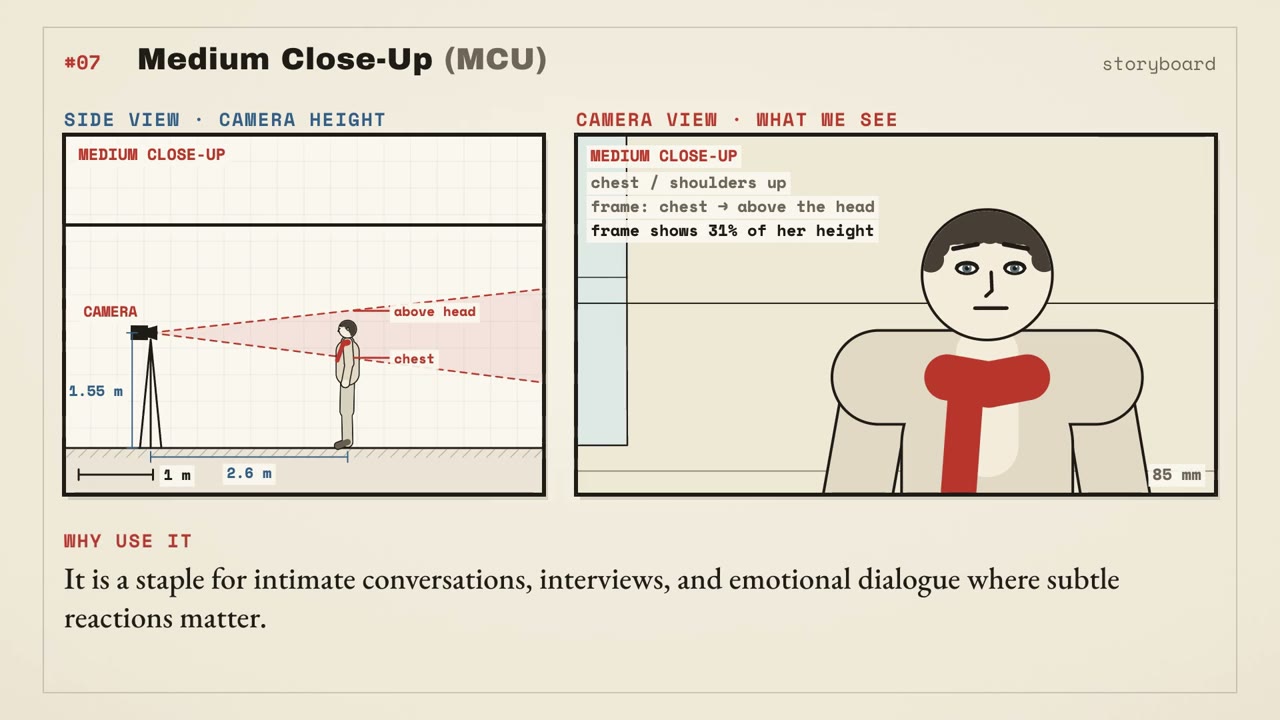
It is a staple for intimate conversations, interviews, and emotional dialogue where subtle reactions matter.
 0:2508 · CU
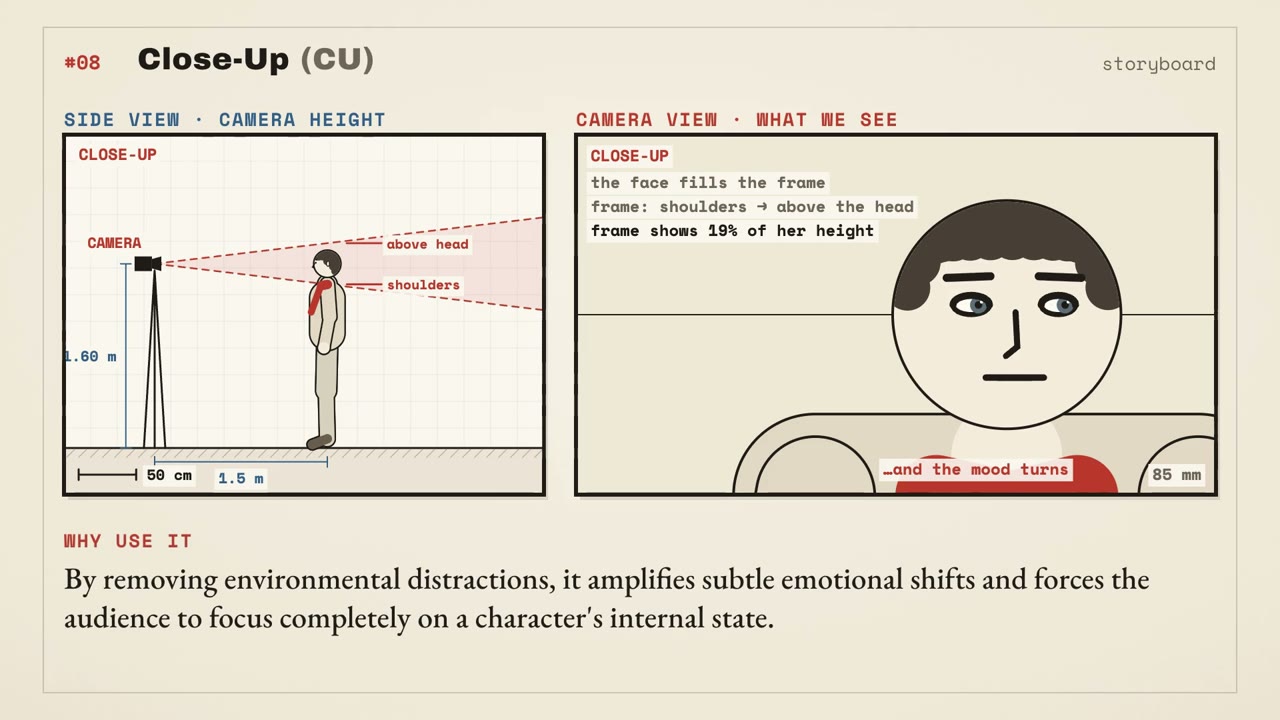
By removing environmental distractions, it amplifies subtle emotional shifts and forces the audience to focus completely on a character's internal state.
 0:2510
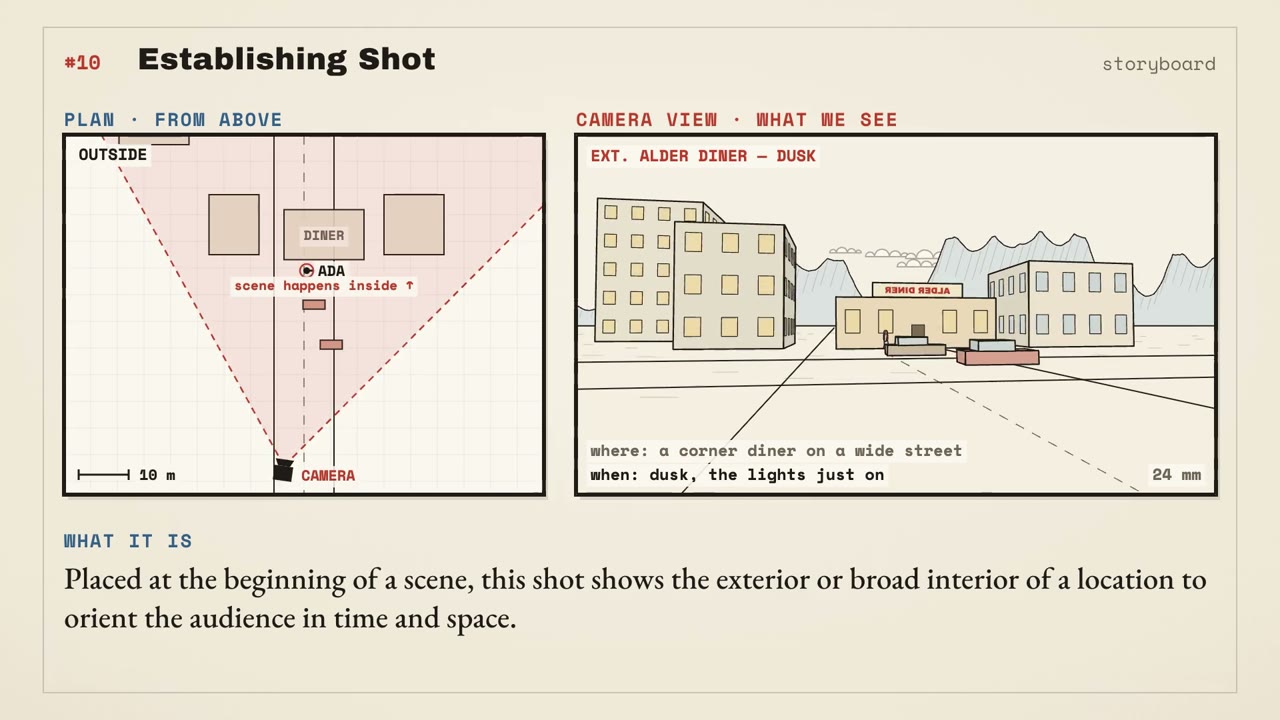
While often a wide or aerial shot, it can be any framing that quickly communicates where the upcoming action takes place.
 0:2511
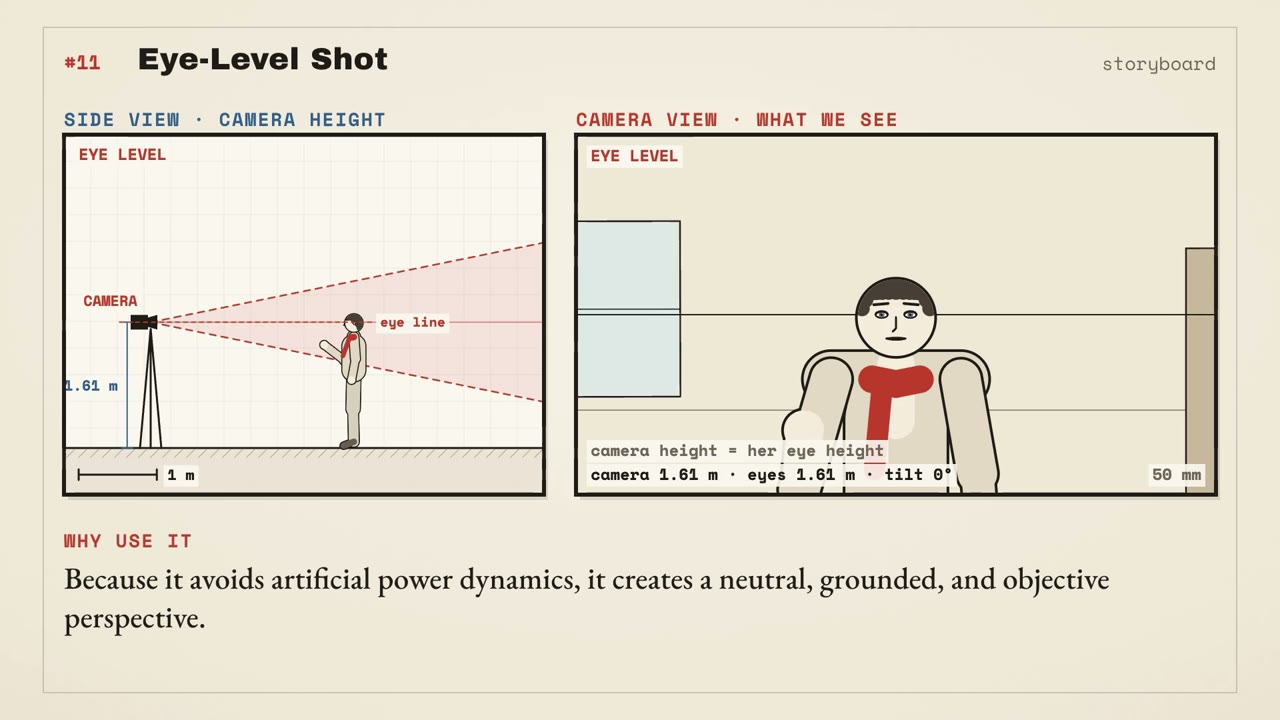
Because it avoids artificial power dynamics, it creates a neutral, grounded, and objective perspective.
 0:2520
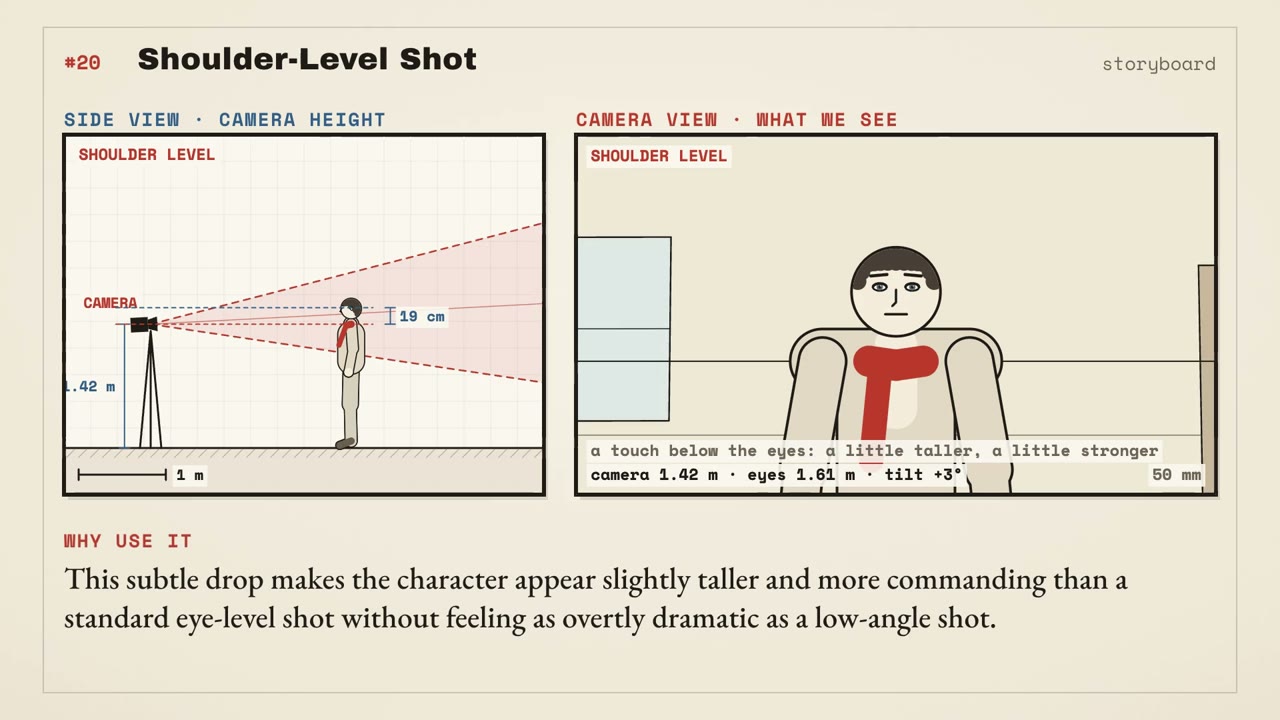
This subtle drop makes the character appear slightly taller and more commanding than a standard eye-level shot without feeling as overtly dramatic as a low-angle shot.
 0:2521
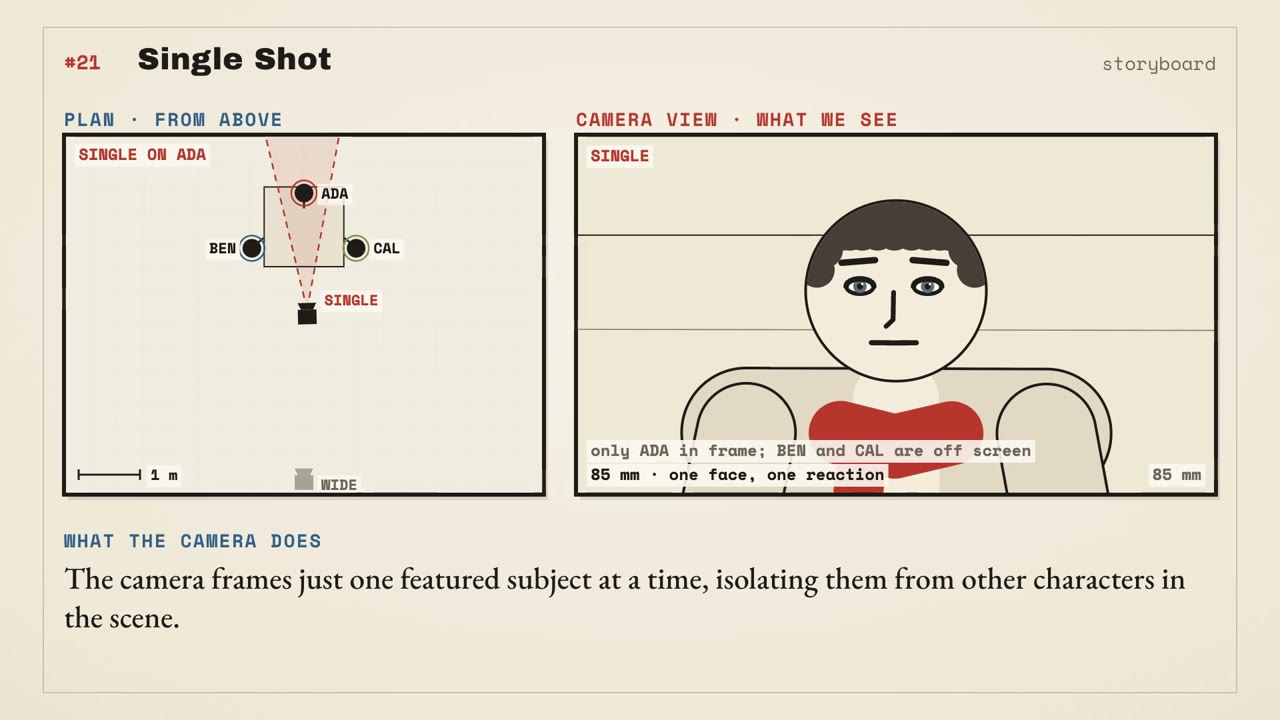
This focuses the audience's full attention on that character's dialogue, decisions, or emotional reaction.
 0:2522
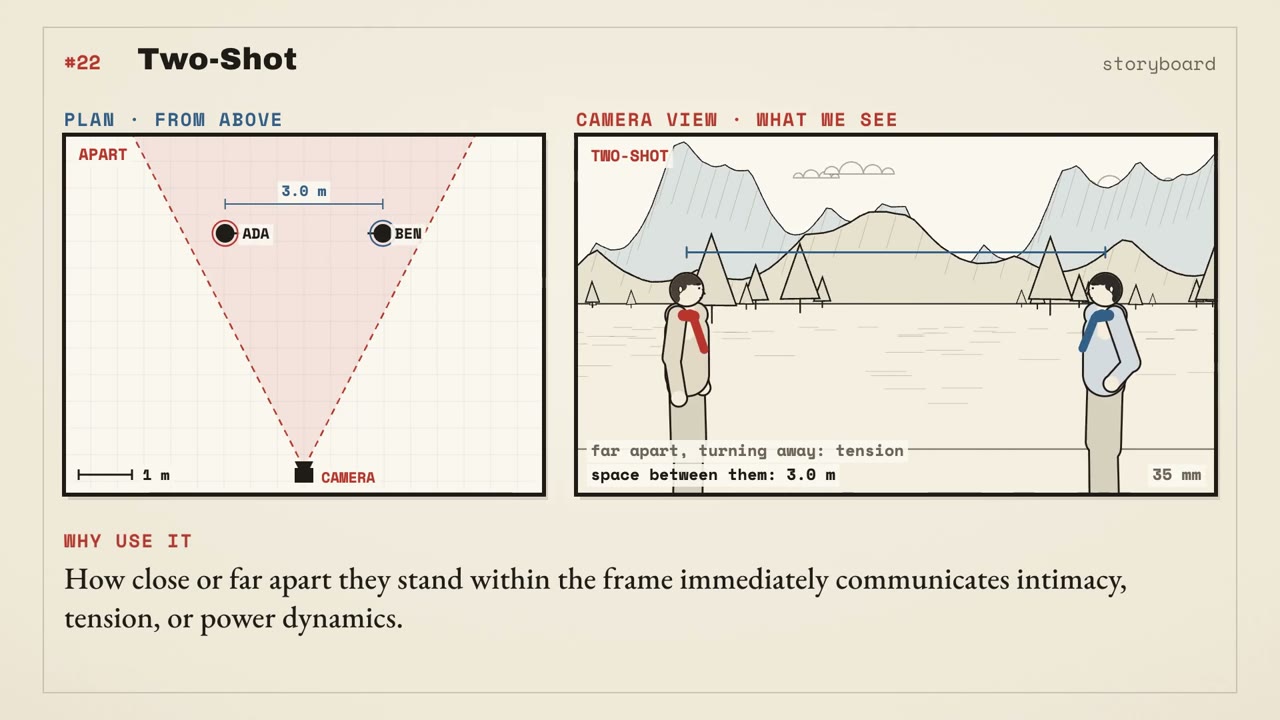
How close or far apart they stand within the frame immediately communicates intimacy, tension, or power dynamics.
 0:2523
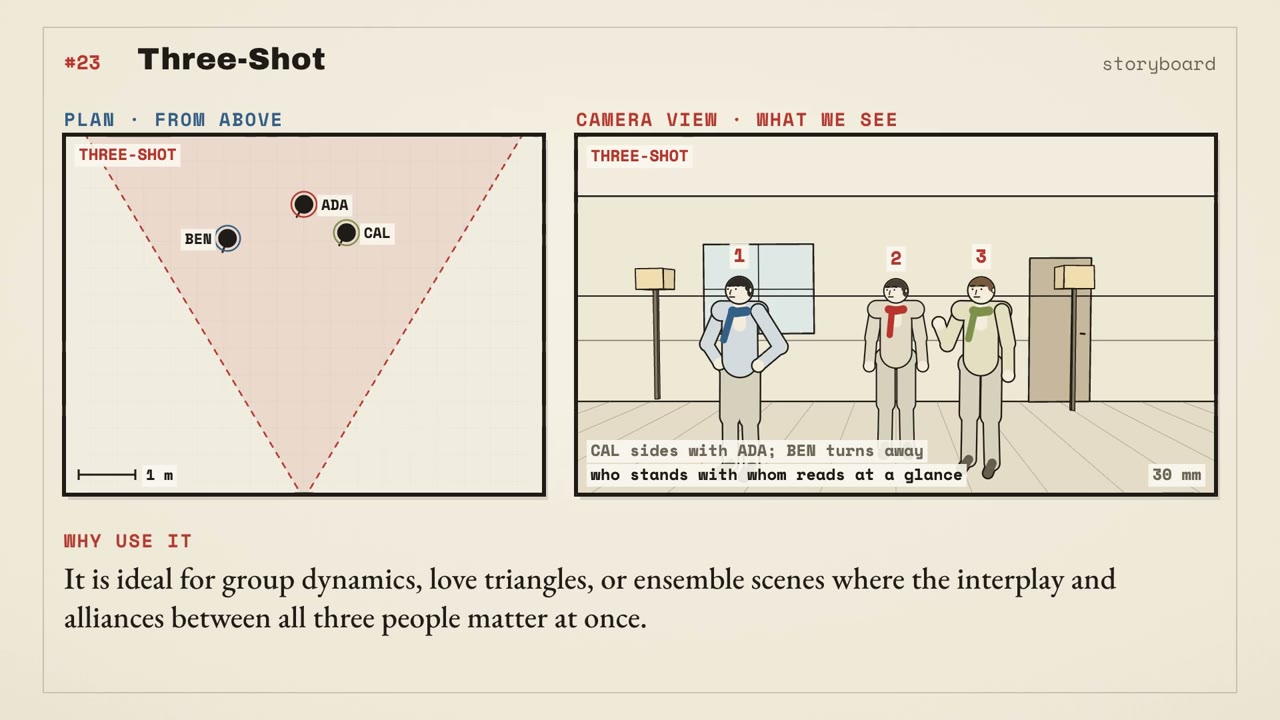
It is ideal for group dynamics, love triangles, or ensemble scenes where the interplay and alliances between all three people matter at once.
 0:2524 · OTS
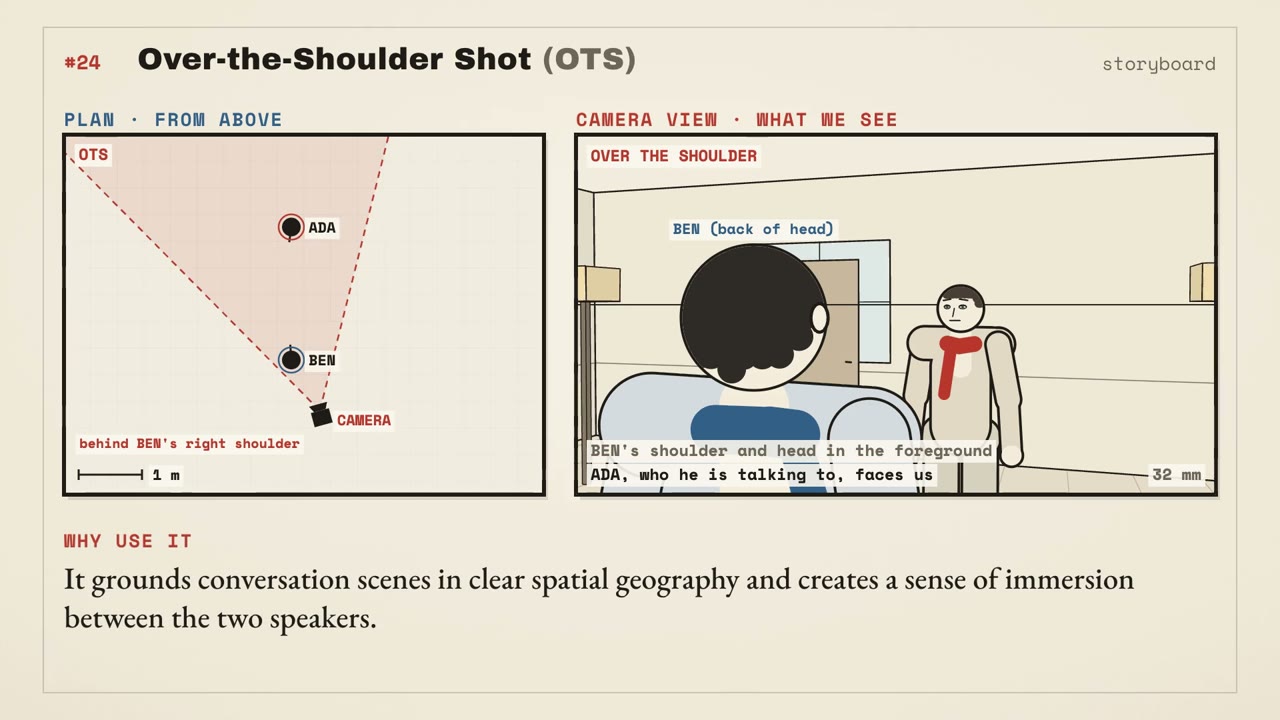
It grounds conversation scenes in clear spatial geography and creates a sense of immersion between the two speakers.
 0:2527
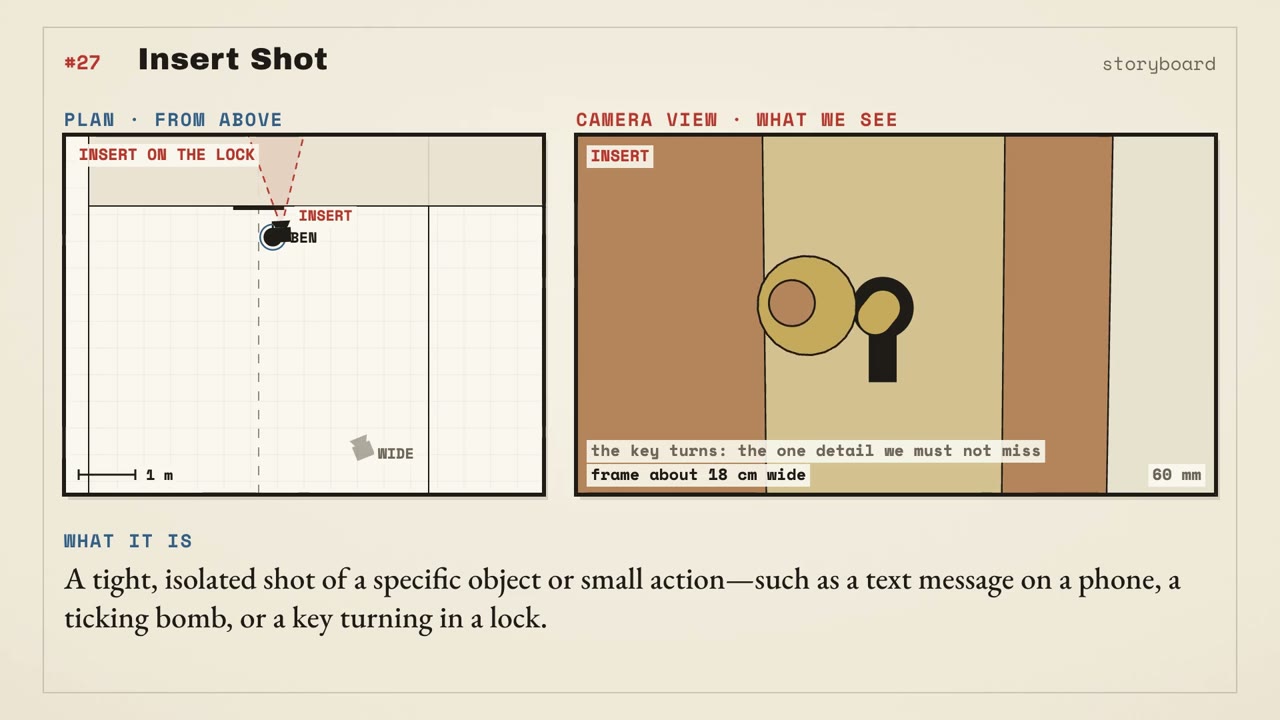
It pauses the broader scene for a beat to deliver crucial plot information the audience cannot miss.
 0:2528
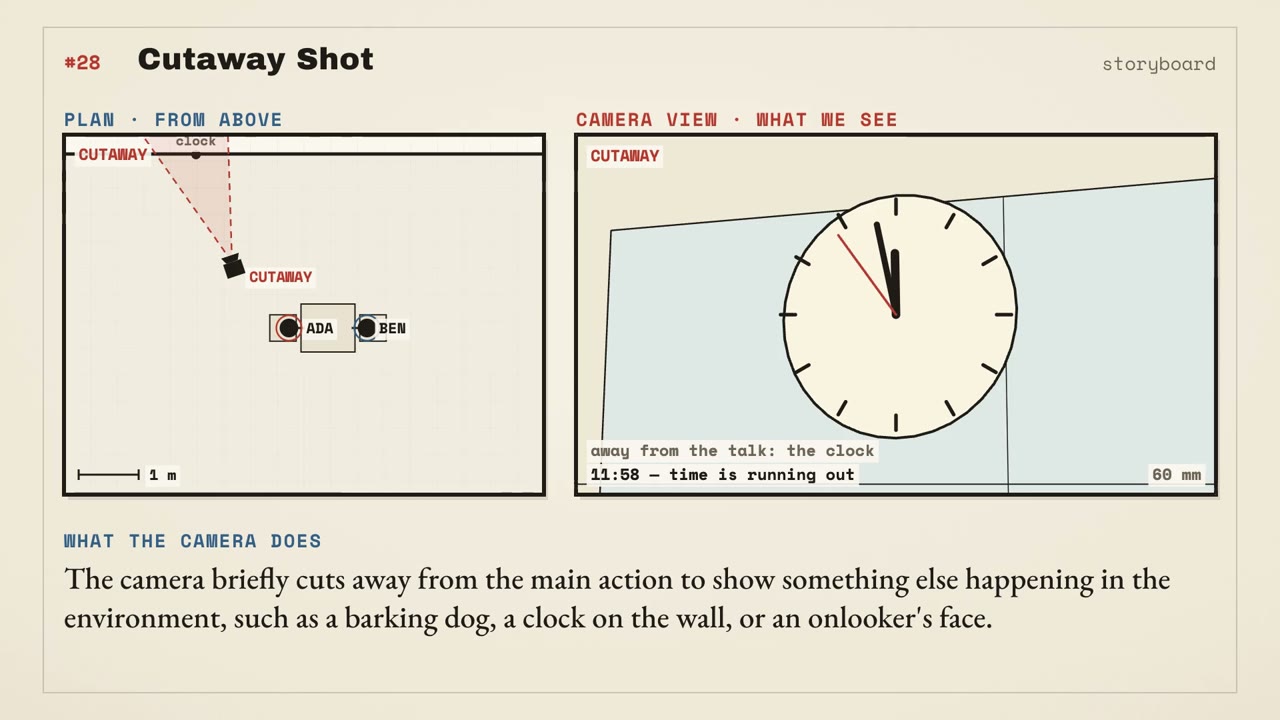
It is used to build tension, provide comedic timing, or bridge continuity gaps in editing.
 0:2529
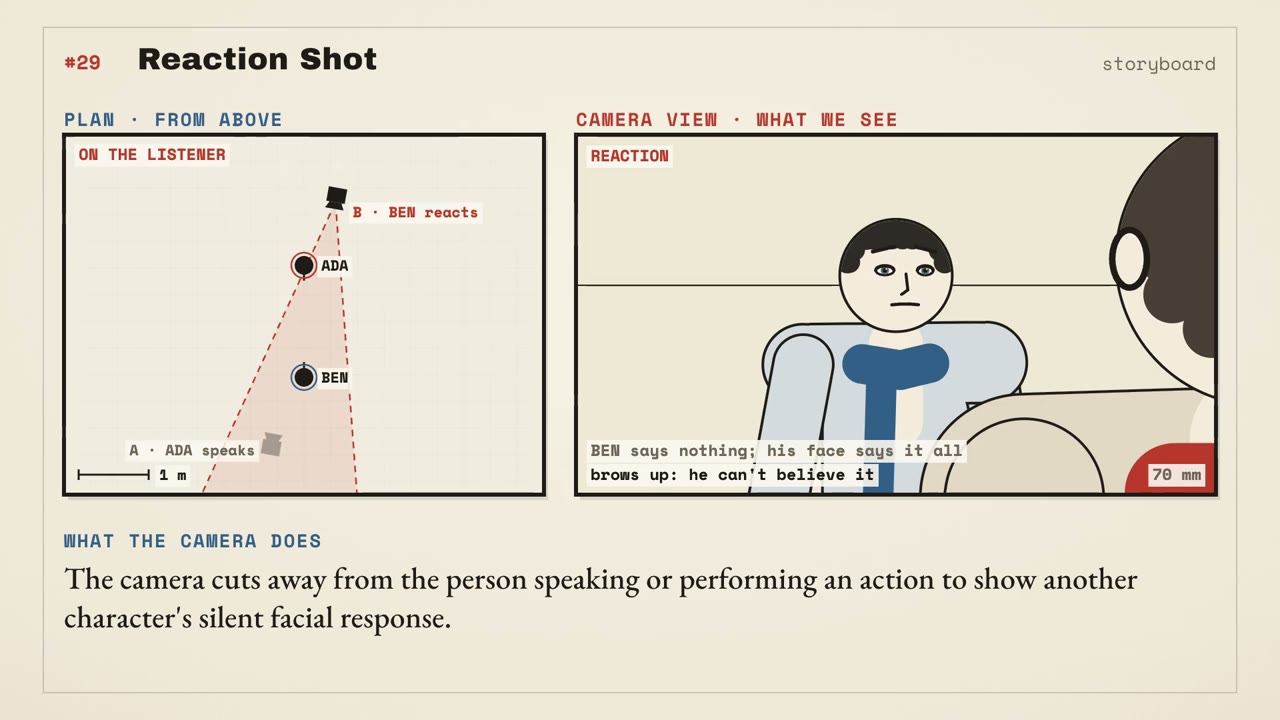
Often more powerful than the dialogue itself, it tells the audience how to feel about what just happened.
 0:2530
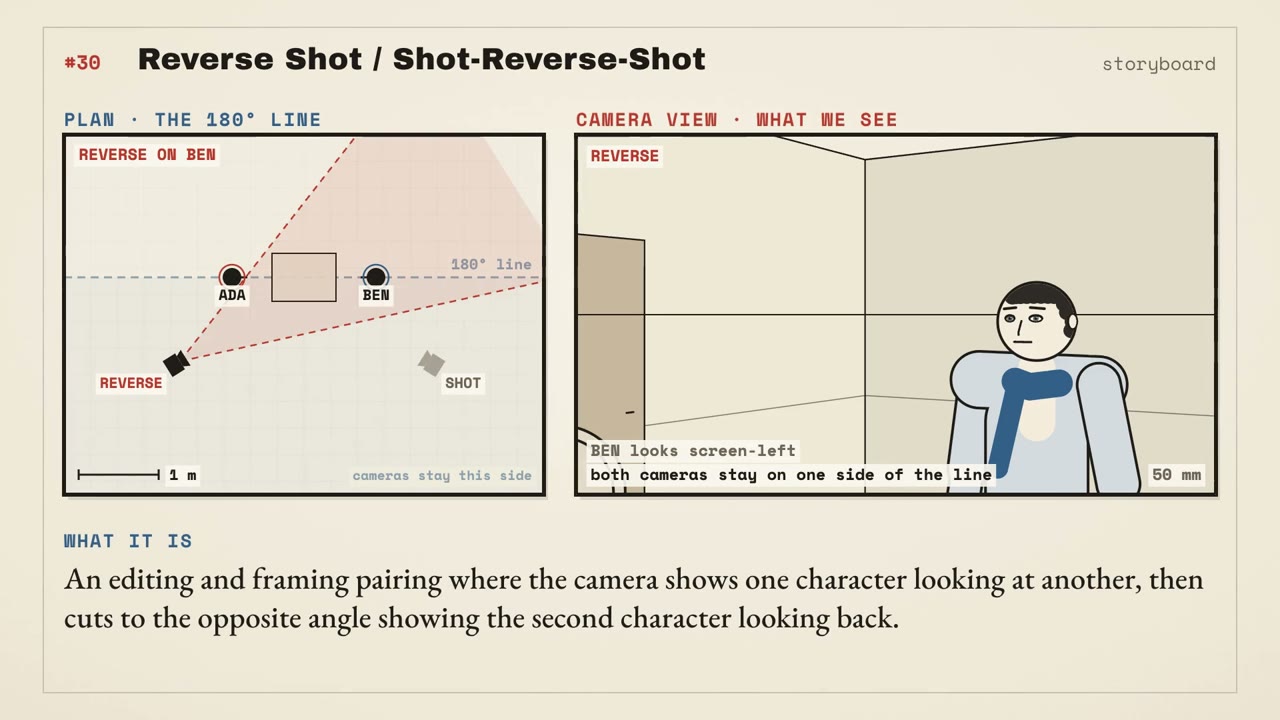
It is the backbone of cinematic dialogue, keeping conversations fluid and easy to follow.
 0:2535
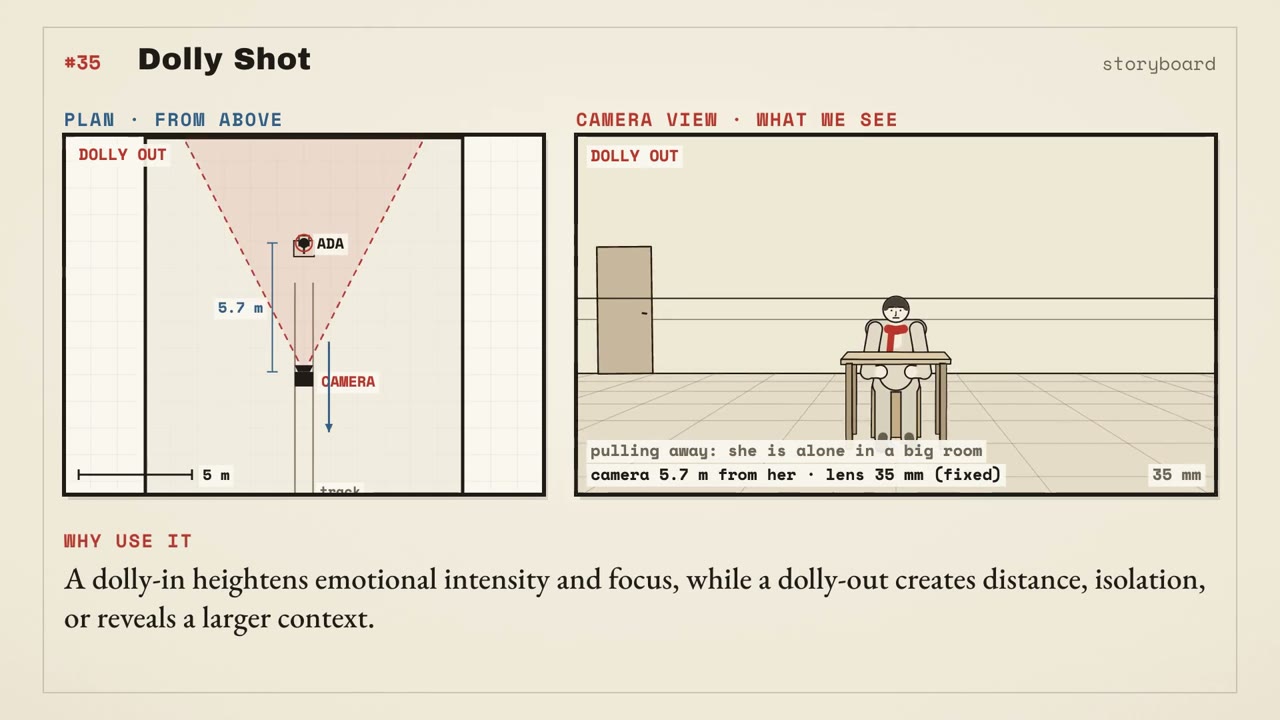
A dolly-in heightens emotional intensity and focus, while a dolly-out creates distance, isolation, or reveals a larger context.
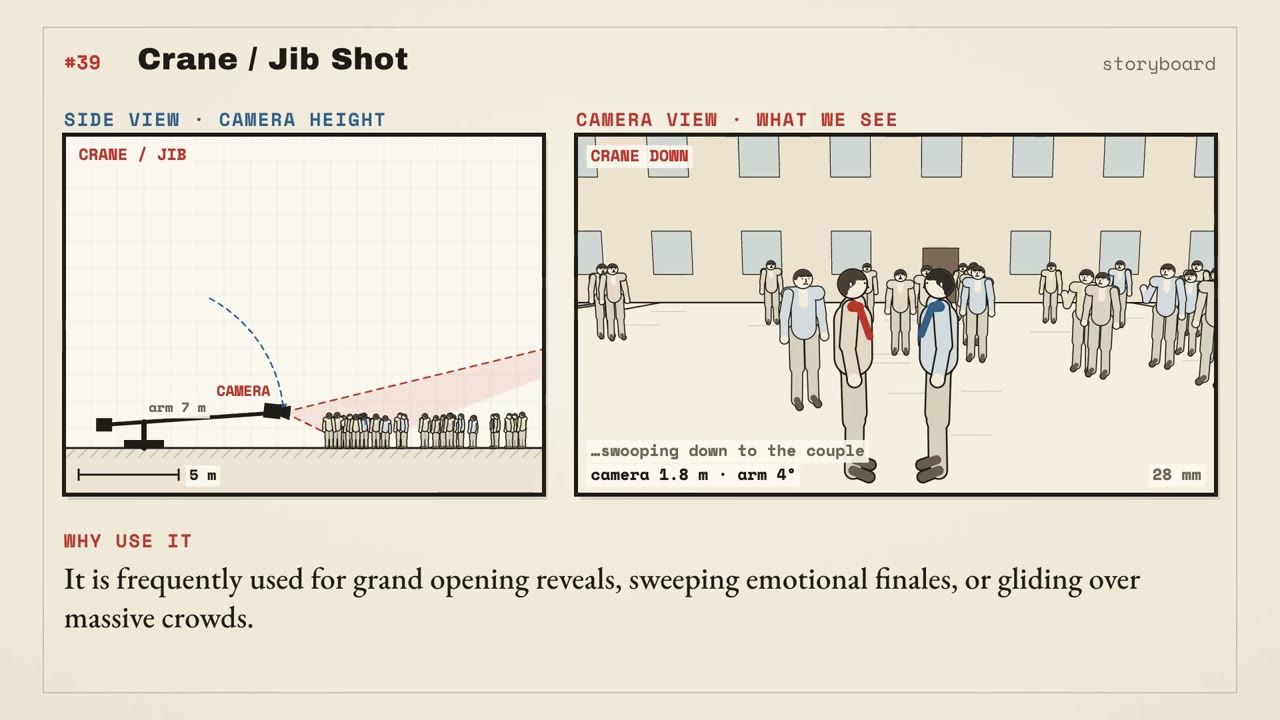 0:2539
It is frequently used for grand opening reveals, sweeping emotional finales, or gliding over massive crowds.
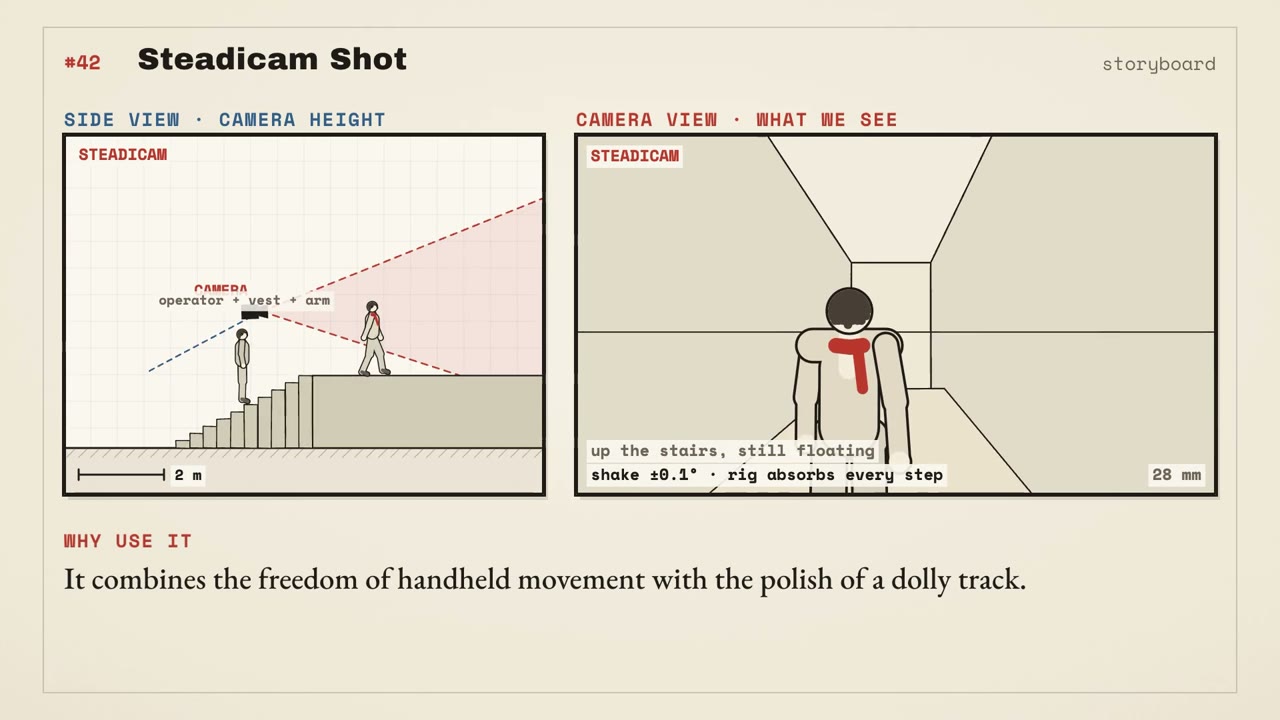 0:2542
It combines the freedom of handheld movement with the polish of a dolly track.
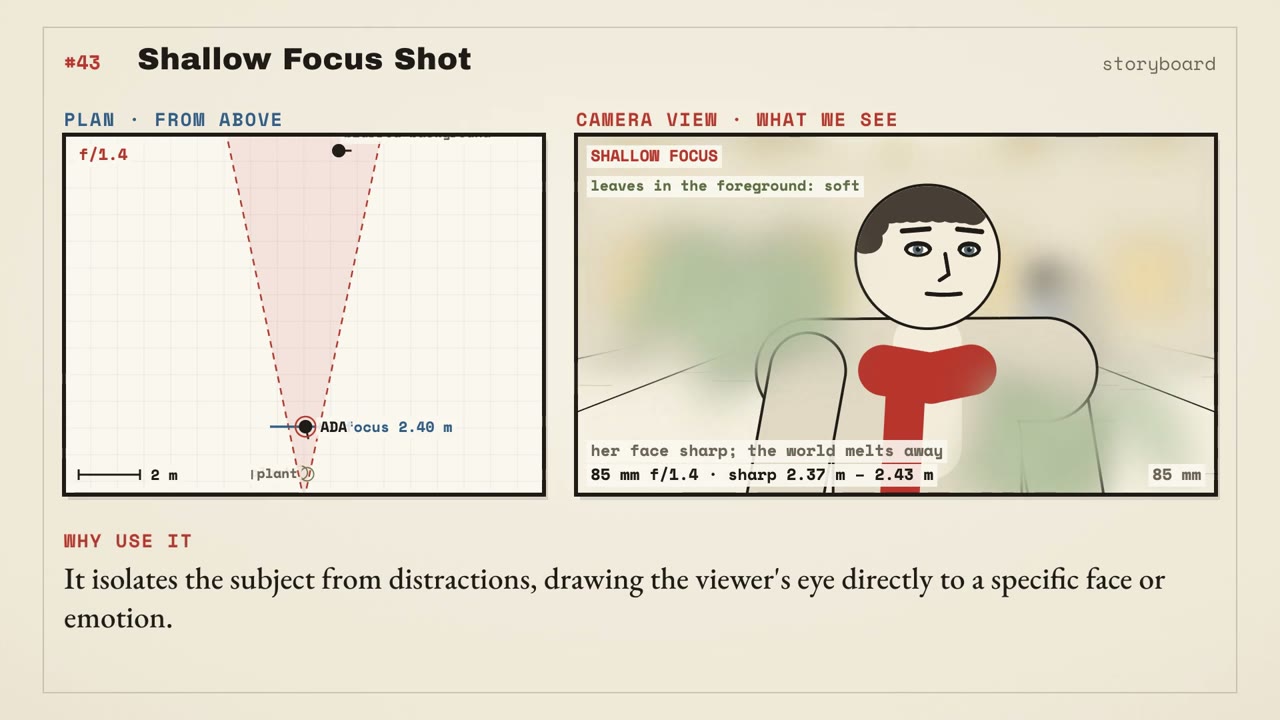 0:2543
It isolates the subject from distractions, drawing the viewer's eye directly to a specific face or emotion.
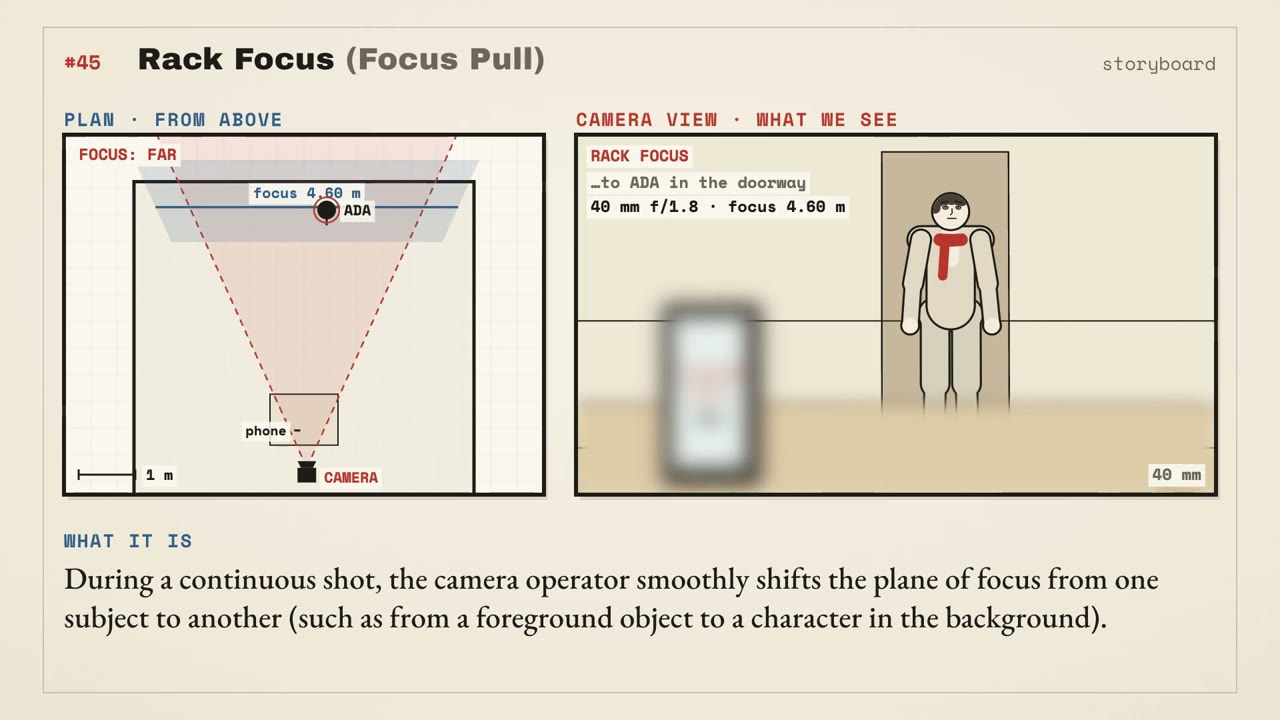 0:2545 · Focus Pull
It acts as an invisible cut, redirecting the audience's attention to a sudden reveal or reaction.
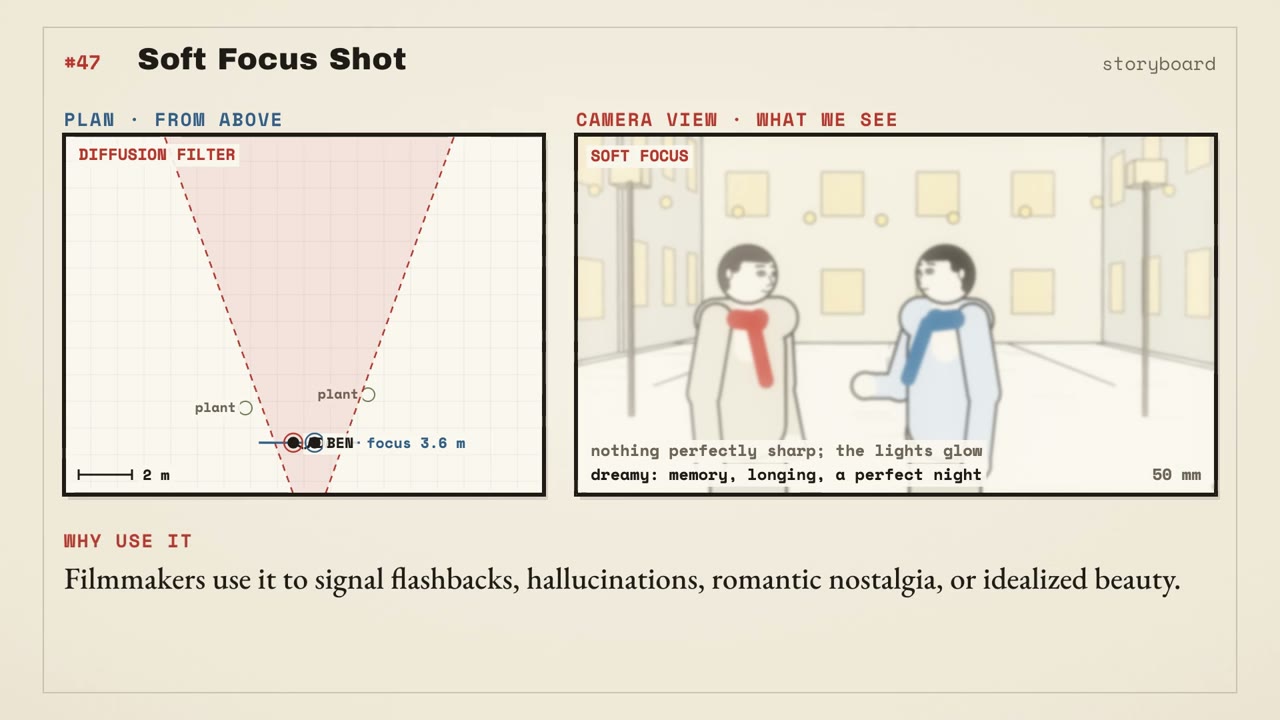 0:2547
Filmmakers use it to signal flashbacks, hallucinations, romantic nostalgia, or idealized beauty.